Get Full Government Meeting Transcripts, Videos, & Alerts Forever!
Get email alerts on the Drug Testing topic
No spam. Unsubscribe anytime.
Board approves adding oral‑fluid (saliva) testing to random drug‑testing options for probationers and intervention participants
Summary
The Board of Registered Nursing voted to allow oral‑fluid (saliva) drug testing as an acceptable method for random testing of probationers and participants in the intervention program, directing staff to add the service to the vendor contract. The board emphasized oral fluid as a complementary test rather than a replacement for urine testing.
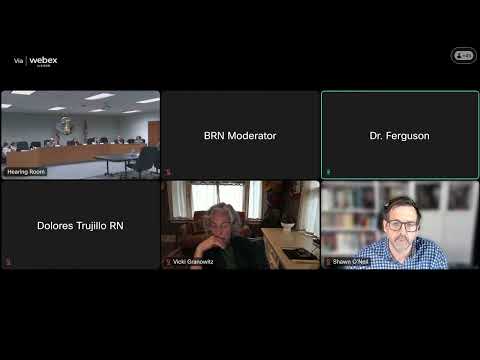
The Board of Registered Nursing voted May 29 to allow oral‑fluid (saliva) testing as an acceptable method for random drug testing of probationers and participants in the state intervention program and to add the service to the board’s vendor contract.
The motion, made during the Enforcement, Investigations and Intervention Committee and carried unanimously, directs staff to amend the board’s existing vendor agreement to add oral‑fluid testing and to work with the vendor on how oral‑fluid collections would be scheduled and used in the random testing program.
Clinical and vendor presenters told the committee oral‑fluid testing has a much shorter detection window than urine and typically detects parent drug compounds rather than urine metabolites. Dr. James Ferguson, medical review officer for Vault Health, said oral fluid “has a detection window that’s normally 24 to 36 hours” and that the modality most often detects the parent (psychoactive) compound. He recommended mixing specimen types: “Follow‑up testing in a different matrix does not invalidate the previous result,” he said, and added that testing different matrices “adds perspective” to prior results.
Vault Health described an administrative workflow for so‑called virtual monitored collections for participants who cannot reach a collection site. A participant would be shipped a kit (five tests per kit, two tubes per test to allow split specimens), schedule a monitored video collection with a live collector, follow a 10‑minute pre‑collection protocol (including rinsing if needed), seal and ship specimens with provided tracking, and the vendor would monitor chain of custody and shipment. Vault said negative oral‑fluid screens typically return in about two days, while confirmatory testing for presumptive positives takes longer.
Committee members and staff raised implementation questions — which laboratories and devices will be used, how delays in shipping could affect validity, and how virtual collections will be supervised. Vault said it uses an immunoassay collection device from a manufacturer owned by Abbott and currently sends specimens to independent confirmatory labs including CRL and DrugScan. Vault and the medical reviewer warned collection devices differ in preservatives and internal validation and advised the board to ensure any devices chosen are supported by at least two certified laboratories.
The committee voted to add oral‑fluid testing as an option and to instruct staff to execute a one‑page addendum to the vendor contract to add the service under existing contract terms. Board counsel later asked that any public commenters who were unable to join earlier because of Webex issues be given an opportunity to comment; staff confirmed the addendum proposal would follow the board’s standard contracting process.
Votes at a glance: The motion to allow oral‑fluid testing passed unanimously in committee: Chair Trisha (Trisha Wynne) Wynne (yes), President Dolores Trujillo (yes), Vice President Nilu Patel (yes), Board member Jovita Dominguez (yes), Board member David Lawler (yes), Board member Vicky Granowitz (yes), Board member Allison Cormack (yes).