Get Full Government Meeting Transcripts, Videos, & Alerts Forever!
Get email alerts on the School Turnaround topic
No spam. Unsubscribe anytime.
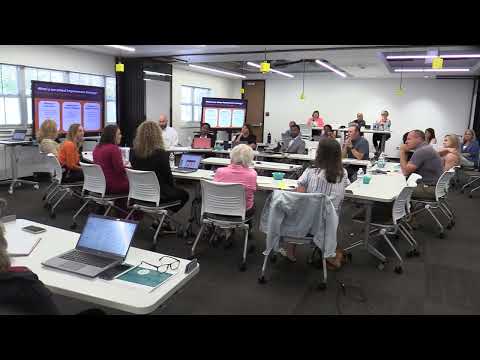
Georgetown ISD principals present turnaround plans for Cooper and Wagner; board to submit plans to TEA by June 30
Summary
At a June 9 board workshop the district held the required public hearing on turnaround plans for Cooper and Wagner elementary schools, outlining behavior systems, monthly progress snapshots, tiered academic interventions and implementation supports. The board must approve and submit the plans to the Texas Education Agency by June 30.
At a June 9 Georgetown ISD Board workshop, district principals presented required turnaround plans for Cooper and Wagner elementary schools and briefed trustees on the steps the district will take to address the schools’ low state accountability ratings from 2023. The board must approve the plans and submit them to the Texas Education Agency by June 30 for TEA review.
District leaders said the plans are rooted in school-improvement best practices and in feedback gathered from parents and staff. The principals told trustees the plans emphasize three main priorities: clearer communication of measurable outcomes to families, systematized behavior supports, and coherent, tiered academic instruction tied directly to grade-level standards.
On behavior, staff described a three-step response intended to keep students in class when possible: a short-time “calming corner,” a buddy-classroom connection, and a one-on-one “walk and talk” with staff. The district also plans a rapid-alert process using QR-coded tags so staff can assign a counselor, assistant principal or school-based therapist to a student incident and ensure follow-up. District presenters said the QR-code system was practiced with staff and is designed to be quick to use.
Instructional strategies in the plans include daily professional learning communities, focused common formative assessments, increased opportunities for structured student discourse and small-group interventions aligned to the specific skill students are missing (for example, addressing multiplication gaps that impede fraction work). Principals reported a 70-page “instructional culture playbook” that outlines campus expectations and will be used for training and consistency.
Principals said monthly snapshot reports for families and staff will display progress on skills, standards and behavior so that parents, students and teachers can see short-term outcomes. Trustees asked about monitoring; district staff said trustees will receive periodic updates during the school year and that the statewide 2025 ratings will also factor into plan adjustments.
The public-hearing presentation closed with trustees and principals agreeing to follow-up reporting on implementation and results. No formal board action was taken at the June 9 workshop; trustees will consider approval as required before the submission deadline to TEA.
Less-critical details: presenters emphasized that the plans are built from 2023 accountability data (the most recent data triggering the requirement) and that some locally observed 2024–25 growth cannot yet be publicly reported because final 2025 student-performance releases were not available at the time of the workshop.