Get Full Government Meeting Transcripts, Videos, & Alerts Forever!
Get email alerts on the Budget Finance topic
No spam. Unsubscribe anytime.
Willis ISD projects roughly $800K–$900K shortfall under early HP 2 estimates; board shown options
Summary
District finance staff told the Willis ISD board at a June 9 workshop that preliminary calculations under the new state law (HB 2) and projected enrollment growth leave the district facing a near-$900,000 deficit in the 2025–26 base budget unless the board adopts additional local changes or uses reserves.
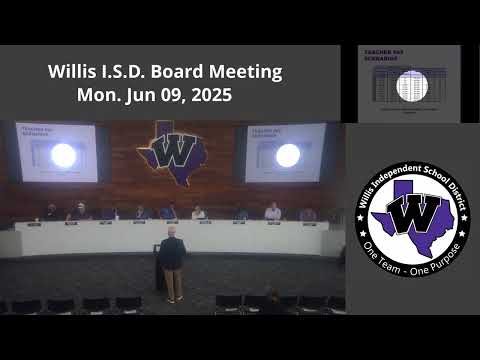
Willis ISD finance staff presented a preliminary budget for fiscal 2025–26 on June 9, telling the school board that early interpretations of the state’s HB 2 funding changes plus projected enrollment growth leave the district with an estimated shortfall of roughly $800,000–$900,000 in baseline scenarios.
District finance staff, speaking during a combined budget workshop and business meeting, said state estimates provided to districts project about $4.2 million in new state funding for 2026 and that the district also will receive several new allotments under HB 2. But the staff member emphasized that those figures are preliminary and likely to change as certified property values and clarifying guidance arrive.
The staff’s presentation focused on three drivers: updated state funding under HB 2, projected enrollment growth, and preliminary Montgomery County property values. The staff displayed a revenue estimate of about $96 million for 2025–26 if the state numbers hold and the district enrolls roughly 280 additional students. On the expenditure side, the base budget plus recommended additions — including operating costs for the new Calfee (Calhoun/Calfee) campus and planned personnel — was shown at roughly $97 million in scenarios that include pay increases for district employees.
Key numbers and mechanics
- Required teacher allotment under HB 2: a district with more than 5,000 students receives a "permanent teacher allotment" of $2,500 for teachers with 3–4 years of experience and $5,000 for teachers with 5+ years. The staff estimated the district cost to implement the required allotment at about $1.7 million. The staff noted this allotment must be added to base pay (not as a one-time stipend) and that TRS/benefits costs are additional and not funded by the allotment.
- Step/scale choices: including the district’s existing step increases on top of the HB 2 allotment would add roughly $337,000. The staff outlined options to preserve, adjust or compress the local step schedule and presented a possible local supplemental payment for teachers with 0–2 years’ experience (about 155 teachers now in that category). A $1,000 district supplement for that group would cost roughly $150,000.
- New allotments and special funding: the staff projected a $55 increase to the basic allotment (estimated to be worth about $480,000 for Willis) and described new separate allotments in HB 2, including a $45 per regular program ADA allotment for certain support staff and a $106 per-enrolled-student instructional facility allotment based on enrollment rather than ADA. The presenter estimated an instructional facility allotment for the new Calfee campus in year one at about $707,150.
- Safety and special education: the safety allotment would increase district funding for safety to about $543,000 under early calculations (roughly a $300,000 increase over current levels), but the presenter stressed that many safety expenditures (the district contracts SROs through Montgomery County) are not treated the same as payroll and that the allotment does not fully cover the district’s safety budget (projected about $1.9 million).
- Local revenue/compression and property values: preliminary Montgomery County numbers showed taxable value up “just over 14%” on an initial run; staff expected ARB and protest adjustments to reduce that to the 11–13% range. The presenter warned that tax-rate compression combined with a planned increase to the homestead exemption could reduce local revenue and shift more of the school’s funding burden to state formulas.
Options and risks
Staff discussed options to close a potential near-$900,000 gap: 1) use fund balance (the audited fund balance is $47.6 million, equating to about 206 days of operations, well above the TEA minimum), 2) reduce expenditures (primarily payroll, which is about 84% of the budget), 3) consider health-insurance strategy changes (including returning to TRS-active health if allowed), or 4) pursue a voter-approval tax-rate election (tax ratification election) later if the board decides to seek additional local revenue. Staff noted that a one-time resource, a pending property-value audit, might provide temporary relief for a single year.
Staff cautioned forecasts will change. "These numbers are gonna shift dramatically once that 40,000 goes into play," the presenter said, referring to the proposed increase in the homestead exemption, and reiterated that certified values and additional state guidance this summer could materially change the picture.
Where the board stands
No formal budget adoption or board action was taken at the workshop; the staff framed the session as an informational review and asked trustees to consider the options as staff prepares a proposed tax rate and budget in July and August. The board’s target calendar remains to set the tax rate and adopt a budget at the August 4 meeting after receiving certified property values.
Ending
Staff promised continuing updates; a fuller revenue picture is expected after county-certified values and additional TEA guidance. The board directed staff to return with more detailed scenarios in July, including health-insurance options and updated HB 2 implementation costs.