Get Full Government Meeting Transcripts, Videos, & Alerts Forever!
Get email alerts on the Special Education topic
No spam. Unsubscribe anytime.
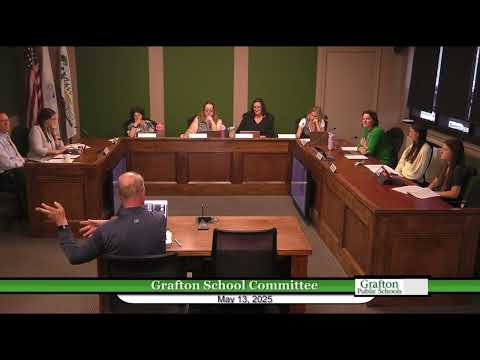
Special education staff brief school committee on integrated preschool programming, tuition and inclusion efforts
Summary
District special education staff described DESE-regulated integrated preschool programming, tuition comparisons with neighboring districts, counts of current sections and a sliding-fee scale; committee directed future fee decisions return to the committee for a vote.
District special education staff briefed the Grafton School Committee on integrated preschool programming, enrollment drivers, tuition comparisons and recent inclusion initiatives.
Nicole McDonald and Chris Kitchell presented the overview. McDonald described the integrated preschool as a DESE‑regulated special education program that places students with disabilities alongside community peers in classrooms governed by state special education ratios and licensing. "If we don't have kind of that balance, it's no longer an integrated an inclusion opportunity," McDonald said.
McDonald explained how the district projects classroom needs using early intervention referrals, historical eligibility trends and expected kindergarten transitions. She said full‑day and half‑day options are both provided, and that integrated preschool requires different staffing, licensing and service hours than EEC‑licensed childcare. "Our half day students receive 2 and a half hours of special education services... If they are full day, they're receiving almost 6 hours of special education services," she said.
Committee members discussed tuition levels. McDonald had compiled comparable tuition figures from districts offering similar DESE integrated preschool models, and told the committee Grafton's current rates are $4,000 for half‑day and $6,500 for full‑day placements. One committee member observed those figures are below the regional averages McDonald supplied and estimated the district is roughly $50,000–$80,000 below the regional average, depending on which comparables are used. McDonald cautioned that averages include outliers and that the district must guard demand for community peers; she noted tuition increases have historically been phased in to avoid pricing out families.
McDonald said current section counts discussed in the meeting included: two full‑day classrooms (one at North and one at South) with eight students each and seven half‑day sections at eight students each. She and the committee discussed how typical‑peer enrollment and family scheduling constraints can limit access; the district operates a sliding‑fee scale for families with need.
The presentation also covered spring special‑education events — Best Buddies prom, Everyday Heroes, Special Olympics and unified sports expansion into the middle school — and professional development to strengthen co‑teaching and specially designed instruction.
The committee did not take an immediate vote on fees. McDonald noted she provided the overview at the committee's request and said the district will return with recommendations; the committee agreed that any fee changes would be brought to the committee for a vote going forward.
Ending: The committee praised the special education team's outreach and programming and asked staff to continue work on enrollment projections, tuition benchmarking and supports to keep integrated preschool accessible to Grafton families.