Get Full Government Meeting Transcripts, Videos, & Alerts Forever!
Get email alerts on the Tax Policy topic
No spam. Unsubscribe anytime.
Custer County begins discussion on raising lodging tax to fund housing, childcare and infrastructure
Summary
Commissioners discussed placing a lodging tax increase on the ballot (options up to 6%), with tourism board and lodging operators urging caution; staff were asked to develop ballot language and return with recommendations.
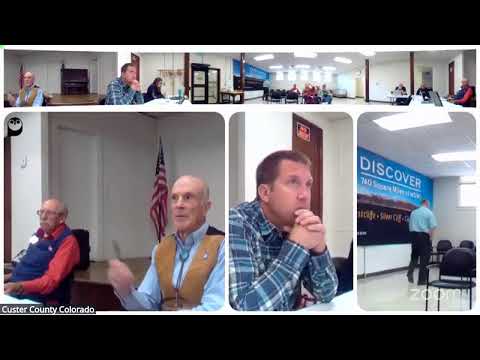
The Custer County Board of Commissioners on Wednesday began a multi‑week discussion about whether to place a lodging tax increase on the ballot under recently enacted state law that allows county lodging taxes to rise above previous limits.
Commissioners said they need to decide whether to place an increase before the county’s deadlines for ballot language and advertising; staff noted a target to have ballot language ready by Sept. 3 and indicated the board would need to make near‑term decisions to meet election calendar timelines. The statute cited in the meeting allows counties to consider increasing lodging (tourism) taxes; options discussed included raising the tax from the current 2% to 3%, 4%, 5% or 6%.
County tourism representatives and lodging owners spoke at the meeting. Deb Adams (tourism board) said tourism is cautious about raising the tax too much, reporting that lodging proprietors are sensitive to total fees and that the county’s lodging revenue is down roughly $10,000 compared with the prior year. Adams said the tourism board believes a move from 2% to 4% would likely be tolerable but that 6% could harm visitation and the ability to fund tourism promotion.
Supporters of a modest increase urged that revenues be directed to workforce housing and childcare — items tourism leaders identified as priorities to support local businesses — and to public infrastructure that sustains tourism, such as roads, trails and public safety services. A presenter estimated historical lodging tax revenue at roughly $46,000 per percentage point on average in recent years; the figure was used as an order‑of‑magnitude illustration, not a precise projection.
Commissioners asked staff to prepare draft ballot language and return with more precise revenue estimates and statutory guidance; one commissioner suggested an initial increment now with the option to request additional increases in future election cycles. No formal motion to place a specific rate on the ballot was made at the meeting.
The board also discussed jurisdictional issues: if a municipality within the county imposes its own lodging tax, the county’s lodging tax does not apply within that municipality. Commissioners said they would consult with incorporated towns and tourism stakeholders before advancing a ballot initiative.