
Rhinebeck trustees press staff for invoices after $100,000 water/sewer overage request; vote tabled
Get AI-powered insights, summaries, and transcripts
Subscribe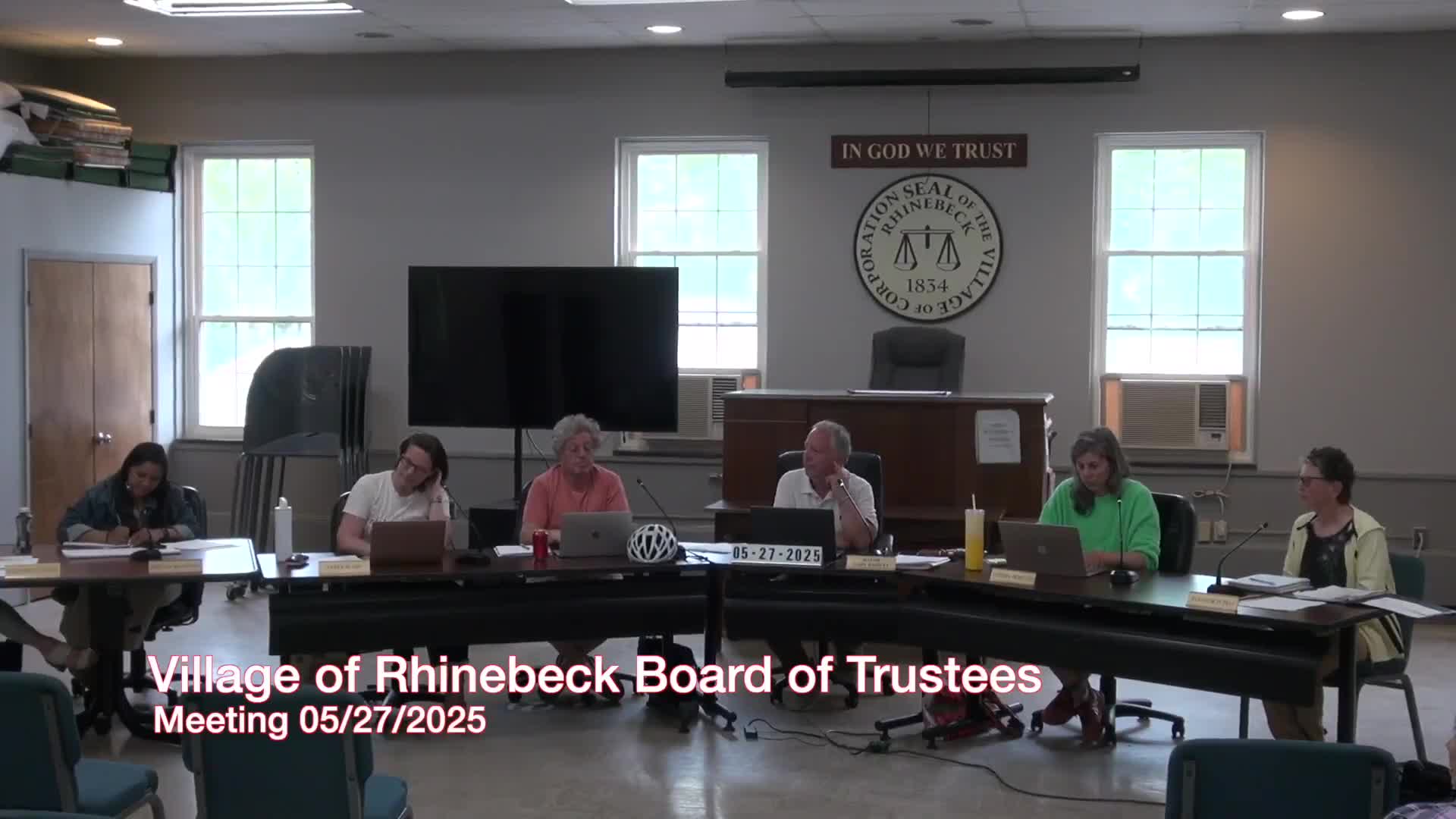
Summary
Treasurer and trustees debated a proposed $100,000 transfer from the village’s capital water account to cover water and sewer fund overages. Trustees asked for line‑item invoices, emergency vs. recurring cost breakdowns and vowed to reconvene with department leaders before approving the transfer.
Village Treasurer Karen McLaughlin presented a request to transfer $100,000 from the Capital Water account to cover overages in the water and sewer funds, prompting extended questioning from trustees and a decision to table the transfer until staff provide more detailed documentation.
Why it matters: The proposal would move capital reserves into operating accounts to cover nearly 10% of the village’s water budget, per the Treasurer’s figures. Trustees said they were surprised by the size and timing of the overages and sought a clearer separation between emergency repairs and ongoing operating‑cost increases before approving budget amendments.
What trustees heard: McLaughlin said the $100,000 request covered a set of overages that included short‑term EFC bond anticipation note interest and a cluster of excavation and line‑repair costs (she cited nearly $48,300 spent to date with D and D Excavating). She also noted increases in chemical costs and electricity used by water treatment processing. Kyle (public works superintendent) and others were identified as personnel who could give more technical detail; trustees asked for a line‑by‑line printout and a breakout of which costs were true emergencies versus recurring operating increases.
Trustee concerns and board direction: Trustees expressed frustration at learning about the cumulative overspend only at the meeting. Questions focused on why months‑old invoices (some dated July 2024 through May 2025) had not been reconciled earlier and whether recurring costs (e.g., higher chemical use, higher electrical costs) should be budgeted differently for fiscal year 2026. Multiple trustees recommended that staff institute a 90% line‑item alert so department heads must request approval when spending approaches that threshold. One trustee said the board has repeatedly asked departments to curb non‑emergency spending since February.
Decision and next steps: The motion to approve the water amendments and the $100,000 transfer was discussed but not finalized. Trustees voted to table the transfer and asked staff (Kyle, Brian and Will were specifically named in discussion) to supply detailed invoice lists, classification of emergency versus recurring expenses, and recommendations for how to budget for the newly higher chemical and utility costs. The treasurer will return with the requested documentation at a future meeting.
Clarifying details: McLaughlin listed multiple line items and explained that the water budget is approximately $1 million and that the $100,000 overages would represent about a 10% excess. She said Capital Water account balance would be $166,510 after the transfer if approved; New York Class balances for sewer were described as healthy while water had limited available funds.
The board did not approve the transfer; trustees requested an itemized report and a follow‑up presentation before taking official action.