Get Full Government Meeting Transcripts, Videos, & Alerts Forever!
Get email alerts on the Digital Signage topic
No spam. Unsubscribe anytime.
San Antonio council approves two-year pilot allowing up to 10 off‑premise digital kiosks over preservation objections
Summary
The City Council approved an ordinance to permit a two‑year pilot for off‑premise digital media and arts kiosks at up to 10 city‑approved locations, setting permit fees, revenue‑share rules and content restrictions after more than an hour of public comment and council debate.
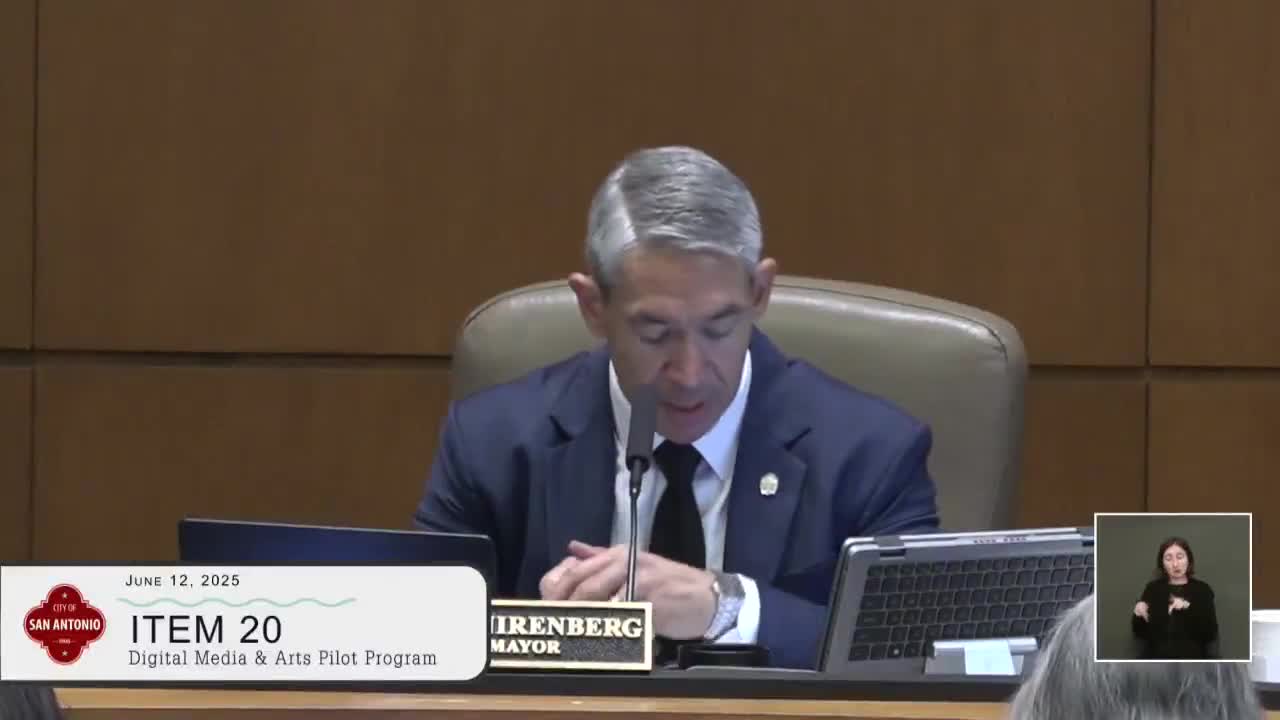
San Antonio City Council approved an ordinance on June 12 to authorize a two‑year pilot program allowing off‑premise digital media and arts kiosks at up to 10 city‑approved locations, despite sustained public opposition from preservationists and tour guides who said the signs would harm the city’s historic character.
The pilot authorizes a maximum of 10 kiosks citywide, with no more than three kiosks in any designated area. The city would require each kiosk operator to pay an initial $100,000 permit fee to the city’s arts fund, and staff described a revenue model that begins with a minimum 10% city share of gross revenues (staff said the share could rise to 15% if the pilot is extended). The city also would retain 20% of the kiosks’ “time share” to display municipal messages and art. Staff recommended exclusions for sensitive sites such as the Paseo del Río and other historic areas and said brightness, hours of operation, content restrictions and removal/maintenance obligations would be spelled out in permits and contracts.
Amin Tomás of the City’s Development Department presented the plan and said staff had proposed guardrails drawn from other cities’ pilots. He described the proposal as a revenue source for public art and a way to project city messages and local artists’ work: “the recommendation is a two‑year pilot … a minimum 10 percent city revenue share … a $100,000 permit to help fund artist commissions and installation.”
Members of the public pressed the council to reject the program. David Ernick, who identified himself as president of a local preservation society, said the kiosks would “disminuir el valor que ya tenemos, la impresión que hacemos en nuestros visitantes,” arguing they would undermine San Antonio’s historic visitor experience. Several tour guides and longtime downtown residents made similar points, saying digital advertising would erode the city’s “small‑town” historic character and that the pilot had not proven long‑term economic benefit.
Supporters and some council members framed the pilot as limited in scope and a potential new revenue stream for the city’s arts programs and public‑safety priorities. Council members asked staff detailed questions about locations, protections for residential areas, limits on commercial content (staff said the ordinance would bar certain categories, such as alcohol and vaping product advertising), and contractual language requiring operators to remove kiosks if the pilot is not extended or if they are not properly maintained.
Council discussion also touched on distribution across neighborhoods: staff presented eight potential areas for kiosks, including commercial corridors and emerging entertainment districts as alternatives to concentrating signs downtown. Staff noted that no more than 10 permits would be issued citywide and that each permit includes a required community‑area review and additional municipal approvals if a kiosk sits near residential areas.
After extended debate and public testimony, the council voted to adopt the ordinance and begin the two‑year pilot. Staff and council members said the contracts developed under the ordinance will include explicit removal language and controls over brightness, hours and prohibited content. The ordinance directs city staff to return to council for evaluation at the end of the pilot period.
The vote authorizes city staff to negotiate permits and contracts subject to the ordinance limits; specific permit locations, final contract language and a detailed operations plan will be developed during implementation.