Get Full Government Meeting Transcripts, Videos, & Alerts Forever!
Get email alerts on the Sidewalk Tree Rehab topic
No spam. Unsubscribe anytime.
Toledo committee backs pilot to repair tree‑damaged sidewalks, preserve mature street trees
Summary
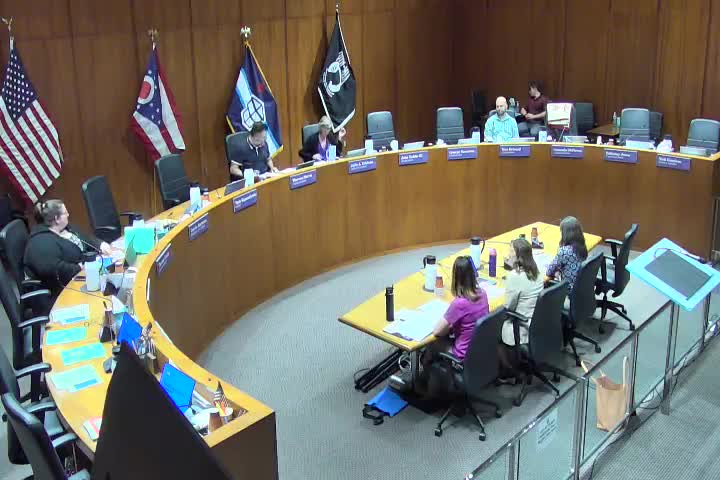
The Mobility, Sustainability and Beautification Committee on June 11 voted to forward a recommendation to full council to pilot repairs for sidewalks damaged by tree roots at 30 Toledo locations while aiming to preserve mature street trees.
The Mobility, Sustainability and Beautification Committee on June 11 voted to forward a recommendation to full council to approve a pilot program to repair sidewalks damaged by street‑tree roots while attempting to preserve mature trees.
Megan Robeson, director of public service, told the committee the pilot would cover 30 locations around Toledo and run through the summer and fall so staff can use the results to shape the 2026 sidewalk program. "We have selected 30 locations throughout the city that have tree related sidewalk damage," Robeson said. "Together, engineers and arborists will collaborate to select the best method for fixing the sidewalk while preserving our mature street trees."
The pilot tests four repair approaches: a temporary asphalt "patch" for minimal uplift, concrete “shaving” or planing for moderate uplift, rerouting a walking path to avoid root zones, and a porous flexible pavement marketed as FlexiPave (also called AddiPave). Sarah Stacy, commissioner of urban beautification, said FlexiPave is permeable and can be poured close to trunks in narrow pedestrian areas; she cautioned it "would not necessarily prevent sidewalk damage" but can preserve soil volume and reduce root compaction. Robeson said the shaving approach is suitable for displacements up to about two inches, and patching is intended for smaller, roughly one‑inch lifts; the typical local concrete slab is four to six inches thick.
Funding and homeowner costs
Robeson said the committee legislation recommends funding the pilot through the capital improvement plan and that, for 2026, the city would pay for tree‑related sidewalk repairs from the general forestry assessment fund. She said non‑tree sidewalk repairs would remain the homeowner's responsibility and that homeowners could either pay up front or be assessed over a 10‑year period. "Because these are tree related sidewalk issues and because we are preserving these street trees...we can use the general forestry assessed fund for those repairs," Robeson said, citing advice from the law department.
Implementation, quality control and resident feedback
Staff said the pilot will use both internal crews and contractors and will include training for city crews on new methods, with particular emphasis on FlexiPave. Robeson said the city will send letters to all residents affected by the pilot and collect pre‑construction and post‑construction surveys to capture resident feedback and monitor outcomes, including cost, ease of implementation, arborist assessments of tree health, and durability.
Residents at the meeting urged the city to enforce contractor warranties and to prioritize long‑term quality. Stanley J. Griffin Jr., a resident, said previous concrete repairs at his property cracked within a short period and asked who would honor warranties: "If you're going to do these projects, who's going to be responsible for the warranty for the work that is being done?" Robeson replied that "the City of Toledo does require a two‑year maintenance bond from the contractors to warranty their work for two years" and said staff will follow up on individual cases.
Other public commenters described falls and injuries tied to uneven sidewalks and long waits for repairs. Melvin Tomaleski said he fell on a raised slab with a three‑and‑a‑quarter‑inch step and later documented it with photos and a ruler. Patricia Larkat, speaking for her 91‑year‑old mother, said she has repeatedly requested help for a city‑planted tree buckling the sidewalk and asked that her mother's address be assessed; staff said they had noted the address and would send an arborist and engineer to evaluate.
Committee action and next steps
After discussion, Chair Comibes said, "I'll accept a motion to move this to full council as approved." A motion was made to forward the item; no roll‑call vote was recorded on the transcript. The administration said it will finalize pilot specifications, locations and budget estimates with the law department in late 2025 or early 2026 and will monitor contractor performance and resident feedback during and after the pilot to inform the 2026 program.
The pilot will test whether the combination of repair methods and funding by the forestry assessment fund provides a workable, scalable approach to reducing trip hazards while preserving mature street trees. Staff stressed the pilot is case‑by‑case: engineers and arborists will jointly choose the method at each site based on tree species, age and condition.