Get Full Government Meeting Transcripts, Videos, & Alerts Forever!
Get email alerts on the Tourism Economic Development topic
No spam. Unsubscribe anytime.
Destination DC warns shifting tourism surtax will pull funding from marketing that drove post‑pandemic recovery
Summary
Destination DC executives told the Council the Tourism Recovery District (TRD) surtax — roughly $20–$26 million annually — funded expanded international offices, advertising and conventions work that helped bring visitation to record levels in 2024; they urged retaining the dedicated funding through 2027 and pursuing a long‑term solution rather
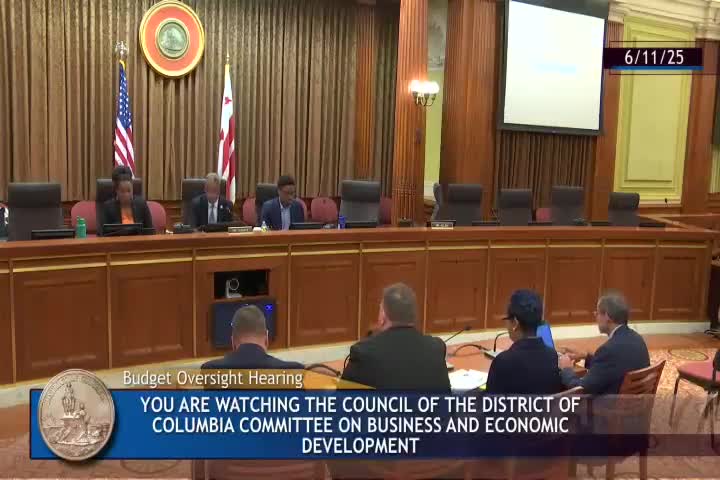
Destination DC President and CEO Elliot Ferguson and board chair Mead Atkinson testified June 11 that the mayor’s FY26 Budget Support Act proposal to redirect the 1% Tourism Recovery District (TRD) surtax away from Destination DC to the Deputy Mayor for Planning and Economic Development would undermine recent gains in visitor numbers, hotel occupancy and tax receipts and weaken Washington’s ability to compete for international visitors and conventions.
Why it matters: Destination DC is the city’s official destination marketing organization. It says marketing and sales investments funded by the TRD produced measurable increases in visitation and tax receipts that support city services. Reducing or diverting a dedicated revenue stream would shrink the city’s tourism promotion budget and, according to Destination DC, reduce return on investment for hotel and retail tax receipts that flow into the general fund.
What Destination DC said: Ferguson summarized recent performance metrics: 27.2 million visitors in 2024 (up 5%), $11.4 billion in visitor spending (up 12%), about 111,000 jobs supported (up 8%) and $2.3 billion in visitor‑related tax revenue (up 11%). He said the TRD — a temporary 1% hotel surcharge proposed in 2022 and scheduled to sunset in 2027 — added approximately $20–$26 million annually to Destination DC’s budget and enabled expanded international offices (Brazil, Mexico, Canada, Japan), larger, year‑round domestic advertising and increased convention sales. "If we spend $1 on promoting Washington as a destination, there's over a $2 return on investment," Ferguson said.
The board’s perspective: Mead Atkinson, General Manager of the Royal Sonesta, said hospitality stakeholders strongly support continued dedicated funding. He emphasized that international visitors stay longer and spend more and that public perception — amplified by negative national news cycles — can depress travel; Destination DC’s work counters that perception in targeted markets.
Use of TRD dollars and community investment: Ferguson told the committee TRD funds increased Destination DC’s budget to roughly $52 million in FY25 and enabled more CBE contracting and community programs. He said Destination DC’s CBE spending rose to more than $4 million in FY24 (after TRD funds were available across a full year) and that the organization uses a return‑on‑investment framework developed with the OCFO to demonstrate economic impact. Destination DC also supports workforce development and youth programs through the American Experience Foundation; the organization received a two‑year, competitively awarded grant from the Deputy Mayor’s office that must be spent in FY24–25.
Consequences of the proposed change: Ferguson and Atkinson warned that redirecting the surtax to an economic development account at the Deputy Mayor would reduce Destination DC’s ability to market Washington overseas and recruit large international conventions — a sector that drives high per‑visitor spending. They urged preserving the TRD allocation through the 2027 sunset and said the council should consider a long‑term dedicated funding arrangement to avoid losing the momentum achieved since the pandemic.
What happens next: Destination DC said it would continue to provide data and analysis on return on investment and explore compromise approaches that could preserve some dedicated marketing capacity while addressing the administration’s priorities. The committee said it would weigh the mayor’s proposal against Destination DC’s quantified returns as the budget process continues.
Ending note: Destination DC framed tourism promotion as an economic development tool that yields measurable tax revenue and jobs; its leadership asked the council to protect marketing funding through the near‑term sunset period and work toward a durable funding model.