Get Full Government Meeting Transcripts, Videos, & Alerts Forever!
Get email alerts on the Fire Code Adoption topic
No spam. Unsubscribe anytime.
Guadalupe County staff outline proposed 2024 International Fire Code adoption and 77 pages of amendments
Summary
County fire marshal and code staff briefed the commissioners court on a proposed adoption of the 2024 International Fire Code with county-specific amendments and a planned adoption target in August; the package includes updates for animal boarding, shipping-container use, battery energy storage, and revised fee tables.
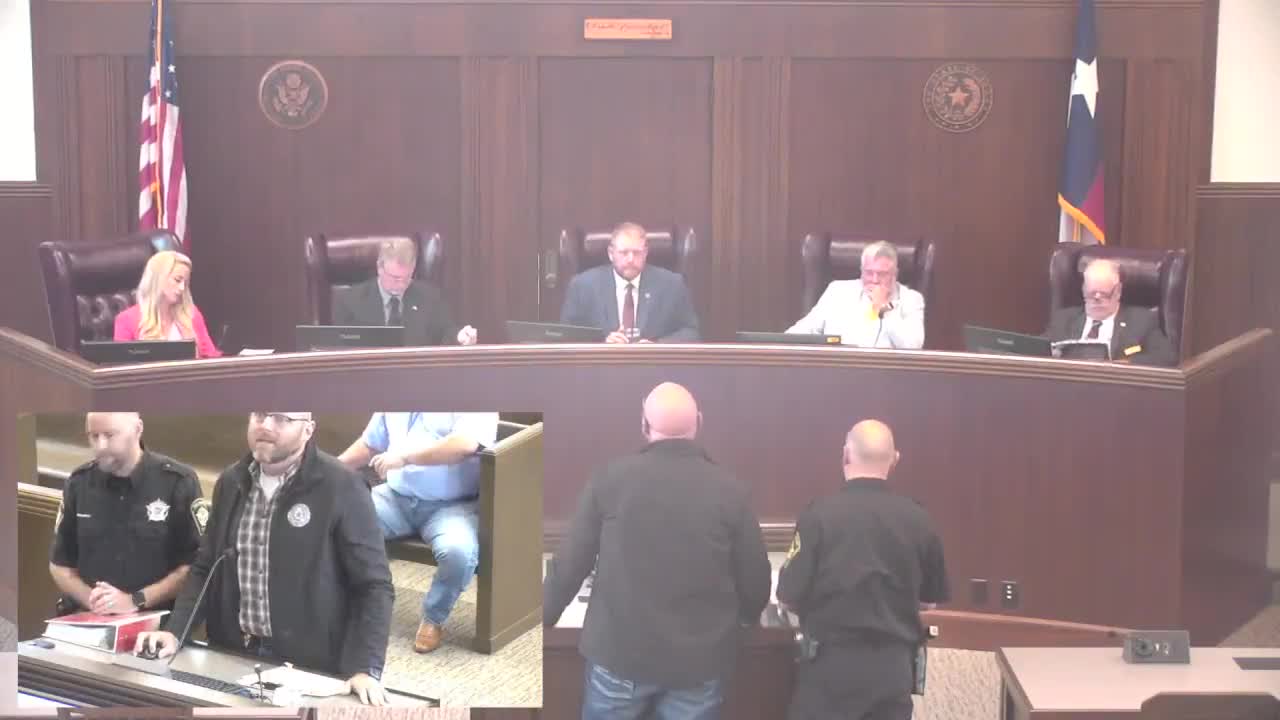
County fire code staff presented an overview of a proposed adoption of the 2024 International Fire Code with county amendments during the June 10 Commissioners Court meeting.
County Fire Marshal Nathan Pender said the county has an agreement with the International Code Council to publish the 2024 fire code with the county’s proposed amendments in one document. The county proposes to adopt the 2024 code and appendices A through D and publish the full code with local amendments for public and developer use. The fire marshal’s office told the court it expects to bring the adoption back for formal action in August.
What is new and changed: Pender and code staff summarized key additions in the 2024 cycle and the county’s proposed amendments: - New requirements for animal shelters and facilities that board 25 or more animals overnight. - Standards for use of intermodal shipping containers as buildings, and for structures built off-site and brought into the jurisdiction. - Expanded requirements for battery-energy–storage systems and lithium-ion batteries, including micro-mobility devices and provisions for charging safety. - Additional mass-notification and egress rules for certain apartment and multifamily configurations, and new risk-based requirements for sprinklers in some Group B (business) occupancies larger than 12,000 square feet. - Revisions to firefighter radio enhancement system (RERS) rules and updated references for explosive materials.
Fee schedule and cost: Staff noted the building valuation table used for fee calculations reflects roughly a 35% increase in construction cost since the 2018 code. The county’s proposed fee schedule has not been finalized in the public presentation; Pender said proposed amendments and fee changes (a 77‑page packet) were provided to the court for review.
Comments and concerns from commissioners: Commissioners asked about the code’s practical impact on small businesses—particularly fire-flow and water-tank requirements that can be costly for small operators—and about alternatives, such as performance-based compliance. Pender said the code has both prescriptive and performance-based compliance paths and that property owners can propose alternatives under a performance-based review often led by fire-protection engineers. The court also discussed insurance-company-driven requirements, retrofit timelines for high-rises in Appendix M, and the county’s current authority under Texas Local Government Code §233 to adopt a fire code that applies to commercial and multifamily occupancies.
Next steps: Staff plan to return to Commissioners Court over the next few weeks with detailed amendments and a proposed adoption ordinance, aiming for adoption in August 2025. Commissioners asked departments and stakeholders to submit comments to the fire marshal’s office while staff prepares the formal adoption package.
Ending: The court did not take final action June 10. Staff will bring the full proposed ordinance and fee tables to future hearings for discussion and potential adoption.