Get Full Government Meeting Transcripts, Videos, & Alerts Forever!
Get email alerts on the Shelter Capacity And Operations topic
No spam. Unsubscribe anytime.
Austin Animal Services reports high intake, 90% live outcome rate and short-term space-management steps
Summary
Animal Services staff told the Austin Animal Advisory Commission the department handled about 1,300 intakes in May, reported a 90.13% live outcome rate, described software transition impacts and outlined short-term strategies to manage overcrowding, while leadership said a strategic plan and facility fixes are underway.
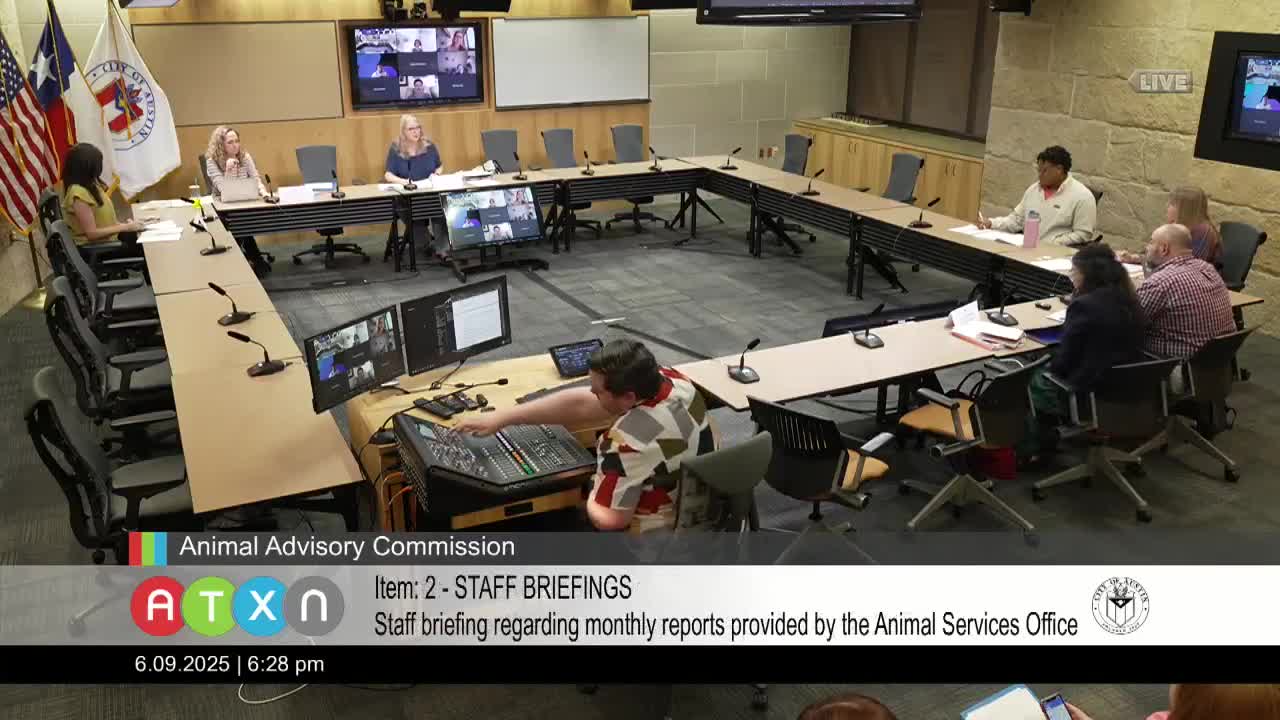
Animal Services staff told the Austin Animal Advisory Commission on June 16 that May 2025 was a high-intake month and outlined current operational responses to capacity pressures.
Jason Garza, presenting the monthly statistical report, said May intake totaled roughly 1,300 animals and that the department was transitioning data systems from Chameleon to Shelter Buddy. Garza said the month’s live outcome rate — combining records from both systems for the month — was 90.13 percent. He reported 500 adoptions, 80 returns to owners, more than 5,200 volunteers contributing about 6,880 hours and 656 members in foster care representing roughly 474 animals in foster.
Garza: “May was a rough month for us, at least with intake. We had a total of 1,300 animals. The live outcome cumulatively was 90.13 percent.”
Garza said veterinary services recorded many emergencies, especially among kittens; staff performed about 420 spay/neuter surgeries and transferred 326 animals to partner rescues. He acknowledged problems with national listing feeds (24PetConnect, Adopt-a-Pet) and said staff would investigate why some returned or fostered animals were not appearing correctly on external sites.
On capacity, Garza said the shelter was in the red across categories (large dogs, small dogs and cats). He described creative space-management measures: playgroups and compatibility assessments to double usable kennel capacity in some areas, grouping animals that arrive together, and targeting recruitment of foster and rescue partners. Garza said the department was offering financial incentives to rescues that pull animals to free kennel space, raising the reimbursement to $750 for some animals.
Interim Animal Services Officer Rolando Fernandez described management priorities beyond immediate space fixes: improving team culture, documenting operations and standard operating procedures, clarifying euthanasia criteria and strengthening facility maintenance. Fernandez said building services have been engaged on HVAC and that a long-term facility plan would be developed as part of future bond work.
Fernandez: “Facilities has been a major concern. We’re working on a short-term plan to make our facility better for our animals and our people, and a long-term plan as part of our bond program.”
Commissioners asked specific follow-ups: test and restore external listing feeds, confirm which animals under veterinary care can be listed for foster adoption, and bring euthanasia criteria and urgent placement-list procedures back to the commission for review. Staff said they would look into each request and provide specifics in later materials.
Why it matters: High intake and software transition affect adoption listings, volunteer coordination and shelter capacity; staff described both immediate workarounds and longer-term plans that could require budget or bond support.
What’s next: Staff said they would investigate external listing issues, provide memos on euthanasia procedures and continue developing the strategic plan implementation workstreams and facility fixes.