Get Full Government Meeting Transcripts, Videos, & Alerts Forever!
Get email alerts on the Human Trafficking topic
No spam. Unsubscribe anytime.
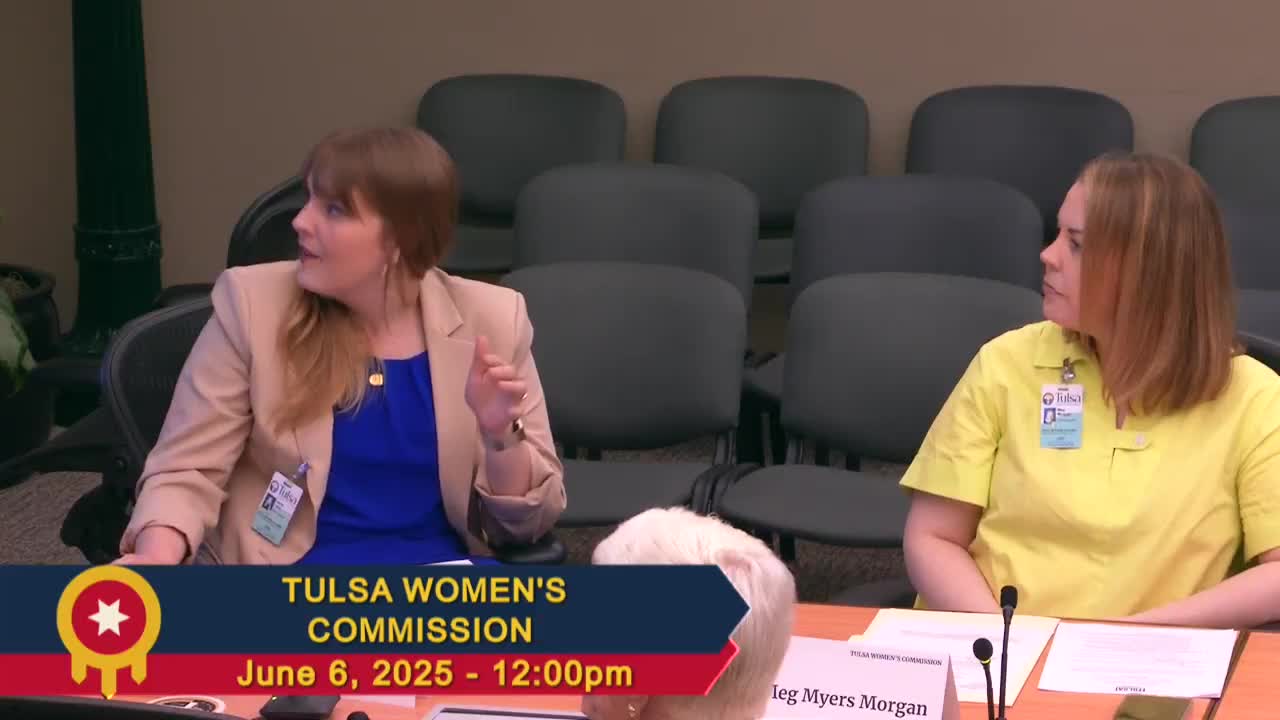
Survivor leaders, Skull Games trainer urge Tulsa residents to watch for human trafficking, offer reporting guidance
Summary
At the June 6 Tulsa Women's Commission meeting, presenter Prima Donna and Ann Marie Hayden of Skull Games Solutions described recruitment tactics, recommended prevention steps and urged community and law‑enforcement coordination to help survivors.
At the Tulsa Women’s Commission meeting June 6, presenter Prima Donna and Ann Marie Hayden, power project manager for Skull Games Solutions, outlined how traffickers recruit and control victims and urged a coordinated local response that emphasizes prevention, survivor support and law‑enforcement training.
Why it matters: Commission members were told human trafficking increasingly targets vulnerable youth through social media and peer recruitment and that local organizations and police need awareness, training and survivor‑focused recovery services to interrupt the cycle.
Prima Donna described patterns she said she has seen in cases brought to her attention, including grooming, isolation and transfer of victims across locations to inhibit escape. She told commissioners trafficking “is a $150 billion industry,” and said predators frequently establish trust over months or years, sometimes posing as romantic partners or job recruiters. She said recruitment often occurs at schools, shelters, bus stops and online platforms such as Instagram, TikTok and Snapchat.
Ann Marie Hayden said Skull Games works with law enforcement to identify predators and to spot victims. Hayden described a survivor empowerment program that combines immediate intervention with long‑term recovery supports. “When survivors are seen, supported, and spiritually restored, they don’t just recover, they rise,” Hayden said.
Hayden and Prima Donna described an empowerment weekend run by Skull Games, a four‑day program at a ranch in Skytook that combines team exercises, self‑defense and scenario training so survivors can practice rescue and victim‑service roles. Hayden told the commission 12 more survivors were scheduled to attend an upcoming weekend and said participants are then connected to job training, housing support and peer networks.
On reporting and immediate response, Hayden advised that members of the public who believe someone is in imminent danger should call 911. For suspected trafficking that is not an immediate emergency, she recommended contacting airport security if the situation involves travel, using the national human trafficking hotline, or local/state hotlines. “If you see something that you really feel like is in danger, you call 911,” Hayden said. She said airport security and some airports’ bathroom signage and staff are increasingly trained to spot trafficking indicators.
Discussion at the meeting emphasized prevention and community education. Prima Donna and Hayden urged school‑based curricula, social‑media literacy for families, and broader public awareness. They said survivors should be treated as victims rather than criminalized, and noted Oklahoma has moved in recent years to classify child prostitution as human trafficking, which advocates said strengthens protections for minors.
Commissioners asked about practical steps for bystanders. Hayden recommended brief, nonconfrontational engagement — for example asking someone how they are — and following that with hotline or 911 reports when warranted. Both presenters offered to share resources and contact information with commissioners for follow‑up and training.
The presentation closed with an appeal for cross‑sector cooperation: training for first responders, consistent referral pathways for identified victims, and long‑term funding for recovery programs. The commission received contact details and follow‑up materials from the presenters.