Get Full Government Meeting Transcripts, Videos, & Alerts Forever!
Get email alerts on the Land Use topic
No spam. Unsubscribe anytime.
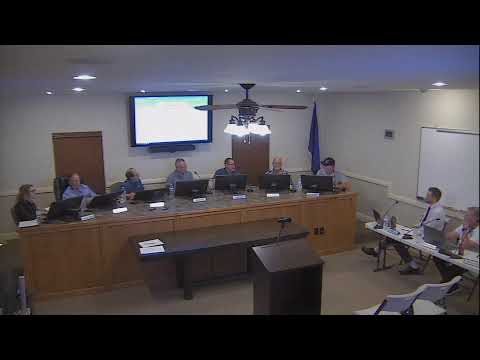
Toquerville council defeats motion to deny Fieldstone Homes general-plan amendment after heated public hearing
Summary
After a lengthy public hearing and split debate over housing, retail and infrastructure, the Toquerville City Council voted down a motion to deny a general‑plan amendment requested by Fieldstone Homes to change a parcel from commercial to residential; the motion to deny failed 3–2.
At a Toquerville City Council meeting, councilors voted on a motion to deny a general‑plan amendment submitted by Fieldstone Homes that would reclassify tax parcel T30223212BR2 from commercial to residential; council members voted to deny the motion 3–2, meaning the motion to deny the amendment failed.
The amendment drew a lengthy public hearing and extended council discussion because speakers said it could affect the city’s commercial tax base, nearby retail prospects and the timing of infrastructure investments. Supporters said adding residential capacity would provide rooftops that make retail and hotels viable; opponents said preserving commercially zoned land was necessary to protect long‑term revenue and avoid infrastructure shortfalls.
Fieldstone Homes representatives and project partners described the developer’s plan and market analysis. Jason Harris of Fieldstone Homes said the proposal would allow denser housing types and give the developer flexibility to build a mix of product, describing the request as “12 units per acre” to allow different product types and missing‑middle housing.
Rick Caldwell, who said he is a partner on the Boulder Ridge project, told the council the developer wants to deliver a long‑term quality product and said covenants and homeowners associations can help preserve neighborhood appearance. Jerry Eaves, another development partner, told the council that when the project was modeled as total commercial the bond valuation was lower and that adding residential rooftop assumptions raised the projected tax value. “The value of that bond dropped $1,400,000,” Eaves said when discussing a market analysis the developers provided to the council.
Planning staff and a planning commissioner who spoke at the meeting said affordable and workforce housing featured in their deliberations at the planning commission. A planning commissioner, who said she voted in favor of recommending the amendment, said, “I moved in favor of this general plan amendment but only 2 of us carried that,” and cited the county median home price as part of the context for the housing discussion.
Opponents at the hearing and several council members argued the parcel had been designated commercial in the adopted general plan specifically to capture sales and commercial property taxes at the Anderson Junction / I‑15 frontage. One council speaker said the general plan and public input prioritized commercial development at that location and warned that converting commercial land to residential would reduce immediate commercial tax receipts: “We worked really hard to develop the general plan…we made it so that it would take a little bit of work for us to amend it or change it,” the speaker said, adding concerns about infrastructure and whether the city could support future maintenance costs if commercial land were converted to housing.
Council action and next steps
A council member moved to deny the general‑plan amendment; the motion was put to a roll‑call vote and was defeated on a 3–2 vote. The motion on the record was to deny business item G‑1; after the roll call a council member said, “The motion is denied.” The transcript did not record the names and votes of each council member in the roll call aside from the numerical result.
The record shows that the public hearing included multiple developers and residents, and that planning commission review had been split. Council members asked developers and staff detailed questions about density, the timeline for commercial absorption, potential retail interest (speakers mentioned hotel and retail interest), water availability, road access and which planning areas would provide bonus density or open space credits. Several speakers and staff said additional materials — including a trails/open‑space accounting table and engineering details for future phases — would be needed before subsequent land‑use and plat approvals for the development.
Evidence spans from the transcript supporting this article are recorded below.