Lifetime Citizen Portal Access — AI Briefings, Alerts & Unlimited Follows
Board denies Milestone’s proposed 150-foot cell tower near Claiborne interchange after residents object
Loading...
Summary
The Loudoun County Board of Supervisors voted to deny Milestone’s application for a 150-foot monopole near the Claiborne/Route 7 interchange, citing incompatibility with nearby residences and visual clutter. Neighbors and homeowners’ groups had urged denial, and supervisors said alternative locations should be pursued.
The Loudoun County Board of Supervisors voted to deny Milestone’s application for a 150-foot telecommunications monopole proposed near the Claiborne/Route 7 interchange, citing incompatibility with nearby residences and visual clutter.
Supervisor Phyllis Glass moved to overrule the Planning Commission and deny the application; Vice Chair Michael Turner seconded the motion. After debate among board members, supervisors voted to deny the application.
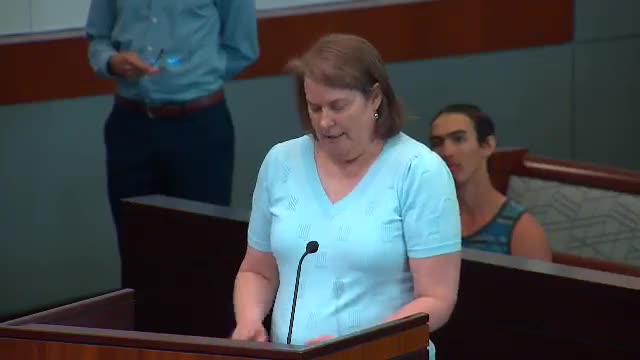
Neighbors and homeowner associations pressed the board to reject the tower during public comment. James Russell, a Regency at Belmont resident and licensed civil engineer, told supervisors the monopole would stand about 380 feet from the nearest apartment building and “would be intrusive and detrimental to our community,” and submitted community-created renderings showing the tower’s appearance from within the neighborhood. Bob Badger, also a Regency resident and professional engineer, presented Verizon and FCC coverage maps and argued the company had not shown a coverage gap that would justify a new tower. Karen Moscato, another Regency resident, told the board she found evidence that carriers are moving toward fixed wireless service rather than deploying fiber to some new subdivisions and said, “If they’re not laying fiber optic cables, they have to provide the service somehow, and it’s over this fixed wireless service.”
Supervisor Glass said the site was inappropriate because it sits “directly adjacent” to a route where large transmission lines are planned and because the tower would be visible to nearby affordable and multifamily housing with little natural screening. Turner noted rooftop alternatives were available and said the tower would compound existing infrastructure near residential properties. Supervisor LeTourneau said he believed the motion conflicted with a comprehensive-plan policy that encourages co-location in rights-of-way in some cases and therefore could not support denial; other supervisors disagreed.
The board’s decision came after a balloon-test photo set, applicant renderings and resident-created visuals were submitted to the record. Several speakers argued the applicant’s renderings downplayed visual impact by choosing distant vantage points; residents provided alternate vantage images showing the tower’s visibility from their townhome terraces, main entrance and rooftop areas.
The applicant, Milestone, did not have a speaker identified by name in the public transcript; the board thanked the applicant and encouraged discussions about alternative locations that might be less intrusive.
The board did not adopt alternative mitigation conditions at the time of the vote; supervisors emphasized they would prefer cellular infrastructure sited farther from homes or co-located on existing structures where feasible.
The denial leaves unresolved related planning questions about overhead transmission lines along the Route 7 corridor, which several speakers and supervisors referenced. Lansdowne Conservancy counsel Brian Turner asked the board to deny or defer related approvals pending a Virginia Supreme Court appeal on whether overhead routing adequately minimizes scenic and environmental impacts.
Residents and community groups said they will continue to press for undergrounding of major lines where possible and to oppose major vertical infrastructure sited directly adjacent to newly developed residential neighborhoods.
The decision is final for this application; the applicant may pursue alternate locations or administrative appeals allowed under local and state processes.