Get Full Government Meeting Transcripts, Videos, & Alerts Forever!
Get email alerts on the Public Housing Safety topic
No spam. Unsubscribe anytime.
Richmond housing authority outlines summer safety plan for public-housing hot spots
Summary
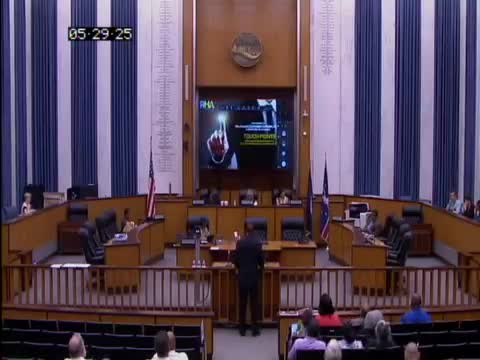
Richmond Redevelopment and Housing Authority officials told the Public Safety Standing Committee they will expand youth jobs, de-escalation training, tip lines and lease enforcement in six public-housing “hot spots” after reporting a year-to-date rise in homicides in those communities.
Steven Nesmith, chief executive officer of the Richmond Redevelopment and Housing Authority (RHA), told the Public Safety Standing Committee that RHA will roll out a multi-pronged safety strategy in its six high-need public-housing sites, including summer youth employment, de-escalation training, a tip line and targeted lease enforcement.
RHA is pursuing those steps, Nesmith said, because "year to date, we are 3 more homicides than we were at this time last year," a statistic he said gives the agency a "sense of urgency." He told the committee the plan pairs expanded resident services and youth programming with enforcement against people who use public-housing units to sell or store guns and drugs.
Nesmith said the strategy focuses on three lines of work: prevention (youth employment and safe spaces), resident engagement (anonymous tip line and community outreach) and enforcement (use of RHA lease remedies). "Idle minds and idle time is a devil's workshop," he said, and RHA will try to reduce idle time by funding jobs and safe recreational spaces.
RHA said it has secured 50 summer employment slots specifically earmarked for public-housing residents through a city partnership; the agency also described ongoing STEM labs, a youth leadership program for ages 8–13 and internships across agency offices. Vice President for Resident Services Ralph Stuckey told the committee RHA has run a summer youth employment program for about five years and this year is coordinating with the city’s larger summer program to place youth in agency offices and technology roles.
On training, RHA said it will restart a third‑party de‑escalation program called RealLife — funded by a grant the authority sought from the state attorney general’s office — and deploy trained de‑escalation specialists to management offices to mediate resident disputes before they result in eviction or criminal enforcement.
RHA also described a stepped-up enforcement posture when it finds public-housing units being used to harbor guns or drugs. Nesmith told the committee RHA will make “better use of what’s called our 2,130 lease enforcement,” describing a process in which tenants would be given 21 days to abate problematic uses of a unit or face eviction: “When we see things are wrong, then, you have 21 days to abate or correct what’s going on. If not, you’re gone.” (The transcript referenced the enforcement as “2,130 lease enforcement.”)
Agency staff emphasized resident-facing measures intended to avoid retaliation for callers who report tips. Nesmith said RHA launched an “If you see something, you say something” campaign and an anonymous tip line, and Corey Franklin, RHA’s senior vice president of affordable housing, described community cleanups, pop‑up community walks with Richmond Police Department officers, and planned National Night Out events to build relationships between residents and law enforcement.
Chief Rick Edwards of the Richmond Police Department joined the discussion and described the department’s summer plans to open gyms and other safe spaces and to coordinate “pop up” hot-spot events where RPD, RHA and community groups will be present. Edwards warned that social-media videos of fights sometimes precede real-world gun violence: "Adults are present filming it, and they captured on that film her murder," he said, urging adults to intervene rather than record.
NAACP Richmond branch president James “JJ” Minor said the NAACP will partner on a citywide “Local Day Out” community outreach event on June 6 and encouraged citywide participation; he asked for figures on guns and drugs seized and arrests made during recent enforcement actions.
Committee members pressed RHA for specifics and timelines. Nesmith said community meetings to present the plan will begin with an ice-cream social kickoff in Gilpin Court in June and roll out to Creighton and other sites. RHA agreed to return with metrics and an update in the fall; Nesmith and staff told the committee they will measure immediate outputs (number of youth placed in jobs and safe spaces) alongside crime statistics and longer-term measures of resident self-sufficiency.
No formal committee action was taken; members asked RHA to report back in a couple of months with metrics and progress.
Ending: Committee members asked for a formal progress update; RHA committed to return in the fall with metrics tracking youth placements, monthly crime snapshots and measures of resident self-sufficiency.