Get Full Government Meeting Transcripts, Videos, & Alerts Forever!
Get email alerts on the Brown Act Training topic
No spam. Unsubscribe anytime.
Manteca city attorney briefs Measure Q oversight panel on Brown Act rules, social media and records
Summary
City Attorney David DeFusi gave the Measure Q Citizens Oversight Committee a step‑by‑step briefing on the Brown Act, focusing on public notice, quorum rules, limits on serial communications and public‑records exposure for messages and texts.
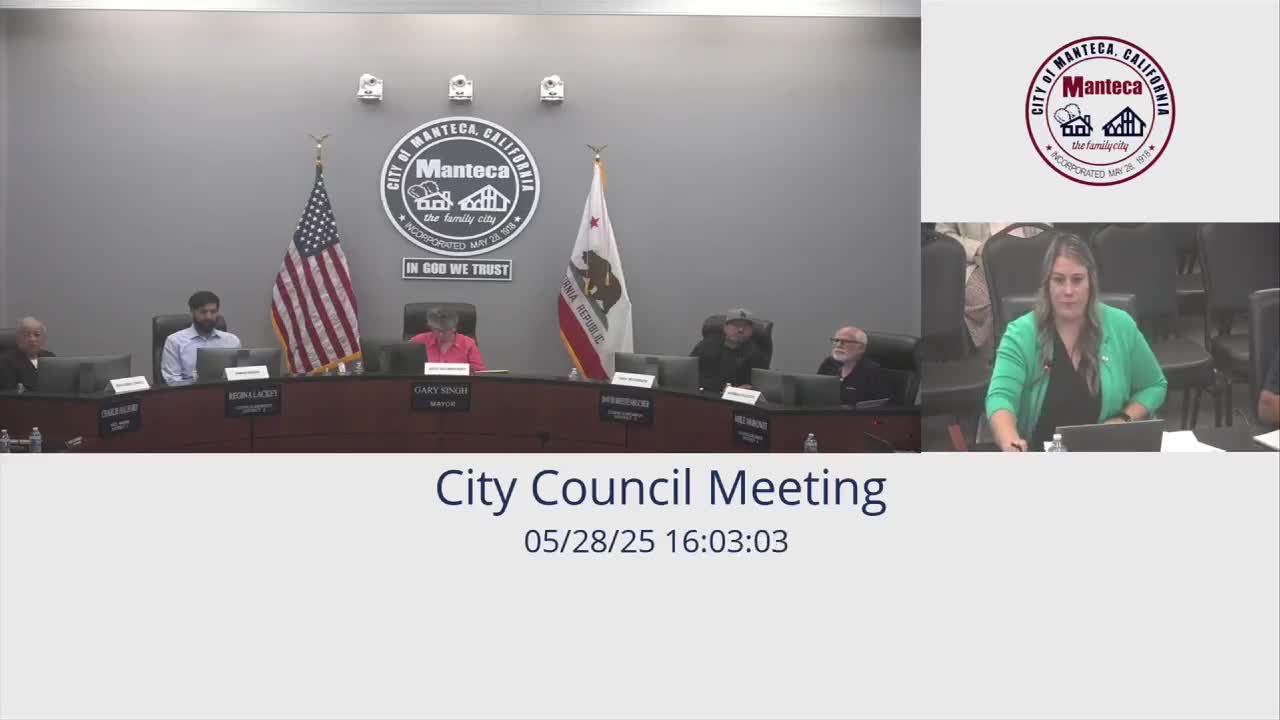
City Attorney David DeFusi told the Measure Q Citizens Oversight Committee on May 28 that the Brown Act’s basic purpose is to give the public notice of and an opportunity to be heard at meetings of legislative bodies.
DeFusi, the city attorney for the City of Manteca, led a slide presentation that reviewed quorum requirements, what constitutes a meeting under the Brown Act, limits on serial communications and the public‑records implications of electronic messages. “For purposes of members of the public it’s providing them notice and an opportunity to be heard,” DeFusi said. “That is what it is, bread and butter.”
The training was aimed at three goals: explain how to avoid inadvertent Brown Act violations, outline what members should disclose to staff before recusing themselves or accepting ex parte contacts, and review procedural rules for public comment and meeting notice. Committee members asked clarifying questions about community presentations and appropriate responses to constituent email threads.
DeFusi emphasized that a quorum is required to take official action and that a majority of the five‑member committee (three members) constitutes a quorum. He warned that a series of individual contacts by members that together involve a majority — including reply‑all email chains or sequential online comments — can create an illegal “serial meeting.” “If you guys all happen to be members of this committee, guess what? You just did a Brown Act violation,” he said, giving an example of successive online comments turning into deliberation without public notice.
The attorney outlined practical limits: regular meeting agendas must be posted 72 hours in advance, special meetings may be posted 24 hours in advance, and meetings must occur within city limits unless state law allows otherwise. He also reviewed accepted exceptions such as ad hoc “2 by 2” subgroups (no quorum) convened for a limited duration and scope and said members may attend conferences or other public meetings together so long as they do not deliberate outside noticed meetings.
DeFusi told members their communications about committee business — including texts, personal emails and city email — are presumptively subject to the California Public Records Act when they concern city business. “Basically, your records are presumed … to be subject to the public if they were to make a request for those records,” he said, explaining why members should avoid informal side conversations during breaks and after meetings.
On public comment, DeFusi reiterated that the committee should provide equal time to speakers, avoid debating members of the public from the dais and treat decorum policies consistently. He recommended that members who anticipate a conflict or an ex parte contact notify the clerk or the attorney’s office in advance so staff can note the disclosure.
Committee members tested application scenarios. One asked whether it was permissible to summarize committee activity at neighborhood meetings; DeFusi said members may describe information that was presented in public meetings but should avoid lobbying or coordinating positions with a quorum. He advised replying to constituent emails with a direct reply (not reply‑all) when appropriate.
The briefing closed after members asked procedural questions about the committee’s role and expectations. DeFusi offered to answer follow‑up questions individually for members who preferred not to ask in public.