Urban Forestry outlines master plan kickoff, ARPA plantings and a new planting strategy
Loading...
Summary
Department leaders said an urban-forest master plan will begin this summer, that the city has planted about 950 trees with ARPA funds and expects to plant another 1,000 this year, and that updated canopy mapping and proactive maintenance cycles are priorities.
Urban Forestry staff told the Governmental Operations standing committee they will begin a four-year urban-forest master plan this summer, will continue ARPA-funded tree plantings, and plan to modernize maintenance and planting practices to address urban heat and stormwater concerns.
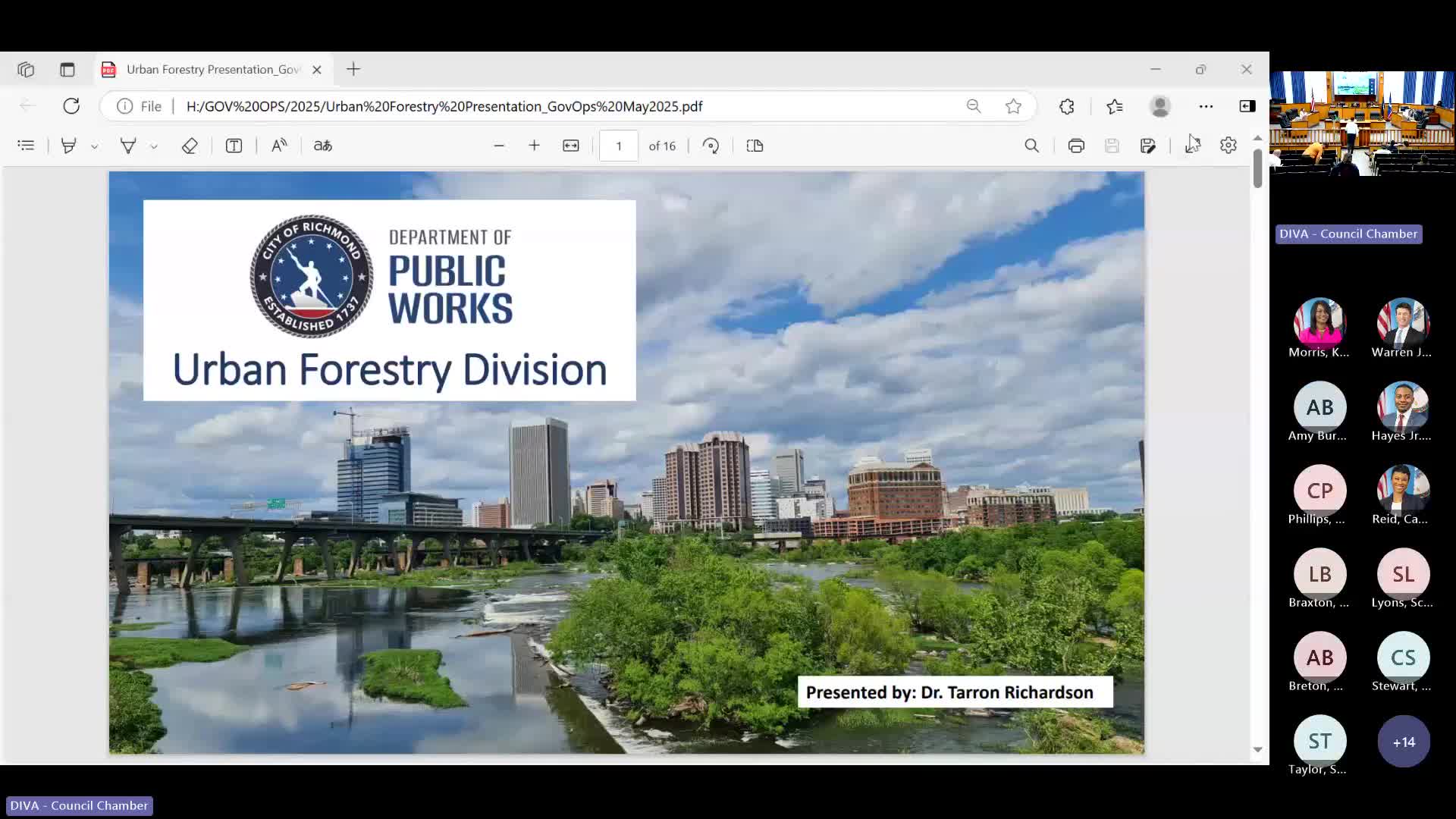
Dr. Terrain Richardson, operations manager for Urban Forestry, introduced the division and said the operations team and planning team together manage inspections, storm debris response, permit review and community outreach. Richardson said the division averages roughly 230 tree inspection requests per month and aims to inspect most requests within five business days when weather and staffing allow.
Michael Webb, urban forester and planning-division lead, said the master plan will update the last canopy assessment (2010) and set 10–15 year planting and maintenance goals. "This is a 4 year project that's gonna encompass 10 to 15 year goals for the urban forest management of the city of Richmond," Webb said. He added that the plan will include a community-engagement phase and an implementation roadmap that addresses budget, staffing and ordinance changes.
Planting and funding: Webb said the division has planted about 950 trees so far using ARPA funds and expects to plant about 1,000 more by the end of 2025. He flagged rapidly rising nursery costs and noted species diversification targets: "based upon our research and understanding of the trees, the species that you should have in a community is that you shouldn't have more than 10% in terms of any species that you do plant within your community." The presentation also referenced a new state-level legislative mechanism, available as of March, that allows localities to create a tree-canopy bank to accept payments from developers who cannot meet planting/quota requirements.
Operations and equity: Webb noted urban heat vulnerability maps that show lower canopy and higher heat vulnerability in parts of the North Side, South Side and East End, and said the master plan will prioritize plantings where they will mitigate heat and stormwater impacts most effectively. Staff also described tree stewards and nonprofit partners who augment city work and three primary contractors used for larger removals and emergency work.
Ending: Council members asked about ARPA-funded 'gateway' beautification work and the new beautification superintendent role. Richardson and Deputy Director Torrance Robinson said the superintendent will focus on planting and landscape maintenance for gateways and other beautification projects while the urban-forestry operations team prioritizes higher-elevation tree work and emergency response. Staff said they will proceed with the master plan kickoff and follow up on questions about specific ARPA allocations and contractor roles.