Get Full Government Meeting Transcripts, Videos, & Alerts Forever!
Get email alerts on the Barr Program topic
No spam. Unsubscribe anytime.
Pilot ‘BARR’ relationship program draws praise from Wyoming schools for lower failure rates and fewer referrals
Summary
Educators from several Wyoming pilot schools reported that the BARR (Building Assets, Reducing Risks) relationship‑building model has reduced course failures and major referrals and improved student engagement during early implementation.
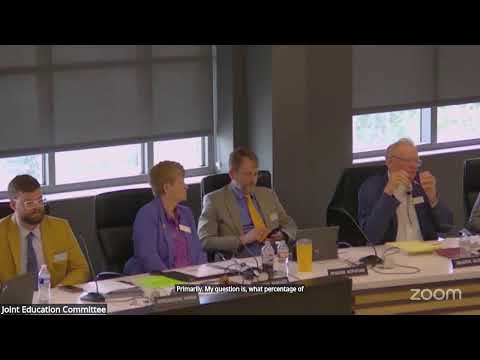
Educators from three Wyoming regions described early results from the BARR (Building Assets, Reducing Risks) relationship‑building model and told the Joint Education Committee the program reduced course failures and major discipline referrals while improving student engagement.
Angela Jerbeck, BARR’s founder and executive director, told the committee the model grew from efforts to collect and share information about students so adults in a school could act on what they knew. She said BARR uses regular, structured relationship lessons and data‑informed team meetings to identify students at risk and coordinate interventions.
Why this matters: multiple Wyoming pilot schools reported measurable classroom and culture changes in the first semester after starting BARR, and committee members expressed interest in wider documentation and possible scaling.
District results and classroom examples Moorcroft Secondary: school counselor and BARR coordinator Heidi Fichtner reported that junior‑high failure rates fell from 14% to 3% after one semester; she described a previously “invisible” student who became engaged, joined peers for activities and moved from multiple failures to passing grades.
Douglas Upper Elementary: instructional coach Jamie Miller and counselor Katie Atkinson said BARR helped a chronically absent student come to school to meet a weekly reading goal and improved peer relationships for a second student who had been anxious about group assignments. Teachers reported reductions in major referrals and better adult‑student connections.
Kemmer (Lincoln County) district: principal and district coordinator Cody Hartung and teachers described district‑wide implementation (K–12) and daily check‑ins that pair social‑emotional lessons with monitoring of grades and behavior; the district reported fewer students needing summer school this year.
Model features cited by presenters - Daily or weekly relationship lessons (presenters called them “relationship building” rather than SEL) that are short, conversational and designed to create belonging; presenters stressed these lessons are not curricular ideology but practical bonding activities (example: short prompt games asking light personal questions). - Small‑group and schoolwide systems that let teachers see a student’s strengths and set concrete “wins” and weekly goals. - “Small block” staff meetings to discuss each student’s strengths and interventions and to coordinate follow‑up among counselors, interventionists and teachers.
School testimonials and data Speakers supplied short vignettes and semester‑to‑semester comparisons: Moorcroft reported 98% of a seventh‑grade cohort earned final grades of C or better; Douglas reported students who were chronically absent met a simple, personalized attendance goal tied to reading time; Kemmer reported enough improvement that it expects reduced summer‑school demand.
Committee questions and clarifications Members asked whether lessons were “SEL” as the phrase has political connotations; BARR’s founder emphasized the lessons are framed as relationship‑building and practical prompts (favorite ice cream, weekend plans) and that the model tries to be locally adaptable. Committee members asked for program materials and data; the BARR team agreed to provide more information to staff for distribution.
Ending note: next steps for committee Committee members and witnesses asked BARR to share its curricula and outcome studies with LSO and committee staff. Several lawmakers said they wanted materials so districts and legislators could evaluate whether to expand or fund pilots in more districts.