Get Full Government Meeting Transcripts, Videos, & Alerts Forever!
Get email alerts on the District Finance topic
No spam. Unsubscribe anytime.
District presents preliminary 2025–26 budget showing $70.6 million in expenditures and $8.7 million projected general‑fund balance
Summary
The district—s finance presenter outlined a preliminary 2025–26 budget with $70.566 million in total expenditures, a projected general‑fund balance of about $8.7 million (roughly 21.5% of expenditures) and items that could affect future years including fluctuations in "other revenues" and the pending state Senate Bill 216.
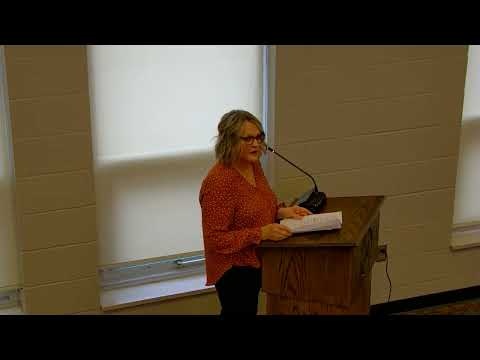
Brandon Valley School District finance staff presented the preliminary 2025–26 budget during the June 9 board meeting, outlining revenue sources, fund balances and multi‑year projections.
The most immediate numbers: the budget proposed total expenditures of $70,566,000 for 2025–26 and a projected general‑fund ending balance of roughly $8.7 million, or about 21.5% of next year—s projected general‑fund expenditures, finance staff said.
Why it matters: The preliminary budget frames staffing, capital outlay and transportation decisions for the coming year and establishes reserves that the district plans to use if certain revenues fluctuate.
Major figures and funds
- General Fund: projected revenue just under $43.0 million and expenditures just over $43.0 million, producing a small budgeted deficit ($80,000) in 2025–26 but a forecasted year‑end fund balance of about $8.7 million (about 21.5% of expenditures). Finance staff noted that the district often under‑expends the adopted budget, and projected a modest $200,000 year‑over‑year increase in fund balance.
- Capital Outlay Fund: revenues $10,265,000; expenditures $8.9 million; projected surplus about $1.335 million. Major uses include technology replacement (about $2.4 million), transfers (about $1.4 million) and facility improvements.
- Special Education Fund: revenues $11,277,000 and expenditures $11,085,000, for a projected small surplus ($192,000); staff described the special education budget as relatively stable but flagged it as one that can change rapidly.
- Bond Redemption Fund: revenues and expenditures both shown at about $3.44 million for 2025–26; debt service rises in 2025–26 to reflect new bonds issued for the new elementary school and middle‑school addition.
What drove year‑over‑year changes
- Staffing and salaries: The state sets an instructional benchmark salary used in the state aid calculation; locally, the district—s benefits rate runs near 34% (higher than the 29% used by the state formula), and the presenter said increased salaries and benefits accounted for most of the increase on the instructional side.
- District adjustments: The board approved a $350 per‑staff salary enhancement and a 2.5% across‑the‑board raise in the draft budget; those items together accounted for roughly $850,000 of the general‑fund increases. Additional staffing and benefit changes were noted.
- Other revenues: The presenter highlighted volatility in the "other revenues" component of the state funding formula, especially bank franchise tax receipts; those receipts were $1.35 million in 2024–25 versus $850,000 the previous year (a $600,000 swing). Finance staff said those swings make multi‑year budgeting harder.
- Debt and capital: Debt service in 2025–26 rises to $2.351 million as the district begins paying bonds issued for the new elementary school and middle school addition. That increase was cited as a major driver of the higher debt service line; the presenter noted the district used capital certificates and other approaches to limit immediate levy impacts on taxpayers.
Enrollment and staffing assumptions
- State aid fall count projected at 5,225 students for 2025–26 (about +90 from the current 5,132), producing a teacher allocation (using 15 students per FTE) of roughly 350.25 teachers in the state formula. The presenter said the district plans 340 certified FTE next year in local planning while showing how state calculations differ.
- The district forecasted enrollment increases concentrated in the middle and high schools (a net rise driven by moving grade cohorts and larger incoming kindergarten classes), while elementary enrollment is expected to remain around current levels.
Policy and state law impacts
- The presentation flagged a pending change known as Senate Bill 216 (state level) that would alter how growth and valuation increases are treated in state funding; finance staff said the bill could reduce the district—s ability to capture growth in the capital outlay fund in the form the district has previously experienced.
- Staff noted the district lowered its mill levy in recent years, absorbing valuation increases rather than raising taxpayers— bills; the presenter said that step reduced immediate tax impact but that state policy changes could alter that dynamic.
Board reaction and next steps
Board members thanked finance staff and asked clarifying questions about the state aid formula, one‑time increases such as bank franchise taxes and the timing of debt service tied to the new elementary school. The board scheduled a public budget hearing at the annual meeting in July and will continue to refine assumptions as state guidance and valuation data are finalized.
Ending
Finance staff said the preliminary budget is designed to be sustainable across the next five years and to leave the district positioned to absorb potential swings in other revenues while the district completes construction and adds operating space for the new elementary and middle school additions.