Get Full Government Meeting Transcripts, Videos, & Alerts Forever!
Get email alerts on the K 12 Student Supports topic
No spam. Unsubscribe anytime.
Assistant special services director outlines McKinney‑Vento and migrant supports, highlights transportation and meal challenges
Summary
The district—s Assistant Special Services Director summarized McKinney‑Vento and Migrant Education program rules and supports, described steps staff take to identify eligible families, and highlighted transportation and meal logistics and recent grant purchases.
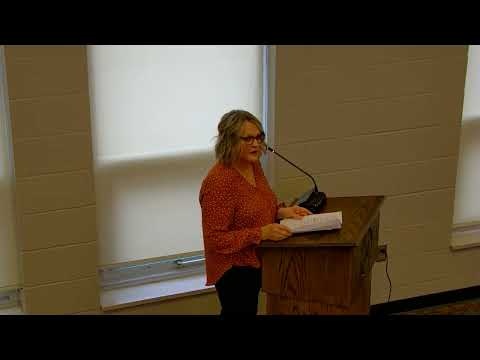
The Brandon Valley School District—s Assistant Special Services Director gave a 30‑minute overview June 9 of the district—s McKinney‑Vento (homeless children) and Migrant Education programs, describing eligibility rules, common barriers and steps staff take to enroll and support students.
The presentation said the McKinney‑Vento program, a federal law, "provides educational rights and services to children who are experiencing homelessness," and allows a student identified as homeless to enroll "without having to have any documentation," the director said. The director added that McKinney‑Vento protections include allowing students to remain at their school of origin even if they move outside district boundaries.
Why it matters: McKinney‑Vento and Migrant Education funding and practices affect meal eligibility, transportation, school stability and state reporting. The district—s description indicates how staff identify needs and the practical steps the district takes to reduce educational disruption for mobile and unhoused families.
Key details from the presentation
- Eligibility and definition: The director said McKinney‑Vento applies to children lacking a fixed, regular and adequate nighttime residence, including families doubled up with others, children in motels, campgrounds or shelters and unaccompanied youth. The Migrant Education program covers students whose families moved in the previous 36 months to engage in temporary or seasonal agricultural work or who moved to join a migratory worker.
- Referral and intake process: Staff typically refer families to the district liaison, who contacts the family, asks about recent moves and coordinates with enrollment staff. The director said enrollment staff member Jennifer Swenson helps by asking targeted questions during registration and promptly notifying the liaison when concerns arise.
- Meal and nutrition supports: The district liaison said that once eligibility is determined she sends information to nutrition services and meals are provided free for eligible students.
- Transportation challenges and solutions: The director said district transportation will generally create routes for students living inside district boundaries, but when families live in neighboring districts the district explores options including paying for family transportation, arranging taxi service for short periods, or coordinating shared transportation with the neighboring district. She said decisions are based on how long the family will stay and the family—s circumstances.
- Migrant program supports and eligibility: The director said Brandon Valley—s EL programs help migrant students overcome language and cultural barriers, and that to qualify a family must have moved for temporary or seasonal agricultural work in the prior 36 months or a child must have moved to join a migratory worker.
- Other resources: The director said staff refer families to 211 for housing, food pantry, medical care and shelter referrals. She also said the state provides backpacks of educational materials to eligible migrant students at the end of the year to support summer learning.
- Outcomes and trends: The presentation noted that over the last three years six unaccompanied youth graduated as seniors, and that referrals to the district—s McKinney‑Vento and Migrant programs have increased year to year. The director said transportation and meals were recurring needs raised by families.
Quotes
- "They can enroll without having to have any documentation," the Assistant Special Services Director said of McKinney‑Vento enrollment rules.
- "Transportation can be a little trickier," the director said, describing the district—s work to create routes, arrange pick‑ups, or provide taxi services when families lack vehicles.
Context and background
McKinney‑Vento (the federal education law for homeless children) requires districts to remove barriers to enrollment and school stability; local implementation varies with staff resources and partnerships. The director noted the American Rescue Plan for Homeless Children and Youth grant purchases (books and training materials) the district received to support staff training and student family outreach.
What—s next
The director said staff will present training and short videos during fall in‑service to help teachers, counselors and enrollment staff identify students who may be experiencing homelessness and to describe referral steps. She also said the migrant backpacks will be distributed at the end of the school year.
Ending
Board members thanked the director and enrollment staff; a board member asked whether homeless students are typically already in district or move in during the school year. The director said both situations occur and that staff handle referrals as they arise.