Get Full Government Meeting Transcripts, Videos, & Alerts Forever!
Get email alerts on the Open Public Meetings topic
No spam. Unsubscribe anytime.
Assistant attorney general briefs Utah Lake Authority on OPMA, GRAMA and ethics changes
Summary
Joe Finley, Assistant Attorney General, reviewed Open and Public Meetings Act (OPMA), the Government Records Access and Management Act (GRAMA), and the Utah Public Officers and Employees Ethics Act and highlighted 2025 statutory changes affecting board meetings and records.
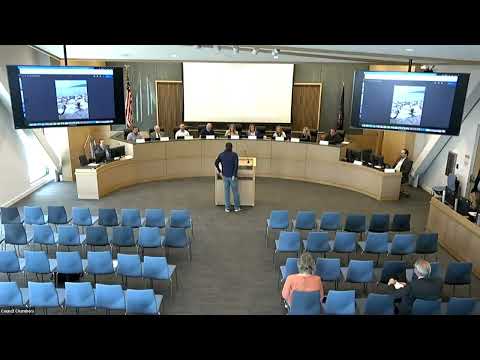
Joe Finley, assistant attorney general assigned to the Utah Lake Authority, gave a combined training to the board on OPMA, GRAMA and conflicts-of-interest rules during the Authority’s May 14 meeting in Provo.
Finley summarized the statutory composition and quorum rules for the Utah Lake Authority board, explained the difference between actual and perceived conflicts of interest under the Utah Public Officers and Employees Ethics Act, and reviewed the recordkeeping and disclosure duties in GRAMA. He emphasized that drafts and electronic messages can be subject to public-records requests and cautioned board members about written communications: “Do not write and record anything in an email, voicemail, text message, or elsewhere concerning board business that would make you uncomfortable if printed in the newspaper,” Finley said.
Finley also outlined two 2025 legislative changes affecting boards: the Open and Public Meetings Act now requires that board meetings be accessible electronically even when members meet in person, and GRAMA reforms replaced the State Records Committee with an administrative law judge process and removed the public-interest balancing test for classification of records.
On conflicts, Finley explained that board members must absent themselves from participation when an actual conflict exists—defined, for example, by a 10% or greater ownership interest or where a board member’s immediate family would be treated differently than the general public. He reviewed the limits on gifts and political activity and said violations can lead to removal or prosecution. He also noted that the Open and Public Meetings Act requires at least 24 hours’ advance notice for meetings and warned that notices shorter than 24 hours can force a revote at a subsequent meeting.
The Authority did not take formal action in response to the training; Finley answered board questions and offered to follow up on specific legal questions raised during discussion.