Get Full Government Meeting Transcripts, Videos, & Alerts Forever!
Get email alerts on the Major Development Seqra topic
No spam. Unsubscribe anytime.
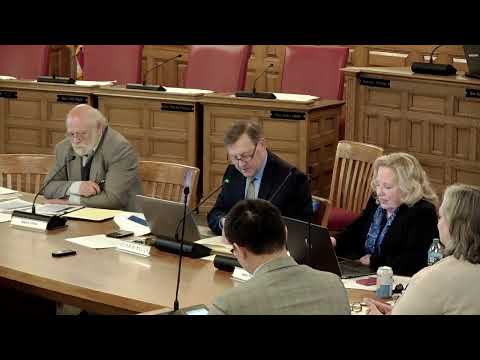
Planning commission issues SEQRA negative declaration for Syracuse University hotel; substantive approvals deferred
Summary
The Syracuse City Planning Commission issued a SEQRA negative declaration for Syracuse University’s proposed 200‑room hotel (resubdivision R-25-22 and project plan Z-2898), concluding the coordinated environmental review found no significant adverse impacts based on submitted EAF Part 2 materials and mitigation commitments.
The Syracuse City Planning Commission concluded its coordinated environmental review and issued a negative declaration under the State Environmental Quality Review Act (SEQRA) for Syracuse University’s proposed hotel project, covering both a resubdivision (R-25-22) and the related project plan review (Z-2898). The commission’s determination followed staff-prepared EAF Part 2 materials, third‑party analyses submitted by the applicant, and departmental review comments.
Joel Elfiri, executive director of campus planning, design and construction at Syracuse University, presented the project on behalf of the university. Design team representatives described a multi‑block proposal on the west side of University Avenue, north of Adams Street, consisting of roughly 200 guest rooms, an event podium with about a 4,200‑square‑foot ballroom and pre-function space, and an elevated parking structure. The design team (DLR Group and King + King Architects) said the project would re-purpose existing surface parking lots and include an underground stormwater detention system and erosion controls. The university also provided will‑serve letters from city water, Onondaga County and National Grid as part of its submittal.
The commission’s environmental review included the staff’s recommended answers for EAF Part 2. Staff recommended no or small impacts for most categories after reviewing the applicant’s materials and mitigation commitments; staff recommended answering “yes” where appropriate (for example, the project will increase energy use and will increase noise and outdoor lighting compared with a surface parking lot). Passero Associates prepared a traffic study concluding the project would generate fewer than 100 new vehicle trips in peak hours, and the planning staff noted the proposed parking garage would have roughly 100 spaces (a reduction from the existing about 124 surface spaces). The project team said excavation and shoring methods would stabilize the site and that all excavated soils would be properly disposed off‑site.
Troy Woffner, director of the Onondaga County Planning Department, told the commission the county’s comments were standard project‑review requests (sewer capacity, traffic, departmental coordination) rather than recommendations opposing the project and expressed county support for the hotel as providing needed guest rooms for the university, hospitals and regional events.
After question and answer with commissioners — including points about grading along University Avenue, the structure’s relationship to adjacent historic resources, and the pre‑development review scheduled with city departments — the commission concluded that the action will not have significant adverse environmental impacts and issued a SEQRA negative declaration for the resubdivision and project plan review. Staff will prepare a written resolution reflecting the action.
The commission did not grant substantive zoning or building approvals at the meeting; staff and the applicant agreed to carry the project forward through regular departmental reviews and to return to the commission for remaining approvals at a later date. A pre‑development meeting with city departments is scheduled for later in the week to coordinate final comments.