Get Full Government Meeting Transcripts, Videos, & Alerts Forever!
Get email alerts on the Strategic Plan topic
No spam. Unsubscribe anytime.
Moab council workshop focuses on five short-term priorities including downtown improvements and stormwater planning
Summary
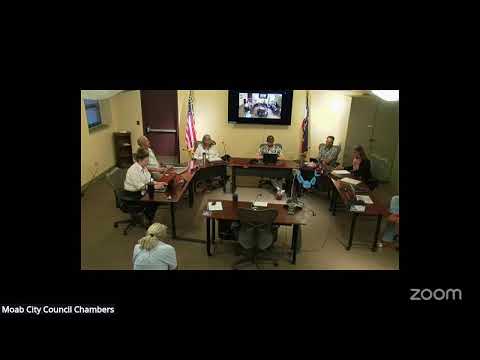
Moab City Council members and staff spent the May 27 workshop reviewing one-page summaries of five top priorities in a proposed strategic plan, aiming to finalize the text before a vote this summer.
Moab City Council members and staff spent most of the May 27 workshop reviewing one-page summaries of five top priorities in a proposed strategic plan, aiming to finalize the text before a vote this summer.
The council and staff focused discussion on actionable items tied to the “big five”: downtown Main Street improvements, Walnut Lane, active transportation, an inventory-and-implementation program for existing plans, and natural-hazard mitigation with emphasis on a stormwater master plan. Alexi, who led the presentation, said the one-pagers are intended to concisely describe each priority and help staff and council explain them to the public.
The one-pager on downtown improvements lists trial bulb-outs, sidewalk upgrades, crosswalk visibility, signal timing and meetings with property and business owners as near-term actions. Council members encouraged continuous outreach with downtown business and property owners to explain impacts and timing. Staff clarified parking policy and broader zoning updates would remain part of the general plan/code amendment track rather than this 1-year implementation push.
On Walnut Lane, staff said some issues remain unresolved and that the council will dedicate a June meeting to finalize text before the plan’s final draft. For active transportation, the council asked staff to add language on “regular striping” and an action to develop ongoing striping/maintenance schedules; the presentation also listed curb ramps, safe routes to school, trail connections and bike-lane striping where appropriate.
“Implementing plans” was presented as an action to inventory adopted plans, extract priority projects and create review schedules so master plans guide budgeting and capital projects. Councilmembers and staff discussed the sewer/wastewater fund balance and the need to align fund balances with plan-driven projects (for example, capital projects identified in sewer/wastewater or stormwater master plans).
Natural-hazard mitigation was discussed as “natural hazard” mitigation to clarify scope; staff and council repeatedly returned to the stormwater master plan as a foundational document that will guide specific projects such as Mill Creek improvements, 100 West to 600 West stormwater work and a bridge design at 300 South. Staff said the city has CIP funding for a stormwater master plan and expects to proceed with an RFP and consultant selection this fiscal year.
Councilmembers generally favored working on the five priorities concurrently and asked staff to identify dependencies, resource needs and where specific steps must precede others. Alexi said she will revise the draft based on council feedback and return a final version for approval at the June or July meeting, noting the plan may be used to onboard any newly elected council members.
The meeting closed the strategic-plan segment with staff direction to refine wording on continuous outreach with downtown stakeholders, add explicit language about regular striping maintenance, and bring a Walnut Lane proposal back for council input in June.