
Clear Creek County fire authority annual report details staffing, finances and rising capital needs
Get AI-powered insights, summaries, and transcripts
Sign Up Free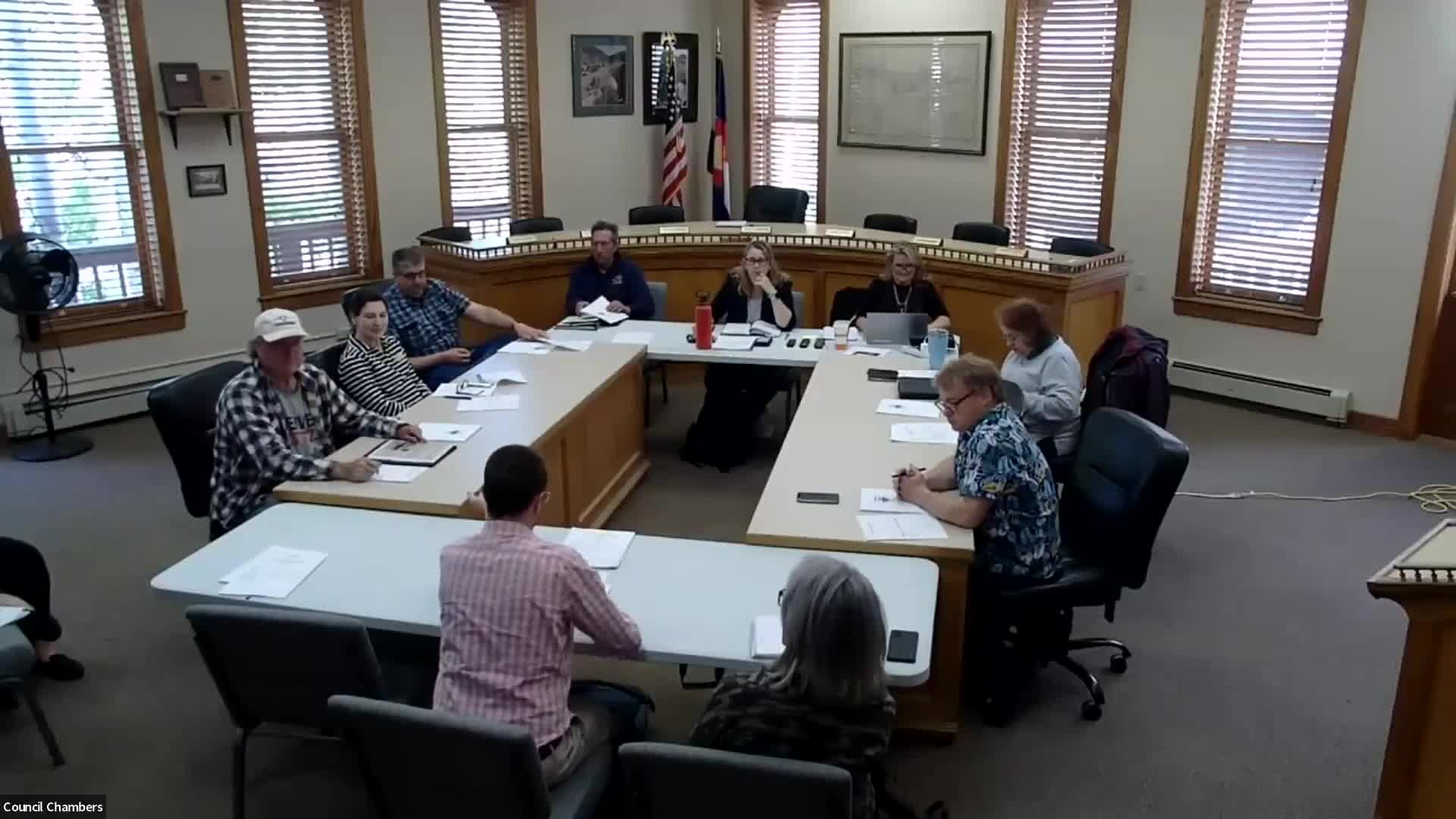
Summary
At a May 22 special meeting in Idaho Springs, Clear Creek County fire authority staff told IGA partners the department reduced response times in 2024 but faces a widening budget gap, rising station construction costs and a shrinking reserve that will require new funding decisions by 2027 unless revenues change.
Clear Creek County fire authority staff presented their 2024 annual report to intergovernmental-agreement (IGA) partners at a special meeting in Idaho Springs on May 22, outlining operations, training, capital assets and a budget shortfall that leaders say will require new long-term funding.
The report, delivered by fire authority staff and discussed with county commissioners and municipal partners, summarized operational changes that took effect in 2024 — including expanded around‑the‑clock staffing in key stations — measured improvements in some response metrics and a capital plan driven by aging apparatus and sharply higher construction costs for a proposed new Idaho Springs station.
Staff said the authority’s average districtwide response time fell from about 12 minutes and 5 seconds in 2023 to about 10 minutes and 51 seconds in 2024, and that the department is tracking compliance with the National Fire Protection Association standard NFPA 1710, which the authority cites as an eight‑minute response-time goal for career staffing models. The report lists a 2024 target of reaching two personnel on scene within eight minutes and notes the authority reached the 8‑minute goal roughly 55 percent of the time for the year and nearer 60 percent year-to-date for the current reporting period.
The presentation covered personnel, training, equipment and funding. Staff reported 55 people on the roster: 16 career (full‑time) firefighters and 39 shift/volunteer firefighters who fill paid shifts; volunteers are paid per shift. The authority noted it has established substantial in‑house training and certification capacity — live‑fire instructor courses, rope and swift‑water teams, hazmat technicians — and is working to expand hazmat technician coverage so at least two techs are available on each shift.
On capital and fleet, staff described a long list of owned assets purchased over time (including engines and ladder trucks acquired in 2013 by lease purchase) and said the authority currently carries no external debt. At the same time, the authority told partners that the estimated cost to build a new Idaho Springs station has risen dramatically: staff said earlier projections near $2 million have grown to roughly $16 million for the same scope. The report also described plans to sell one older engine to offset part of the purchase cost of a recently acquired used engine.
The finance portion of the report showed a 2024 approved operating budget of $2,296,000, with total expenditures reported at $2,353,000 and total revenue cited as $1,000,848 (an 18 percent increase over the prior year in staff’s summary). Staff said reserve funds declined from about $6.5 million at the end of 2020 to $4.3 million at the end of 2024 and projected reserves of roughly $3.4 million at the end of the current year; staff advised that at current spending levels reserves would be depleted by about 2027 without new revenues. Payroll was reported to be about 72.5 percent of operating costs.
Staff described grant activity and external funding sources that helped buy equipment or support mitigation projects. Jeremy, a fire authority staff member who also represents the authority on watershed partnerships, said some mitigation funding has come through the Clear Creek Watershed and that the authority has secured contributions from municipalities including Westminster, Arvada and (in earlier years) Golden for radios, a wood chipper and staff support. The authority also reported a planning grant from the International Association of Fire Chiefs to develop a Community Wildfire Protection Plan (CWPP).
Operationally, staff highlighted programs intended to maintain or increase availability, including a staffed ‘‘shift’’ program that supplements volunteers, seasonal wildland mitigation crews funded through grant sources, an active community chipping/mitigation program, and partnerships with Red Rocks Community College for a training academy pipeline. Staff also described a program placing whole‑blood capability on ambulances and efforts to add a supervisory “chase” vehicle to keep captains available without taking heavy apparatus off the line.
The report addressed the impact of new recreational use on emergency workload. Staff said incidents at the recently opened Virginia Canyon mountain bike park account for roughly 10 percent of the authority’s time‑on‑task for certain months, and that multi‑hour remote rescues at the park have driven conversations about whether visitor fees or paid parking should contribute to trail maintenance and emergency costs. A county commissioner present said it would be reasonable to expect the park’s operations to “pay for whatever portion of the emergency response is attributable to it.”
Staff also reviewed mutual‑aid relationships and hazardous‑materials coverage on the I‑70 corridor. They described their effort to rebuild hazmat capabilities after statewide staffing shortages in specialized troopers and said the authority has become one of a small number of local agencies with trained hazmat technicians in the region.
Directions given during the meeting included an instruction to the authority’s finance committee to prepare cash‑flow projections and a funding plan for presentation to partners at a June 16 meeting; staff said that projection will accompany any proposal for a levy, sales tax or other dedicated revenue option. No formal votes or ordinance actions were recorded during the session.
The authority asked partners to weigh next steps on long‑term funding to maintain 24‑hour staffing, replace aging apparatus and to proceed with capital projects. Staff recommended pursuing new revenue sources and continuing intergovernmental cooperation to sustain operations and capital replacement plans.
The fire authority said it will distribute the full report and slides and invited commissioners and municipal partners to contact staff with follow‑up questions; the county finance committee will receive detailed cash‑flow scenarios at its June meeting.