Get Full Government Meeting Transcripts, Videos, & Alerts Forever!
Get email alerts on the Housing Funding topic
No spam. Unsubscribe anytime.
Syracuse housing program waits on council action as ESD grant limits use of administrative funds
Summary
The Housing Strategies Corporation board reviewed program design, staffing and budget estimates while emphasizing that access to state Empire State Development funds (and the city—s FY24-25 $2.5 million transfer) hinge on a June council vote and ESD contract sign-offs that restrict use of the grant for administrative costs.
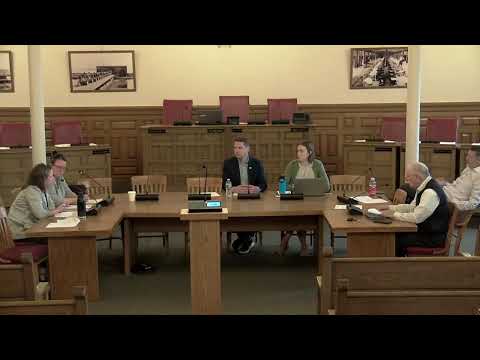
The Housing Strategies Corporation board discussed program eligibility, staffing and budget assumptions and said the timeline to begin grant and loan work depends on pending city legislation and Empire State Development (ESD) contract approvals.
Board members and staff focused on three near-term constraints: (1) the city—s FY24-25 $2.5 million transfer needs a council vote, (2) ESD has cleared funding but its contract and state sign-offs limit use of those dollars for administrative costs, and (3) planned program staffing would need to be in place before larger-scale implementation.
Michelle, a staff member supporting the effort, said the city has requested that the council consider the legislation by the June 9 vote to allow "sufficient time to make sure that we can do the backend contracting that has to be executed by the end of the fiscal year." She also told the board that ESD—s board approved the award and that staff "anticipate that we would have access to those funds beginning in September," with an initial one-time disbursement of $2,000,000 followed by two additional disbursements of $1,500,000 each as the contract is executed.
Board members queried whether ESD funds could be used to pay a third party to administer grants and loans. Michelle said ESD has been reluctant to allow using that money for program administration and that ESD previously resisted contributing toward the board—s own staff administration time. One council member warned of the consequence if the council transfer is not approved: "If this isn't done by the June, we're dead in the water." That remark was recorded in discussion and not part of any formal vote.
On staffing, the board discussed creating four city positions to run the program: a director of operations, a construction specialist, a program administrator and an office/administration role. Michelle described those as likely city positions, probably housed with current SIRR staffing arrangements, and said the organization could run the hiring processes as open, competitive positions. Board members noted the work is similar to other neighborhood and business development functions the city performs and that some existing employees could apply for the new roles.
Board members reviewed preliminary program budget scenarios developed with the CZB team. The materials circulated to the board assume a long-term average direct cost of roughly $27,000 per project, with a low estimate near $7,500 and a high near $75,000 depending on project scope and neighborhood. Early projections used a roughly 60/40 split between homeowner and Housing Strategies Corporation contributions; later iterations assumed a 70/30 split in some areas. Michelle said the mix of smaller exterior "block challenge" grants versus more extensive homeowner renovation projects will vary by neighborhood and influence administrative needs.
The board also identified likely early geographic focus for wave 1: Salt Springs and Tippill neighborhoods. Staff said Elmwood and a small portion of the Strathmore area were discussed but are not expected to be part of the first wave. Members asked whether historic-district permitting or tax-credit opportunities should be incorporated; staff said permitting and predevelopment assistance are being considered and that MBD staff (Neighborhood and Business Development) would coordinate internal reviews.
Members discussed partnerships for back-office functions. Karen, representing Home Headquarters, suggested that Home Headquarters could serve as a back-office partner handling loan underwriting, loan closings and other behind-the-scenes administrative duties while the city or the Housing Strategies Corporation act as the front-facing approver and customer contact.
Next steps the board identified: follow up with council offices to support the June 9 council vote on the city transfer, review the incoming ESD contract when provided, refine budget assumptions with governance and finance committees, confirm staffing and administrative funding options given ESD—s restrictions, and schedule standing committee meetings to advance program rules and eligibility.
Votes at this meeting were limited to routine meeting business. The minutes from April and May were approved by voice vote after a motion and second; no roll-call tally was recorded. The meeting later adjourned by motion.
The board discussed a potential additional funding source: Caitlin relayed that New York State budget discussions include money for land banks and that NYS Homes and Community Renewal (HCR) is exploring grants and loans for middle-income homeowners that could be counted toward neighborhood totals even if they do not flow through the Housing Strategies Corporation.
Implementation risk: staff emphasized that the program cannot move at scale until the council transfer is completed and legal/contractual details with ESD are resolved. The ESD award—s restriction on administrative use of funds was raised repeatedly as a factor that will determine whether the program can budget for staff and outside contractors or must seek alternative administrative funding.