Get Full Government Meeting Transcripts, Videos, & Alerts Forever!
Get email alerts on the Firearms Policy topic
No spam. Unsubscribe anytime.
Senate advances Hearing Protection Act to legalize firearm suppressors with rules, prompting safety and policing concerns
Summary
Senators moved Bill 27‑38, the Hearing Protection Act of 2025, to third reading after committee markup added ATF‑aligned definitions, GPD rulemaking and fee language; supporters argued suppressors reduce hearing damage, while opponents and judiciary cited public‑safety and law enforcement response concerns.
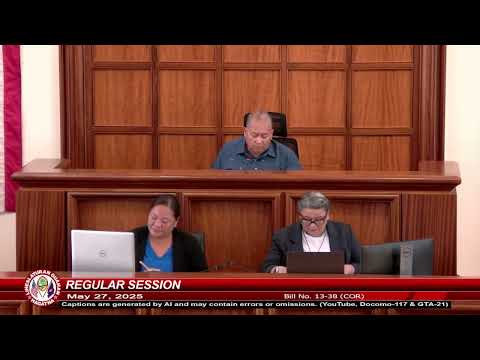
The Guam Legislature on the floor moved the Hearing Protection Act of 2025 (Bill 27‑38) to third reading after a lengthy debate that balanced hearing‑safety arguments with public‑safety and law‑enforcement concerns.
Senator Parkinson (bill sponsor) said the measure would legalize firearm suppressors (commonly but imprecisely called “silencers”) on Guam to reduce the risk of noise‑induced hearing loss during training and to help survivors of domestic violence train safely. He cited federal public‑health guidance, telling colleagues that “suppressors cut gunshot noise by 20 to 35 decibels” and referenced CDC and NIOSH recommendations endorsing noise suppression where legally permissible.
The bill, as amended in committee and reported on the floor by Senator Fontelofo, adopts the ATF definition of a firearm silencer, requires that ownership, purchase and transfers comply with federal and local law, and directs the Guam Police Department (GPD) to begin rulemaking to implement the measure. The committee added specific implementation details: GPD must include a notation on firearm identification cards that the holder is authorized to own or possess a suppressor; transfers and sales must follow ATF procedures (including Form 4 transfers); and the statute sets minimum age thresholds cited in committee markup — at least 21 to purchase from a dealer and at least 18 for certain trust/corporate/Form‑4 transfers — reflecting federal standards discussed on the floor.
Supporters argued suppressors are proven hearing‑protection tools and would enable safer, more frequent training. Senator Parkinson said the devices “reduce damaging noise” and stressed training and repetition are essential to firearm safety.
Opponents — including speakers who identified judiciary and police concerns during testimony — warned that suppressors could impede rapid identification of active‑shooter incidents and delay law‑enforcement response because a suppressed gunshot may not be immediately recognized as gunfire. A floor speaker summarizing judiciary testimony said the use of suppressors “could hinder the rapid identification of threats” and pointed to high‑profile cases where shooters used suppressors or subterfuge that reduced initial recognition of gunfire.
Senators also debated practical implementation. One senator pointed out the bill’s section requiring GPD to “begin the process of developing rules and regs” within 30 calendar days; opponents noted that rulemaking requires public notice and cannot realistically be completed in 30 days, and that the bill appears to make suppressors lawful upon enactment even if rules are not yet finalized.
After debate and sponsor remarks, senators voted to move Bill 27‑38 as amended to third reading. The floor also recorded additions of several cosponsors. The bill as drafted requires compliance with applicable federal requirements (ATF) and tasks GPD with rulemaking and fee development to recover administrative costs.
Ending: Bill 27‑38 will proceed to third reading; if enacted, it would legalize ownership and regulated transfers of firearm suppressors under the terms described in the amended measure and require GPD to promulgate implementing rules and fee schedules.