Get AI Briefings, Transcripts & Alerts on Local & National Government Meetings — Forever.
Proposal to pursue public‑private partnership for Guam Memorial Hospital prompts questions on costs, oversight and staffing
Loading...
Summary
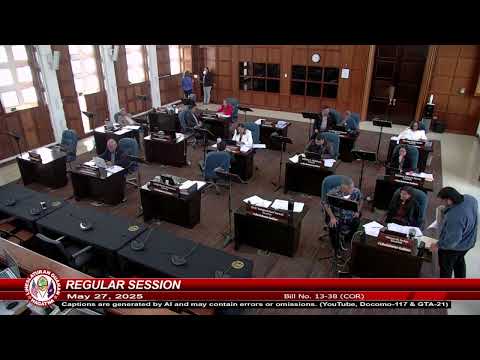
Senator Therese M. Turlahi introduced Bill 13‑38 to authorize a public‑private partnership (P3) for Guam Memorial Hospital and create a stakeholder committee to draft an RFP for private management or partnership of hospital functions.
Senator Therese M. Turlahi introduced Bill 13‑38 COR to authorize a public‑private partnership (P3) to address chronic operational and financial challenges at Guam Memorial Hospital (GMH). The bill establishes a P3 committee to develop a request for proposals (RFP) that would define the scope of a private partner’s role — potentially covering billing and collections, information technology, facility maintenance and clinical operations — and estimate contract costs and financing options for legislative consideration.
In opening remarks the sponsor said GMH has repeatedly required emergency appropriations and cited a history of unmet capital projects, revenue shortfalls and management decisions that left the hospital in recurring crisis. The sponsor noted past studies and a 2016 task force that recommended pursuing a P3 and that three private entities earlier signaled interest in an RFI. "Our hospital has been in perpetual crisis and doing more of the same is simply not an option," she said.
Several senators supported exploring a P3 but raised detailed concerns. Questions focused on the lack of initial funding for issuing and evaluating an RFP, whether a private partner would be a manager, lessee or builder, and the consequences for classified government employees if the private partner assumes operational control. One floor discussion flagged a provision that would require a private contractor to retain non‑management classified employees and asked whether that requirement could dissuade bidders. Senators also asked about timelines, safeguards to prevent prioritizing profit over patient care, and what accountability mechanisms would ensure the new partner meets performance targets. The sponsor said the bill intentionally tasks a stakeholder committee (including AG and procurement assistance) to craft an RFP and that contract terms and funding would return to the legislature for approval.
Financial figures cited during the discussion included roughly $80,000,000 in GMH funding at the start of FY24 (including a $30,000,000 appropriation), an additional $30,000,000 appropriation in public law and $20,000,000 pledged from federal ARP funds; testimony also reported current vendor debts of about $20,000,000 and a $5,000,000 EHR expense that did not meet the hospital’s needs. The transcript ends during floor questioning; the bill was introduced and debated on the floor but the record in the provided excerpt does not show final legislative action on the RFP motion.
Where it stands: Bill 13‑38 was introduced and debated with wide recognition of GMH’s chronic problems; the bill would create a committee to draft an RFP and require legislative approval before contract execution. No final vote on authorization or appropriation appears in the excerpt.