Get Full Government Meeting Transcripts, Videos, & Alerts Forever!
Get email alerts on the Food Donation topic
No spam. Unsubscribe anytime.
Guam legislature advances Inafamalik Food Donation Act to protect good‑faith donors and reduce food waste
Summary
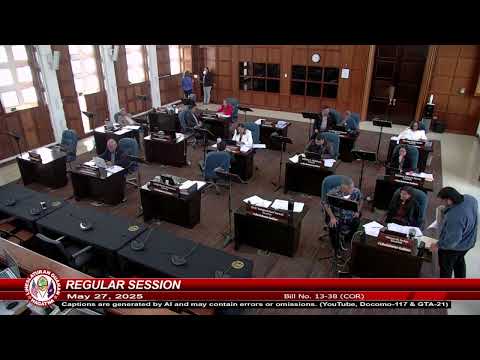
Senators advanced Bill 89‑38, the Inafamalik Food Donation Act, toward final consideration after adopting amendments to define "good faith," require DPHSS rulemaking, and align local standards to the Guam Food Code.
Senators moved Bill 89‑38, the Inafamalik Food Donation Act, into the third‑reading file after floor debate and several amendments that clarified definitions and rulemaking authority. The bill adopts protections modeled on the federal Bill Emerson Good Samaritan Food Donation Act to limit civil and criminal liability for donors who provide "apparently wholesome food" in good faith to nonprofit organizations, gleaners, or directly to individuals in need. Sponsor remarks cited a 2020 study estimating roughly 20,000 tons of edible food from grocery stores, restaurants and hotels is landfilled annually on Guam and said diverting even some of that supply could feed thousands.
The bill requires the director of the Department of Public Health and Social Services (DPHSS) to promulgate rules and regulations implementing the statute and to adopt standards consistent with the Guam Food Code. Floor amendments adopted during debate added an explicit statutory definition of "good faith" ("a transaction done honestly and objectively with no deliberate intent to defraud the other party"), codified the DPHSS rulemaking requirement, and clarified that donations must be "apparently wholesome" as defined in the bill and consistent with applicable food‑safety rules. The committee record and witnesses at the public hearing — including the Division of Environmental Health chief Tom Nadeau and community organizations such as Guahan Sustainable Culture and WestCare Pacific — supported the bill and provided implementation suggestions.
Senators asked detailed questions about how DPHSS will reconcile enforcement across noncommercial donations, temperature and time‑control protocols for perishable donations, and how the bill’s gross‑negligence standard for liability would be applied in practice. The sponsor said existing Guam definitions of "good faith" and a Guam Food Advisory Group working on an updated Guam Food Code would inform the implementing regulations. After several technical amendments and the addition of multiple cosponsors, senators recorded "No objections" and the bill was ordered to third reading.
Where it stands: The legislature advanced the amended bill to third reading and adopted language directing DPHSS to issue implementing rules; the transcript records no final passage vote in the provided excerpt.