
State reclamation division reviews respirator and silica safety procedures
Get AI-powered insights, summaries, and transcripts
Subscribe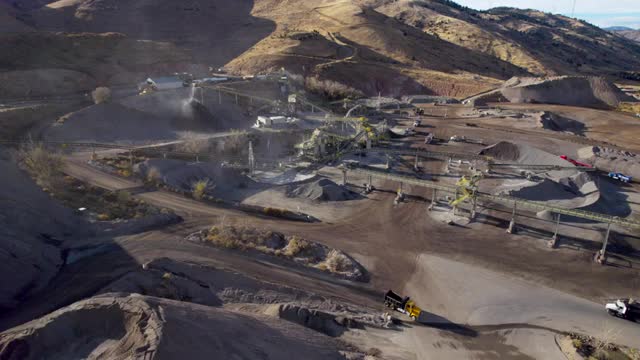
Summary
The Natural Resources Reclamation Mining & Safety Division presented guidance on respirator use, silica dust hazards, engineering controls, fit testing and cartridge maintenance during a safety training segment.
The Natural Resources - Reclamation Mining & Safety Division reviewed respirator use and silica dust controls during a safety training segment. Presenters warned that inhaling excessive respirable crystalline silica can cause lung damage or death and explained when respirators are required, how employers must measure exposure, and which engineering and administrative controls are preferred.
Division staff said mine operators are required to determine employee exposure to silica dust and to use engineering controls — including water sprays on haul roads, vacuuming trucks, water sprays on conveyors, screens and crushers, and truck washes — to minimize airborne dust. They noted that when engineering controls do not sufficiently reduce exposure, operators must measure contaminant concentrations to select an appropriate respirator and cartridge.
The presentation outlined respirator program requirements: training and fit testing before use; a written respiratory protection program at sites where respirators are required; and annual or condition-triggered fit tests conducted by a qualified person. Trainers emphasized that typical respirators filter air and do not supply oxygen and must not be used in atmospheres with insufficient oxygen or where contamination exceeds 10 times the permissible level discussed in training.
Speakers demonstrated respirator components and care: attaching cartridges that filter particles and chemicals, inspecting face pieces, valves, cartridge connectors, straps and headbands for dirt, cracks, tears or other damage, and replacing cartridges before they reach the end of service life. They recommended replacing cartridges when users experience excessive inhalation resistance and noted some cartridges include end-of-service-life indicators.
The trainers described donning and seal-check procedures. For a negative-pressure check, users cover the cartridges, inhale gently until the face piece slightly collapses and hold for 10 seconds; for a positive-pressure check, users cover the exhalation valve and exhale gently to build slight pressure, holding for 10 seconds. If leaks are detected, users should readjust straps and repeat checks. The respirator must pass one of these tightness tests before use.
No formal policy decisions or votes were recorded during the training segment.