Get Full Government Meeting Transcripts, Videos, & Alerts Forever!
Get email alerts on the Municipal Revenue topic
No spam. Unsubscribe anytime.
Council discusses revenue drivers: Measure S, sales tax, cannabis and CFDs; staff outlines constraints
Summary
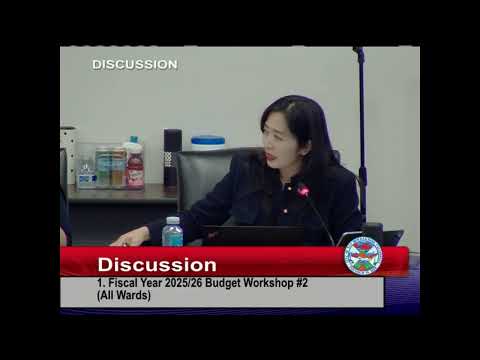
Councilmembers pressed staff for a clearer breakdown of the city’s revenue drivers — sales tax, Measure S, cannabis receipts and CFDs/impact fees — and staff said consultants model sales-tax estimates, Measure S returns 100% to the city, cannabis revenues are about $2 million and CFDs/impact fees are restricted to their districts.
Councilmembers used the budget workshop to press for better visibility into the city’s revenue drivers and constraints, noting that San Bernardino relies heavily on sales tax and asking staff how to grow the city’s tax base.
Finance staff said the general‑sales‑tax estimate relies on a consultant retained by the city; staff projected sales tax essentially flat for the upcoming year while Measure S — a 1% local measure — is projected to increase because Measure S revenue is remitted fully to the city, unlike the pooled sales-tax share that is split with the county. Zuiva Ruiz told council that projected general‑fund revenues for FY 2025–26 were about $228.2 million; she emphasized conservative forecasting given national and state volatility.
Councilmembers asked for a ward‑ or corridor‑level breakdown of top sales‑tax generators; staff said the city’s consultant, HDL & Associates, can produce public‑facing summaries (for example by corridor or mall) but that specific taxpayer-level data is proprietary and cannot be publicly released.
On cannabis revenue, staff estimated municipal receipts of about $2 million annually; staff cautioned the council that adding more dispensaries can dilute retail sales per outlet and that indoor grows are capital‑intensive and constrained by local code. Recycling and integrated‑waste revenue from the franchise (described in materials as recycling and environmental fees) was shown in the materials as roughly $1.2 million combined.
Staff also clarified that CFDs (community facilities districts) and development‑impact fees are restricted to the funds and purposes for which they were formed (parks, streets, storm drain, etc.). The finance director said impact fees are tracked in separate funds and are not general‑fund revenue available for other uses.
Council directed staff to return with additional, shareable sales‑tax and CFD information for council and public use and to brief the council on economic‑development strategies tied to revenue generation.