Dallas outlines reoriented Kay Bailey Hutchison Convention Center plan, aims for 2029 opening
Loading...
Summary
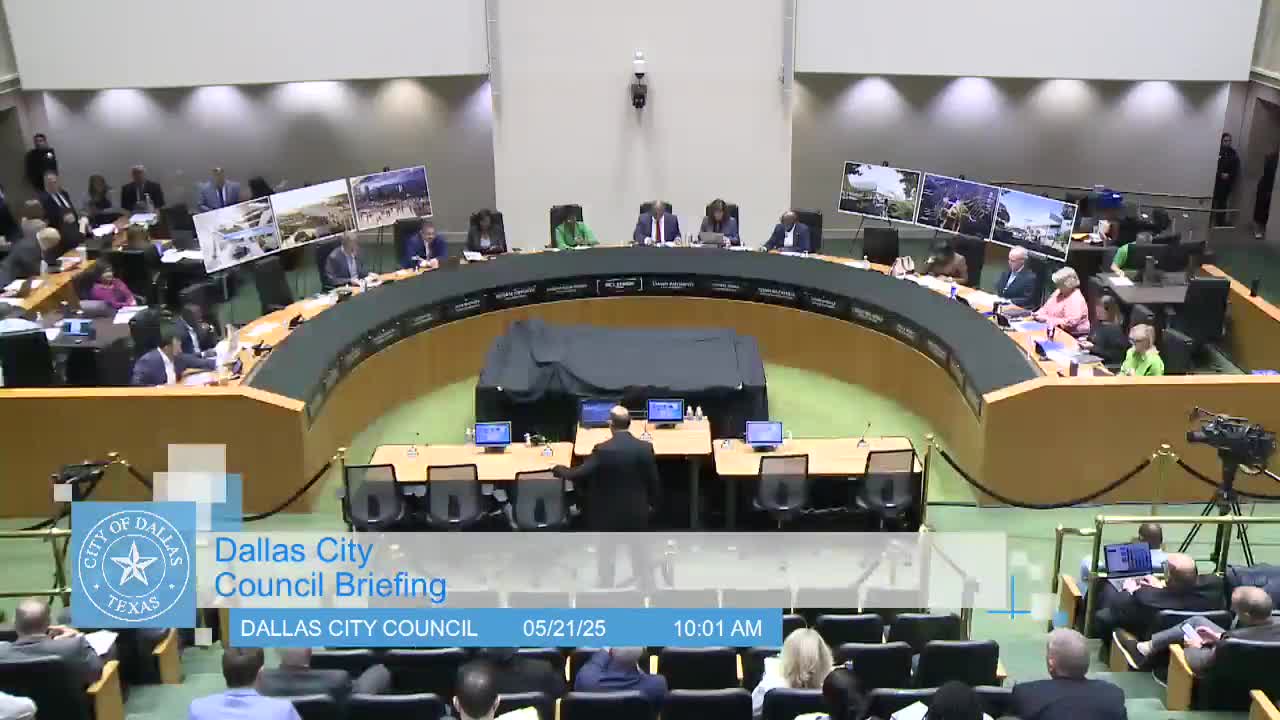
City officials on May 21 briefed the Dallas City Council and the public on a reoriented master plan for the Kay Bailey Hutchison Convention Center and a financing approach intended to allow construction to begin this year and open the new facility in early 2029.
The schematic-design package, described by Director of Convention and Event Services Rosa Fleming and the project team, enlarges and consolidates exhibit space to roughly 750,000 square feet on one level, doubles meeting-room capacity, and adds a 105,000-square-foot rooftop ballroom. Designers said the reorientation minimizes conflict with Union Pacific and TxDOT work and improves walkability and visual connections from downtown to the Cedars and southern Dallas.
City Manager Kimberly Beiser Tolbert told council the reorientation was required in part because TxDOT and other infrastructure partners need laydown areas that conflicted with the earliest design alignment. The city said it purchased additional property needed to accommodate the new alignment so the project can remain on its target schedule.
Why it matters: supporters including Visit Dallas, the Dallas Black Chamber of Commerce, the hotel association and arts leaders said a modern, on-time center will keep or restore Dallas’s competitiveness for large conventions and sporting events and sustain jobs and hotel-tax revenues. Speakers said bookable business already exists for the 2029–onward opening and urged the city to keep to the schedule.
Design and delivery: Populous and Perkins & Will presented a stackable building concept with a “Great Hall” arrival on Lamar Street, a contiguous exhibition floor below and meeting rooms and ballrooms stacked above to reduce the walking distances convention planners now cite. A mobility hub, marshaling yard (Lot E), a covered logistics area spanning rail, and a proposed vertiport/fire station were shown in the design package. Designers said the approach preserves operations in the eastern portion of the site while enabling construction on the west side.
Financing approach: Chief Financial Officer Jack Ireland and financial advisors said the city projects it can pledge a package of hotel-related revenues (local hotel-occupancy tax shares, the city’s 2% ballot measure collections, and a three-mile project finance collection) to issue roughly $2.2 billion of revenue bonds. The team is also pursuing grants, land-sales proceeds and naming-rights revenue to reach an overall financing “envelope” in the $3.3–3.5 billion range shown at schematic. To have funds available for early contracts and long-lead purchases, the city proposes a short-term draw facility (bridge loan) of up to $1 billion that would be taken out by long-term bonds when the city issues them, likely in the first half of 2026.
Schedule and next steps: the project team said schematic design is complete and the next phases are design development and construction documents. The city plans to bring a first guaranteed maximum price (GMP) and related financing authorizations to council this spring and summer for “enabling” work so FIFA-related site needs and early construction can proceed without delaying the overall schedule. The team said the target date for substantial completion is early 2029 with operations in April 2029.
Council questions and concerns: members probed parking counts and distribution, the extent of development shown in renderings around the arena and T‑Ball, the effects of TxDOT and Union Pacific sequencing, DART integration and future high‑speed‑rail connectivity, and the proposed bridge line. Staff said development shown in some renderings represents a 32-acre developable parcel that will be planned in a later phase and that street‑level and transit connections will be studied as part of ongoing transportation planning. Financial staff said the bridge is intended as short-term liquidity to allow the city to award contracts and order long-lead materials; the city will only draw what it needs and will retire the bridge with the revenue bonds once issued.
What’s next: council members asked for regular reporting and a public website for project updates, and staff said they will return with financing and enabling-GMP items for council approval. The city expects to continue community outreach as designs are refined and as the other master-plan components (the arena and T‑Ball site) are advanced.
Ending: Project leaders said the reoriented concept (concept 15 in the team’s analysis) scored highest across program and connectivity criteria; designers billed it as the plan most likely to keep Dallas competitive in the conventions market while reconnecting north and south across I‑30.