Get Full Government Meeting Transcripts, Videos, & Alerts Forever!
Get email alerts on the Economic Development Loans topic
No spam. Unsubscribe anytime.
Anna CDC and EDC approve loans and $500,000 allocation to clear downtown site
Summary
The Anna Community Development Corporation and Economic Development Corporation on May 22 approved a package of loan resolutions and a $500,000 allocation from downtown land acquisition funds to prepare a downtown site for redevelopment, using future sales tax revenue as collateral for part of the financing.
The Anna Community Development Corporation and the Anna Economic Development Corporation on May 22 approved resolutions authorizing tax-exempt and taxable loans and directed staff to apply $500,000 toward the taxable portion to lower the city corporations' debt service.
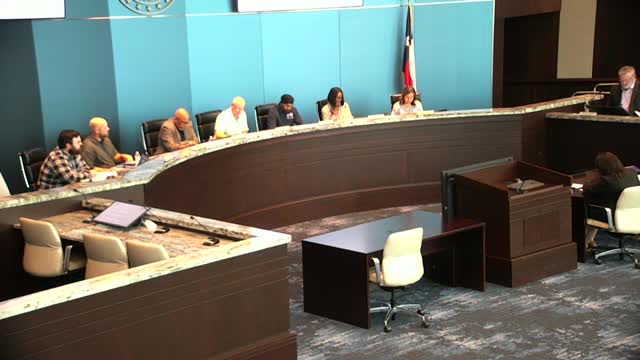
The actions, taken during the boards' joint meeting at Anna Municipal Complex Council Chambers, are intended to remove existing homes from a site off Southwest Eighth Street and make the property "shovel ready" for future economic development, including a potential public parking lot. Bernie Parker, a staff member who presented the matter, said the boards previously used property and homes as collateral on a February loan with Lamar Bank and are now pursuing a structure that relies in part on future sales-tax revenue as collateral.
Board members approved three linked resolutions: a tax-exempt loan authorization, a taxable loan authorization for the portion of the project that does not qualify for tax-exempt financing, and an instruction to allocate $500,000 from funds earmarked for downtown land acquisition to reduce the principal on the taxable loan. The motions were put by board members and passed with no recorded opposition.
Matt Sullivan, a representative of GovCap who attended to explain the financing, described how the proposed structure would change the allocation of principal and interest between the tax-exempt and taxable notes. "Right now the proposal you have in front of you reduces that debt service $500,000. And then what we're gonna do is take both of those notes and do a blend where we don't change what the payment would be, but we're gonna push the principal on that more expensive portion to the front, and on the tax exempt portion to the back," Sullivan said. He added that, with that approach, "you're gonna retire the taxable portion in about 5 to 7 years." He also said that applying the $500,000 would lower the boards' quarterly payment to about $46,000; without the buydown the quarterly payment would rise to about $60,000. Sullivan estimated roughly $75,000 in interest savings from restructuring principal and timing.
Parker told the boards that staff recommends reallocating $500,000 from the downtown land acquisition line at the time of closing to reduce the taxable loan principal so the boards would have lower ongoing quarterly payments. Parker and Sullivan said staff would provide a formal amortization schedule on request; Sullivan offered to deliver that to Parker the next day.
Board members noted the goal of clearing the site to attract development and generate sales-tax revenue. The presentation packet included GovCap's proposal and staff materials on the prior February transaction with Lamar Bank, which used property as collateral.
The boards did not specify development partners or a purchase price for the site at the meeting; staff said the purpose of the approved financing and the $500,000 allocation is to remove structures and make the parcel ready for future projects. Next formal steps noted in the meeting include closing the loans, applying the reallocated funds at closing, and circulating any developer agreements through the city attorney's office for review.