Get Full Government Meeting Transcripts, Videos, & Alerts Forever!
Get email alerts on the Major Development Project topic
No spam. Unsubscribe anytime.
Planning board declares lead agency, schedules public hearing for Rhinebeck Villas hotel/motel project
Summary
The board agreed to act as lead agency under SEQR and to schedule a public hearing for the Rhinebeck Villas (Ryan Meadows LLC) hotel/motel project, while members pressed the applicant for more detail on wastewater discharge, building design and uses of on‑site meeting space.
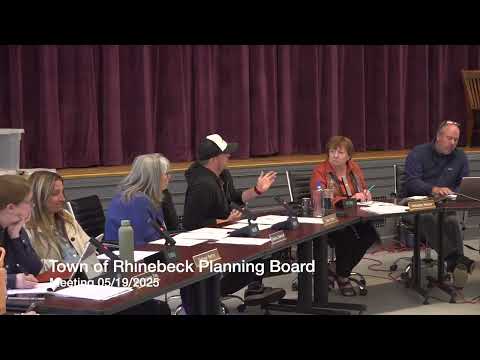
The Rhinebeck Planning Board on May 19 declared itself lead agency for SEQR review and moved to schedule a public hearing for the Rhinebeck Villas (Ryan Meadows LLC) site plan, setting a submission deadline of June 23 for a July 7 public hearing. The applicant team — represented by agent Sean Kemp and owners including Andrew Paulus and Rob DuPont — described changes to the latest site plan and requested guidance on the exterior renderings and program details.
Board members requested more detail before the hearing on several technical and operational items: wastewater design and the point of discharge (the applicant’s engineer identified an unnamed tributary of the Rhinebeck Kill), emergency access and fire‑department review, photometric plans and dark‑sky‑compliant lighting, full signage and wayfinding plans, sidewalk coordination with adjacent properties, and a clearer narrative describing the intended use of a proposed accessory meeting/breakfast space (whether it will be limited to guests or used as an event venue). The board asked for an exterior materials schedule and suggested earth‑tone finishes to reduce visual impact from Route 9.
The applicant described their building configuration as hotel/motel hybrid buildings with covered exterior circulation and a sheltered elevator and entrance lobbies. The applicant said they are not currently pursuing a zoning variance to enclose second‑floor corridors; they defended the design as driven by square‑footage limits and interior layout needs.
On wastewater, the applicant said updated flows will be submitted; the applicant’s engineer told the board the discharge would be to an unnamed tributary of the Rhinebeck Kill and that the initial submittal did not include flows for the accessory breakfast/meeting area. Board members emphasized that septic and discharge sizing must reflect the final program, including any meeting or event uses and the breakfast accessory area.
The board and applicant agreed to coordinate a single site visit when the board has a full application and asked the applicant to stake building footprints in the field for easier review. The board also urged the applicant to work with the fire department and DOT early on access and sight‑line issues and to provide a complete sign package that includes directional and interior signage for circulation and deliveries.
Procedurally, planning staff circulated an intent to declare lead agency; the board received limited initial comments from Dutchess County Public Health and moved to formalize lead‑agency status so the SEQR review can proceed. The applicant and board agreed on a target submission schedule: materials due June 23 for a July 7 public hearing date. The board asked the applicant to submit a detailed narrative clarifying whether the accessory meeting space will be limited to hotel guests (customary accessory use) or operate as a broader event facility, and to include material samples, renderings and a complete photometric/lighting plan for the public hearing package.