Get Full Government Meeting Transcripts, Videos, & Alerts Forever!
Get email alerts on the Doj Federal Actions topic
No spam. Unsubscribe anytime.
DOJ asks for staff and funding to defend state programs; committee weighs limited‑term vs. ongoing resources
Summary
The Department of Justice requested additional positions and funding to defend California against federal actions affecting environmental protection, education and federal grants. LAO recommended limited‑term funding and stronger reporting; DOJ warned limited‑term allocations make recruitment of experienced attorneys harder.
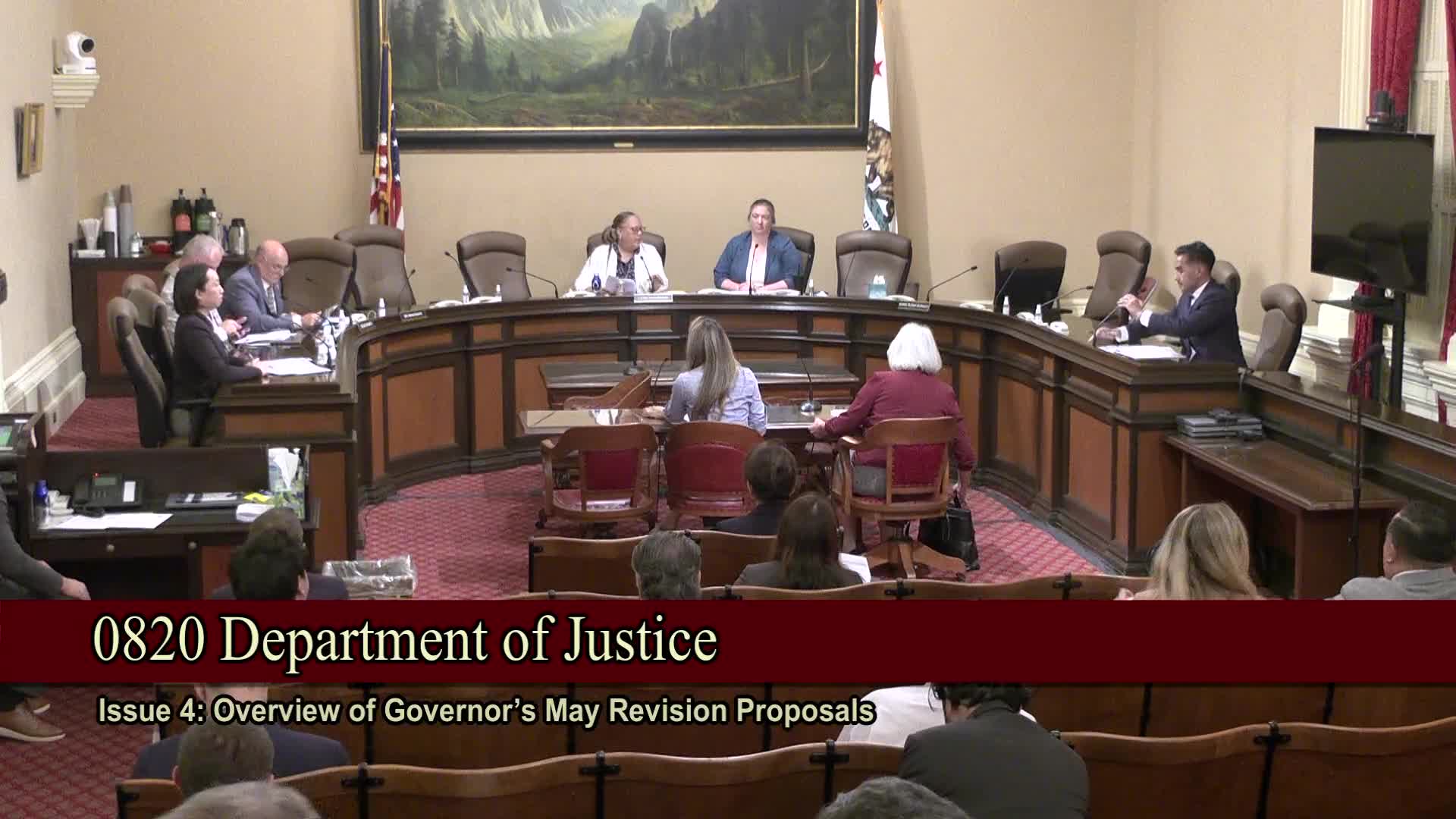
Department of Justice (DOJ) representatives told the Senate Budget Subcommittee No. 5 their office needs additional resources to respond to a surge of federal administrative and policy changes that could affect state programs and funding.
Mark Jimenez (Department of Finance) presented a May Revision overview for DOJ that included a request described as funding to “defend California against adverse federal actions,” with new positions and general fund support noted in the governor’s materials. DOJ said the request supplements resources provided earlier in the year and would be used for litigation and defense work in areas such as environmental protections, federal grant terminations and other federal actions affecting the state.
Why it matters: DOJ explained that defending federal funding streams and administrative decisions can directly protect billions of dollars in federal funds that support state programs (Medicaid, education, public health, transportation grants, etc.). DOJ counsel Christina Bull Arnn told the committee DOJ has filed numerous multistate suits to protect funding and programs and that coordinated litigation has kept federal funds flowing to California in several important examples.
Key details and recommendations
- DOJ request: The May Revision included funding to expand DOJ’s capacity to litigate and respond to federal actions and to add IT and other administrative resources (the presentation listed multi‑year staffing and costs in the DOJ materials; the hearing record contains the administration’s requested amounts).
- LAO recommendation: LAO staff recommended considering limited‑term funding (up to four years) because the scale and duration of federal actions are uncertain, and they recommended reporting consistent with special‑session accountability language so the legislature can track use of funds.
- DOJ staffing concerns: DOJ cautioned that limited‑term staffing makes hiring and retaining experienced litigation attorneys more difficult given private‑sector pay differentials; the department requested consideration of ongoing resources to ensure continuity and institutional knowledge.
- Litigation activity: Christina Bull Arnn, Chief Counsel for Special Litigation at DOJ, summarized active matters and the stakes for federal grants. She said DOJ and multistate partners had filed dozens of lawsuits in recent months to protect federal funding and to challenge administrative actions, citing examples where federal cuts would have affected hundreds of millions or billions of dollars in state funding if not enjoined.
Budget mechanics and the litigation deposit fund
Committee members also asked about the use of litigation‑related special funds and recent loans from the fund commonly called the litigation deposit/Unfair Competition Law fund. Department and Finance staff explained how settlement receipts flow into the litigation deposit fund and are later transferred by statute to special funds (for example, Unfair Competition Law fund) when settlement terms and conditions are met. The hearing included questions about prior borrowings from special funds and how much remains available for budgetary loans.
Ending
LAO recommended limiting the new funding’s term and requiring public reporting; DOJ urged the legislature to consider the operational challenges of short‑term attorney funding. The committee asked DOJ and Finance to supply more detailed, written information about caseload expectations, the funds requested, and how the department will report spending and legal outcomes.