Get Full Government Meeting Transcripts, Videos, & Alerts Forever!
Get email alerts on the Zoning Bylaws topic
No spam. Unsubscribe anytime.
Hubbardston select board closes public hearing on multiple zoning bylaw amendments after extended discussion
Summary
The Select Board closed a public hearing covering four zoning bylaw amendments — accessory dwelling units, grid-scale battery energy storage, floodplain updates and site plan approval revisions — after detailed questions from board members and public. Staff said many changes are required by state law and aimed to modernize local processes.
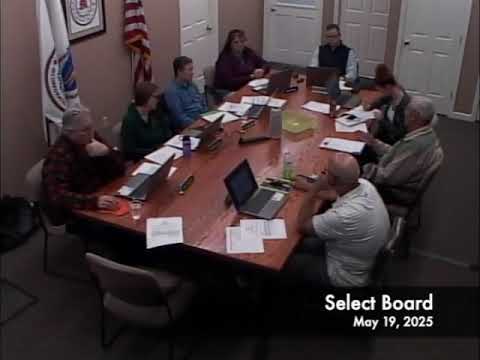
The Town of Hubbardston Select Board closed the public hearing on proposed zoning bylaw amendments after an extended presentation and questions from board members and residents.
The hearing covered four major topics slated for the June town meeting: revisions to the accessory dwelling unit (ADU) bylaw, a grid-scale battery energy storage systems (BESS) bylaw, updates to floodplain provisions to match state mapping and standards, and changes to the town's site-plan approval procedures.
Town Planner Alec Wade said the ADU changes are largely driven by state legislation that protects ADUs as a use type. "The state has chosen to protect ADUs as a use type," Wade said, meaning towns may not adopt rules that contradict state definitions. Under the draft before the town, ADUs would be allowed by right in all districts that permit single-family homes and would generally be limited to one ADU per property; additional ADUs would require a special permit should the town choose to allow them in the future.
Board members and attendees pressed staff on specifics. Questions focused on whether ADUs may be detached or freestanding (staff: yes, subject to septic, building and other requirements), whether an ADU occupant may run a home-based business (staff: ADUs are intended for habitation; home-business rules in Article 4 would still apply), and septic-system and setback limitations, which staff said were likely to be the main practical constraints for many homeowners.
The proposed grid-scale BESS bylaw drew the most sustained concern. Planning staff summarized prior attempts to regulate large battery installations, noting that earlier town language was struck down by the state attorney general's office after court decisions and AG interpretations treating battery storage the same as solar facilities. The draft before the town is intended to apply to large commercial systems rather than small home systems ("Powerwalls"), and would place site-plan and setback requirements and other restrictions on those larger installations. Board members and residents raised safety and environmental concerns, and the fire chief's training and reservations about fighting battery fires were referenced during the discussion.
On floodplain changes, staff said updated FEMA maps (with an effective printed date in July 2025) required the town to adopt model language so property owners who must carry flood insurance would not face higher premiums. Planning staff said they removed language that would have been more restrictive than the state's minimums so as not to force higher insurance costs on residents.
The site-plan approval revisions would separate administrative detail from the bylaw into planning-board rules and regulations, allowing more flexible administrative updates without repeated town-meeting votes. Staff said the change is intended to modernize the process, make expectations clearer to applicants, and create an intermediate review pathway for projects that do not require a full special permit.
The Select Board closed the public hearing without objection and recommended that the board's formal article recommendations be recorded for the June 2 town meeting materials. Planning staff said some language remains subject to legal review and that evolving state legislation could require last-minute adjustments prior to the town meeting.
The planning director and Town Planner encouraged residents with detailed questions to contact the planning office or attend planning-board sessions and posted office hours; they also noted recorded planning-board meetings on YouTube for background.
The Select Board indicated it expects some amendments on the floor at town meeting, particularly for the BESS article, because state actions remain a moving target; staff said they will aim to present as clear a version as possible to voters.