Get Full Government Meeting Transcripts, Videos, & Alerts Forever!
Get email alerts on the Land Use Zoning topic
No spam. Unsubscribe anytime.
Oro Valley council initiates zoning-code amendments to implement recent state law on administrative approvals
Summary
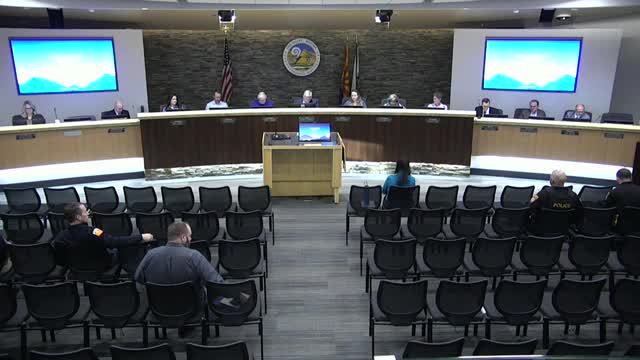
On May 21 the Oro Valley Town Council voted unanimously to initiate a zoning code amendment package to reflect state law changes that shift approval of certain code‑compliant development and design review applications from public bodies to administrative staff, while creating a limited appeal process and other adjustments.
On May 21, 2025, the Oro Valley Town Council voted 7–0 to initiate a package of zoning code amendments to reflect recent state law changes that require administrative approval for certain development and design review applications that are nondiscretionary and code‑compliant.
Staff said the new state law “goes into effect in January 1,” and that jurisdictions have a deadline to adopt updated ordinances before the effective date. Planning staff asked council to initiate a comprehensive code update that would implement the statute’s requirements while adding locally required measures such as a limited appeal process for council review, provisions to allow at‑risk grading submittals, expedited reviews for some applications and a conditional use permit requirement for building‑height increases in the private‑school (PS) zoning district.
Principal planner Mr. Spath told the council the changes will not alter the town’s technical standards. “The standards and requirements that all applications are still going to be reviewed for will not change,” he said, adding that the amendment changes only who approves nondiscretionary, code‑compliant applications. He gave examples of applications the state law affects — master development plans, development plans, preliminary plats and the development plan components that previously came to Planning and Zoning or council for review — and described how routine, code‑compliant items would move to administrative approval.
Council members pressed staff on examples. Mr. Spath cited the Oro Valley Marketplace master development plan and recent preliminary plats and noted that elements tied to rezonings (such as tentative development plans) would still go to Planning and Zoning and council, while other pieces of a project could be approved administratively if they remain in substantial conformance with prior approvals.
Several council members expressed concern about reduced public review. Vice Mayor Barrett emphasized keeping neighborhood meetings and public participation in practice even if approval authority moves to staff, saying: “I would just like to underscore this point about neighborhood meetings to remain part of the process.” Council members discussed using stronger, clearer design standards and affirmed the intention to preserve opportunities for neighbors to provide input so that staff can make minor adjustments that mitigate impacts without derailing projects.
Staff also told council the code update will affect the town’s Economic Expansion Zone by making portions of that incentive redundant, because the statute’s administrative approval requirement would apply town‑wide. Staff recommended strengthening design standards as part of the update to reduce gray areas for administrative reviewers. Staff said expedited‑review fees would be added to the development fee schedule when those processes are implemented.
Mayor Winfield moved the initiation motion, which listed six specific elements: enable administrative approval for permitted, nondiscretionary code‑compliant applications; establish a limited appeal process for administrative approvals; amend related sections of code (including Economic Expansion Zone and design standards); allow at‑risk submittals for certain grading and drainage applications; allow expedited review for zoning and grading applications; and require a conditional use permit for building‑height increase requests in the PS zoning district. The motion, seconded by Councilmember Green, included a friendly amendment — accepted by the mover — that directs staff to identify areas with unintended consequences and propose mitigation methods. The motion passed 7–0.
What council initiated is a direction to draft and return to council with ordinance language, study sessions and public hearings. Staff said they will present more detailed code edits, study‑session material and public‑hearing dates later this year to meet the state’s adoption deadline.
Votes at a glance: the initiation motion passed 7–0. (See actions[] for the full motion text and vote record.)
Staff contact and next steps: planning staff will draft ordinance language, return to council in study session for review, and present public hearings and a final ordinance for adoption before the statutory deadline.