Get Full Government Meeting Transcripts, Videos, & Alerts Forever!
Get email alerts on the Land Use Rezoning topic
No spam. Unsubscribe anytime.
Hundreds of residents urge council to reject rezoning and commercial plan for Waimea parcel
Summary
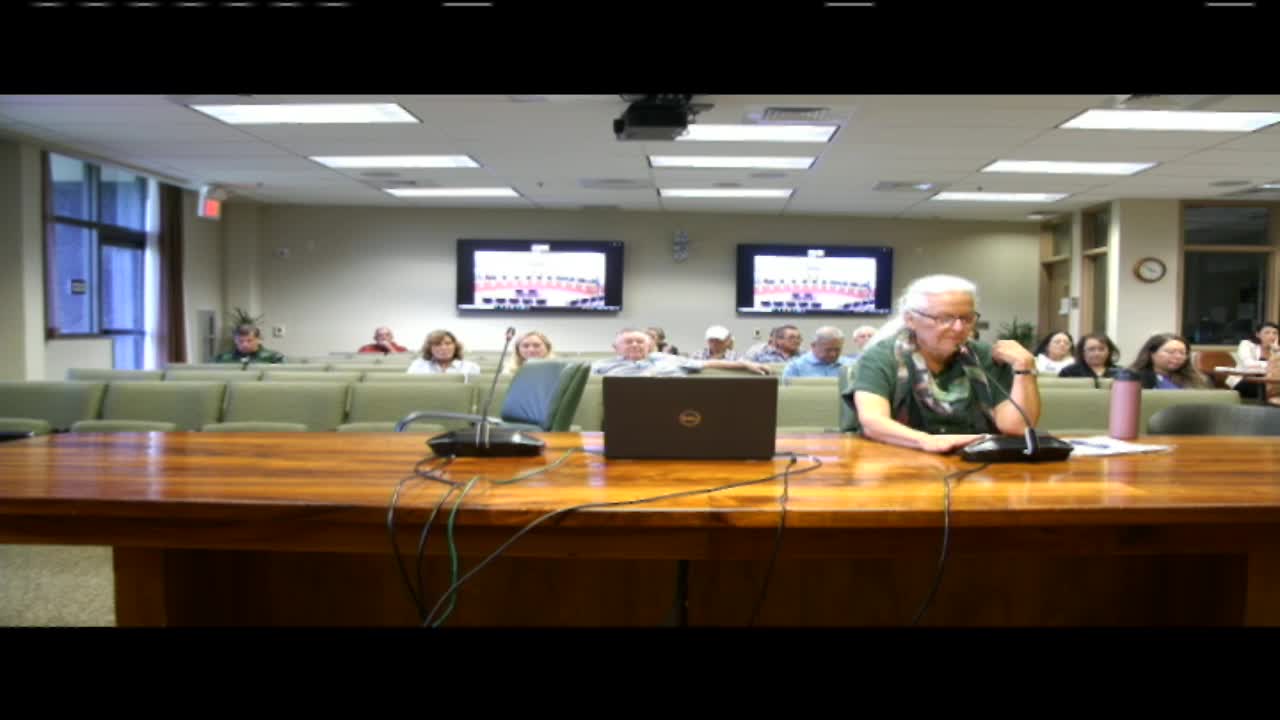
Dozens of residents from Waimea told the Committee on Legislative Approvals and Acquisitions on Wednesday that Bills 198 and 199 — requests to change zoning and allow a commercial/residential subdivision on a parcel in South Kohala — should be denied.
Dozens of residents from Waimea told the Committee on Legislative Approvals and Acquisitions on Wednesday that Bills 198 and 199 — requests to change zoning and allow a commercial/residential subdivision on a parcel in South Kohala — should be denied.
The testimony focused on water availability, traffic and infrastructure, loss of agricultural land and precedent for future subdivision. Many speakers said the Leeward Planning Commission had given an unfavorable recommendation; residents offered written community reports and urged the council to uphold that recommendation.
Why it matters: Testifiers said approval would allow subdivision of prime agricultural lots into smaller parcels and open the door to commercial development they say Waimea cannot support. Several speakers framed the issue as one of long-term food security, local housing affordability and protection of cultural and community ties.
Residents and community representatives presented specific concerns and figures. “This project will possibly need 20 water meters,” said Ladonna Shively, a Waimea resident of 36 years. Multiple speakers described difficulty securing a single water meter for existing residents and said new development would worsen shortages. Pua Case, a kumu hula, appealed to the council on cultural grounds: “please save me for your future, for your children, for your grandchildren.”
Several testifiers described the parcel and nearby development patterns. Cece Davenport described the property across from the Minute Stop as a 0.73‑acre lot that was converted from agriculture to commercial use and warned that the proposed project — including a 2.35‑acre commercial frontage she attributed to the applicant — “will only contribute not only to the traffic, but to the noise.” Ikalani (Kalani) Flores and other speakers said the applicant originally owned 15 acres that were subdivided into three 5‑acre parcels and is now requesting further subdivision into half‑acre lots; Flores characterized that as spot zoning that would create a domino effect across neighboring AG‑5 parcels.
Multiple speakers cited process and outreach concerns. Dr. Momi Naughton and Anna Kahaupi‘i raised questions about local community association subcommittees and whether community outreach reached all impacted residents; Anna Kahaupi‘i said she personally walked the neighborhood and handed out more than 85 flyers and that about 80 people attended recent community meetings. The community submitted what attendees described as hundreds to more than a thousand written oppositions; speakers gave different counts during testimony (one speaker referenced “close to a thousand letters,” another referenced “1,800 testimonies opposing”).
Not all testimony opposed the bills. Nancy Karr Smith said the project follows planning guidance and urged the council to approve the entitlements, calling opposition “not in my backyard” sentiment. Patty Cook, who said she has attended many Waimea community meetings, told the council, “I ask you to please vote yes,” and urged residents to engage in planning processes for long‑term solutions to water and transport.
What the council took: The hearing recorded public testimony; no formal vote on Bills 198 or 199 occurred during the session. Council members present at the meeting were named at the outset (Council members Kaguata, James Eustace, Galimba, Kani Lee Kleinfelder and Chair Halaki Nava). The clerk noted the meeting would recess at 5 p.m. for a scheduled budget hearing; at 04:56 the chair recessed the session to continue with the finance meeting.
Outcomes and next steps: The transcript records only public testimony. There was no motion or vote recorded on either bill during this meeting; the formal decision on the bills was not specified in the public record of this session. The Leeward Planning Commission had previously issued an unfavorable recommendation for at least one related entitlement, according to multiple testifiers.
Community context: Testimony repeatedly tied the zoning and subdivision requests to broader concerns in Waimea — water supply, growing costs and the loss of agricultural land used for local food production, school capacity, road congestion and cultural continuity. Speakers identified affected groups including Hawaiian homesteaders, farmers, long‑term residents, teachers and health professionals who they said are being priced out of the area.
Documentation: Residents said they submitted a community report and multiple written testimonies to the council; several speakers offered to leave physical copies for the record. Planning staff materials and previous Leeward Planning Commission records were referenced by speakers but were not read into the record during public testimony.
Ending note: The council recessed the meeting to attend to the scheduled finance meeting and did not take formal action on Bills 198 or 199 during the session.