Get Full Government Meeting Transcripts, Videos, & Alerts Forever!
Get email alerts on the Legislative Update topic
No spam. Unsubscribe anytime.
City attorney briefs FPUA board on three state bills: fluoride ban, worker-assault expansion, fuel-source limits
Summary
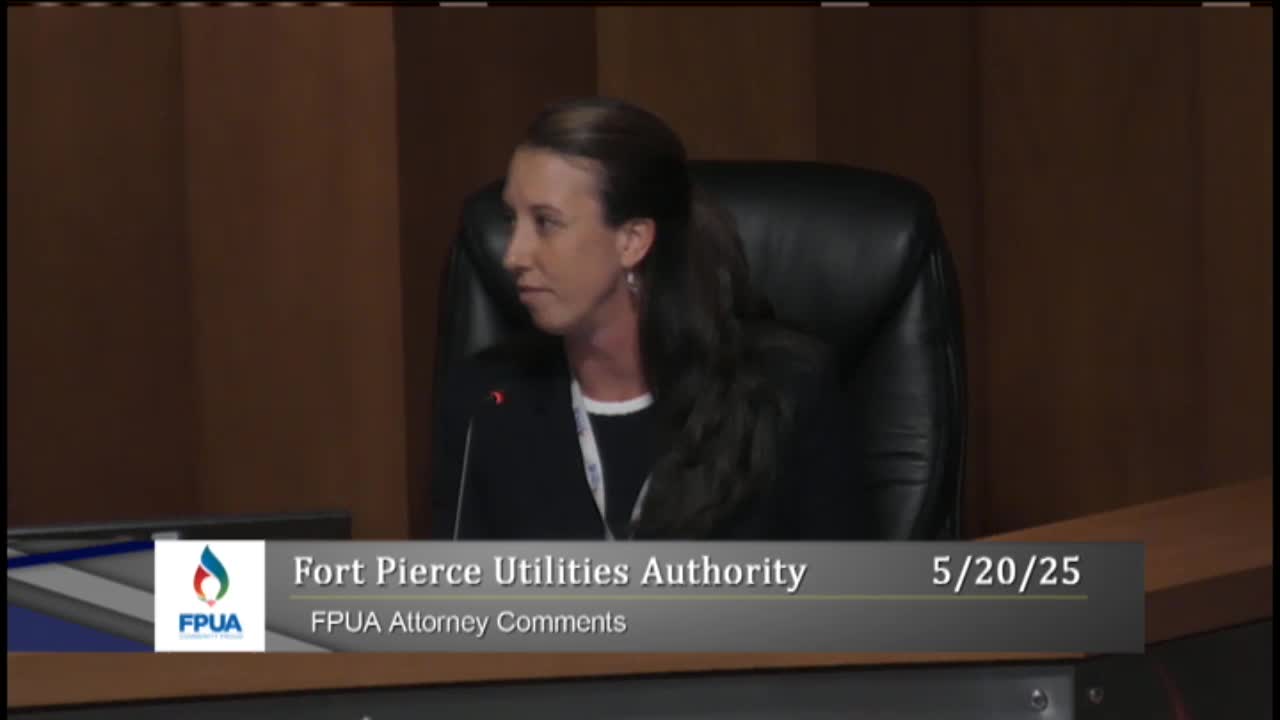
In attorney comments May 20, the board was briefed on three Florida bills: a ban on introducing fluoride into public water systems (effective July 1), a new assault or battery offense applying to utility workers, and a law limiting government action to prohibit fuel sources.
During attorney comments at the May 20 meeting, the board received a legislative update on three state bills that could affect utility operations.
The attorney reported the governor signed Senate Bill 700, which the attorney described as prohibiting the utility from “feeding fluoride into the public water system”; the attorney said the bill is effective July 1. The attorney also described Senate Bill 1386 as expanding criminal liability by making assault or battery on utility workers a punishable offense, broadening protections that previously applied to tampering or trespassing at utility facilities. Finally, House Bill 1137 was described as limiting government action to restrict or prohibit a fuel source; the attorney said the bill likely has more relevance to building-code and municipal policy than to FPUA’s direct operations but is being monitored.
The attorney said he will present a six-month update on his accomplishments and goals at a future meeting. No board action was taken on these items; they were informational only.
Why it matters: Board members were informed about changes in state law that could affect FPUA’s regulatory environment and employee protections. The attorney framed the bills as items the utility should monitor and, where relevant, coordinate with city and county officials.