Get Full Government Meeting Transcripts, Videos, & Alerts Forever!
Get email alerts on the Municipal Budget topic
No spam. Unsubscribe anytime.
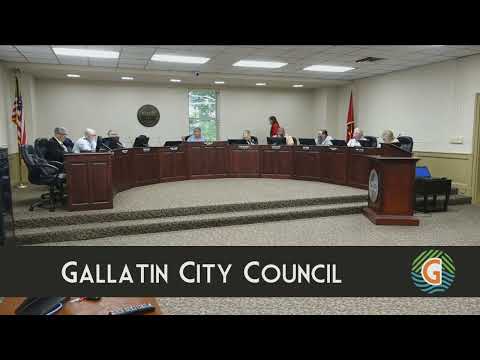
Gallatin council adopts 2025–26 budget after amendment; councilors debate new pay scale
Summary
The Gallatin City Council approved the 2025–26 fiscal year budget on second reading as amended, adding funding for street lighting and signal technicians and advancing a new five-step pay scale that prompted extended debate over reserves, salary compression and retention.
The Gallatin City Council on Tuesday approved the city’s fiscal 2026 budget on second reading, adopting an amended spending plan that adds roughly $73,704 to the street lighting and signals line item and advances a new employee pay scale to be implemented with the budget ordinance.
Councilors approved the amendment and then the budget as amended during the meeting; Vice Mayor Hayes introduced the budget ordinance, calling it “an ordinance adopting the annual budget for the fiscal year beginning 07/01/2025 through 06/30/2026.” The council voted in favor of the amended budget on second reading with no recorded opposition.
The budget package drew extended discussion about reserves, borrowing and a proposed change to the city’s pay structure. Council members raised questions about the size and composition of the city’s reserves and whether reserve accounting in the presentation matched past years. Councilman Alexander and others sought clarification on how much of the roughly $39 million labeled “other reserves” was dedicated to known capital projects.
“Some portion of that was dedicated reserve for projects that we know are coming like Bligh Street,” a staff member explained during the discussion, listing projects the council has previously earmarked for funding. Councilors also noted the city plans a bond issuance that anticipates borrowing about $30 million for capital projects; staff said the exact borrowing amount and timing remain subject to the bond process.
The meeting included a lengthy exchange about a new pay system for city employees. Councilors described the proposal as a five-step pay scale intended to simplify progression and to provide a $1-per-hour increment in many cases to address competitiveness at lower pay levels. Council members raised concerns about salary compression and the possibility that the new scale could leave long-serving employees with smaller annual increases in some future years.
“Someone who has been here for seven years is not still a general labor 1,” a staff member said, describing management’s goal that employees progress into higher steps over time. Another councilor pushed for a hybrid approach that combined a fixed-dollar increase for lower-paid employees with a percentage-based cost-of-living adjustment.
Council members also discussed the city’s rainy-day and dedicated reserves. Staff said dedicated reserves include sums set aside for projects such as the Bligh Street project, South Water phases and an anticipated fire hall project; the council later approved a separate resolution to move forward with tax-exempt borrowing related to a fire hall.
The budget vote followed routine business including the unanimous approval of the May 6 meeting minutes and a procedural deferral earlier in the agenda of Resolution R2505-27 (acceptance of property from Eaton). The council approved the budget amendment and then the ordinance on second reading; the city will consider final adoption in subsequent readings as required.
Looking ahead, councilors noted that the adopted budget assumes implementation choices — including pay-scale adjustments and some capital programming — that may be modified later by future councils or may affect future-year decisions on cost-of-living increases and discretionary pay.
The council also approved several related appropriation ordinances on second reading during the meeting: $500,000 for the Hale Avenue extension and $135,000 to repay West Eastern Street expenditures. On first reading the council approved a $25,000 appropriation for a multi-use path project (listed on the agenda as Ball State Gap Veil phase 1b).