Get Full Government Meeting Transcripts, Videos, & Alerts Forever!
Get email alerts on the Social Services topic
No spam. Unsubscribe anytime.
Mayor and Council review proposed changes to Rockville Emergency Assistance Program; agree to add childcare, boost rent cap and seek summer budget amendment
Summary
City staff proposed several targeting and benefit changes to the Rockville Emergency Assistance Program, including a $10,000 liquid asset cap, an 80% AMI income cutoff (staff recommended), higher eviction‑prevention rent assistance, an overall $4,000 annual cap, and adding childcare as an eligible expense.
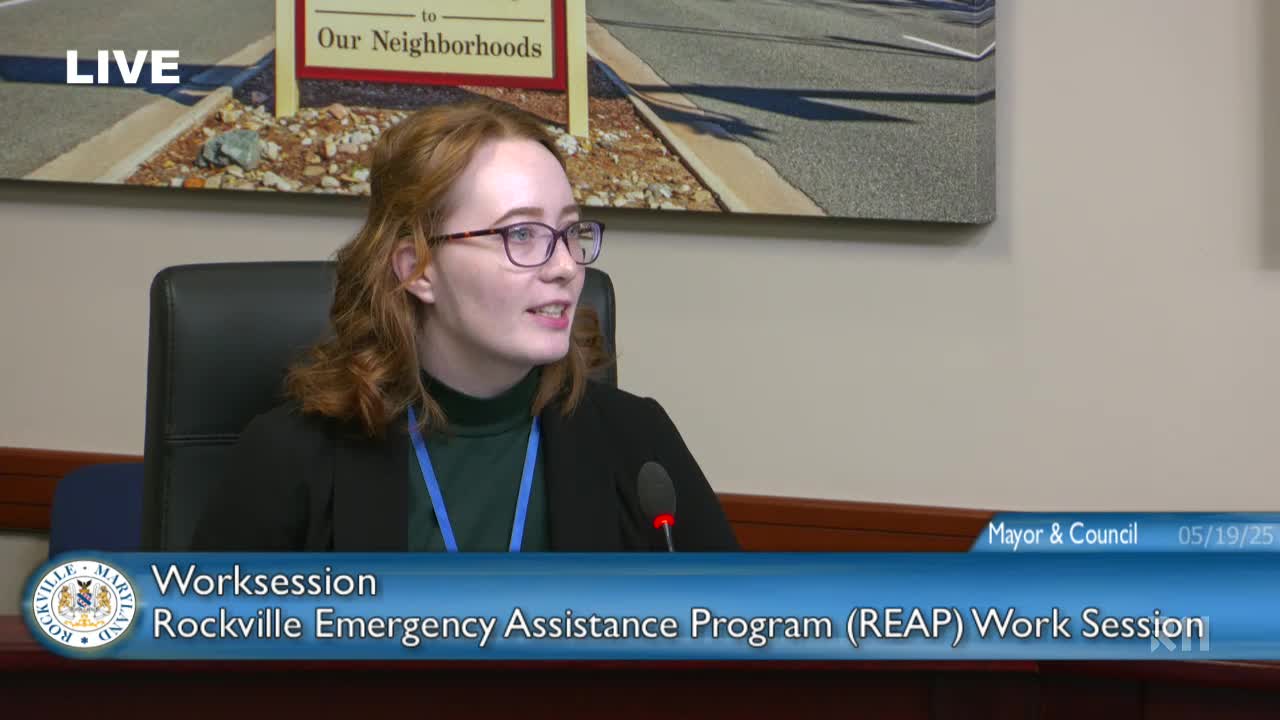
City housing staff presented a package of proposed design changes to the Rockville Emergency Assistance Program (REAP) and asked the Mayor and Council for feedback on asset and income eligibility and program benefits.
Jane Lyons Reeder, Housing Programs Manager, and Tawanna Seagler King, a REAP caseworker, told the Council demand for emergency assistance has risen since federal and county pandemic funds were wound down. Staff recommended several changes intended to target limited city dollars to households with the greatest need and to align Rockville’s caps with Montgomery County where helpful.
Key staff proposals discussed: - Add a liquid asset eligibility limit of $10,000 (savings/checking and readily available funds) to help prioritize households without accessible cash reserves. - Establish an income cap at 80% of AMI for applicants (staff noted historically very few applicants exceed $70,000 household income and that the county uses 60% AMI). - Increase the single eviction‑prevention rental assistance cap from $2,000 to $3,000 to better match median Rockville rents and to align with county limits; staff also proposed an overall maximum of $4,000 in assistance per household during a rolling 12‑month period. - Add childcare as an eligible expense with a proposed maximum of $2,000 to bridge families during job searches or short term crises. - Remove funeral expenses from the program because requests were rare and typically exceeded what the program can cover. - Add explicit administrative allowances for security deposits (proposed cap $2,000), moving and short‑term hotel stays (proposed $150/night up to $3,000 total in limited cases), and guarantor fees (staff cited up to $18,000 as a maximum that would cover typical commercial guarantor arrangements).
Council members broadly praised the proposal’s intent and asked questions about implementation. Several members supported adding childcare and increasing rental assistance and asked staff to double‑check the prescription medication cap (staff currently proposed $300) — some councilmembers urged raising that limit (a few suggested $600). Council members asked staff to track cases that would be excluded by the proposed 80% AMI cap so the Council can evaluate whether the income limit would exclude significant need during the upcoming federal workforce transition. Several members flagged relocation assistance (moving expense coverage) and potential moving cost coverage for MPDU relocations in a different agenda item and asked staff to coordinate cross‑program support.
Budget and next steps: The Council requested staff implement the updated program design promptly, and staff said they will seek a $100,000 budget amendment in this summer’s amendment cycle (in addition to the FY26 REAP base budget) to increase program capacity. Staff committed to providing tracking data to the Mayor and Council on the effects of any AMI limit and the caseload that would be affected.
Ending: Staff will finalize administrative rules informed by Council feedback, begin outreach to nonprofit partners, implement the program changes, and bring a budget amendment forward for Council consideration.