Get Full Government Meeting Transcripts, Videos, & Alerts Forever!
Get email alerts on the Watershed Restoration topic
No spam. Unsubscribe anytime.
Truckee River groups outline restoration work, sediment and flow concerns
Summary
Local watershed organizations described restoration projects, volunteer monitoring and efforts to manage sediment and streamflows affecting the Truckee River and Donner Lake shorelines.
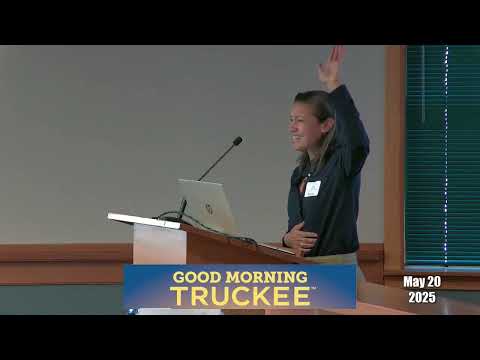
Michelle Prestowicz, executive director of the Truckee River Watershed Council, told the Good Morning Truckee audience that the council’s “mission is to bring the community together to protect, enhance and restore the Truckee River Watershed.” She said the river has been designated as polluted by both the state of California and the U.S. Environmental Protection Agency because of excess sediment that harms habitat and water quality.
The council is pursuing three types of work: projects, policy and people. On projects, Prestowicz highlighted the Martis Wildlife Area restoration — “70 acres of wetland and 2 miles of stream,” she said — and a series of linked restorations intended to create wildlife corridors and improve habitat for species such as the willow flycatcher.
Prestowicz described work on Donner Creek to reintroduce meanders and slow flows where the creek has been channelized by roads and development. She said the restoration uses measures such as alternating root wads and small meanders to drop sediment, improve habitat and reconnect wet meadow groundwater. The council identified four construction sites along Donner Creek; one is adjacent to a mobile home park, another is above the bike path where trees have been lost to erosion, and a third is hydrologically connected to a wetland that now only flows under the highway during storms.
On Donner Lake, the council leads an interagency partnership of nine organizations to set common goals for recreation, wildlife and water supply. Prestowicz said pilot work at Donner Memorial State Park and a shoreline assessment of 39 public piers have shown visible shoreline loss; she described “about 2 feet of shoreline” lost at the lagoon in recent years and said the council is designing living-shoreline projects and a toolkit to hand off to Rec and Park and the town to stabilize the most heavily impacted piers.
The council also runs community programs: Prestowicz called out Truckee River Day, the council’s annual volunteer restoration day now drawing roughly 300–350 volunteers, and an adopt-a-stream water-quality monitoring program that surveys about two dozen creeks four times a year. Those monitoring data, she said, provide long-term trend information on oxygen, pH and other indicators.
Prestowicz urged residents to attend River Talks and other outreach events; she noted an upcoming River Talks presentation on May 27 and said the council posts schedules and sign-ups on its website. She also asked volunteers to support ongoing restoration, monitoring and the Donner Lake shoreline work.
Why it matters: the Truckee River supplies drinking water downstream and supports local recreation and wildlife; council leaders say reducing sediment and restoring natural flows protects habitat, public safety and the regional recreation economy.