Get Full Government Meeting Transcripts, Videos, & Alerts Forever!
Get email alerts on the Digital Assets Crypto topic
No spam. Unsubscribe anytime.
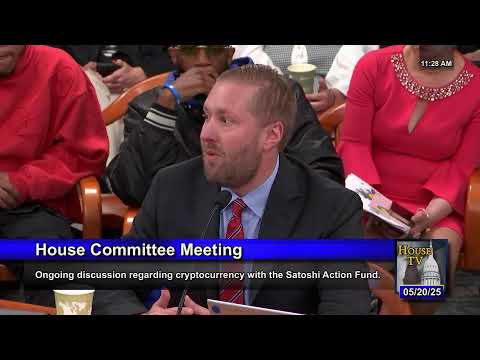
Committee hears overview of state crypto policy and local entrepreneur pitches esports token project
Summary
A policy director from Satoshi Action Fund urged Michigan to create clearer state rules for digital assets, stablecoins and pension allocations; a local entrepreneur described an esports and token project during public comment.
Eric Peterson, policy director at the nonprofit Satoshi Action Fund, told the committee Michigan could expand digital asset policy to provide regulatory clarity for stablecoins, state investment guardrails and unclaimed digital property regimes.
Peterson said yesterday the U.S. Senate advanced the GENIUS Act addressing stablecoins and that states can create pathways to register stablecoin businesses locally. He recommended a "belt and suspenders" approach for state pension or treasury investments — proposals typically limit allocations to a small percentage of a fund and restrict holdings to large‑market‑cap digital assets — and described recent state activity on that approach in other states. Peterson also said states are revising unclaimed‑property rules so lost digital assets can be preserved in native form for a period before liquidation.
On consumer protection, Peterson said kiosks and cash‑to‑crypto transactions have been used in social‑engineering scams and that states can adopt protections targeted at vulnerable populations without banning the asset class. He also said custodial exchanges are already regulated in Michigan with money‑transmission requirements, and that allowing individuals to self‑custody is itself a consumer‑protection policy.
Public comment: esports token and local initiatives
During public comment, Dee Jones described work on esports labs, a connected‑learning initiative with Baxter Community Center and a Play Fuel Token ("PFT") project that he said is intended to advance digital‑finance access and educational opportunities. Jones identified himself as an esports entrepreneur and said he connected AT&T to Baxter Community Center; committee staff suggested he contact legislative offices to arrange follow‑up meetings.
Ending
Peterson invited follow‑up meetings with the committee to discuss model legislation and consumer protections; lawmakers asked about consumer safeguards and scams and heard that exchanges and kiosks are already subject to regulatory regimes in many states.