Get Full Government Meeting Transcripts, Videos, & Alerts Forever!
Get email alerts on the Disaster Recovery topic
No spam. Unsubscribe anytime.
Burke County signs state MOA to speed private property and waterway debris removal after Storm Lien
Summary
The Board authorized the county chairman to execute a memorandum of agreement with North Carolina Emergency Management to enable state-managed private-property, commercial and waterway debris removal tied to Tropical Storm Lien recovery.
Burke County commissioners voted unanimously Monday to enter a memorandum of agreement (MOA) with the North Carolina Department of Emergency Management to speed debris removal from private property, commercial sites and waterways as part of the county’s recovery from Tropical Storm Lien.
County manager staff briefed the board on the long-running recovery effort: the county has been operating alternate debris sites, contracted right-of-way removal and monitoring, and has collected approximately 328,000 cubic yards of storm debris. The county manager asked the board to authorize a state partnership to avoid project-management, liability and cash-flow exposure for the county on higher-risk debris removal types (private-property debris removal (PPDR), commercial-property debris removal, and waterway debris removal).
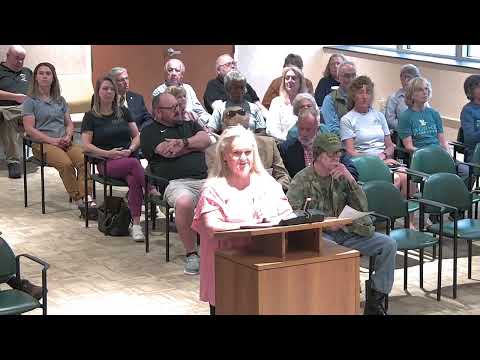
Joe Stanton, assistant director of North Carolina Emergency Management (who identified himself as the deputy state coordinating officer for this disaster), told the board the state can mobilize quickly using contractors vetted under state procurement and work closely with FEMA to pursue reimbursement. Stanton said the goal is to remove debris “as soon as possible” and to do so prudently to preserve taxpayer dollars.
County staff described three operational options considered: (1) continue county-managed contracts; (2) direct engagement with the U.S. Army Corps of Engineers and state; or (3) partner with the state with the state acting as project manager and property manager for higher-risk debris removal. The board approved the state MOA as the quickest way to mobilize cleanup without county project-management liability. The motion authorizes the chairman to execute a final MOA subject to county attorney review.
Commissioners asked about the MOA’s scope (for example how far upstream/downstream crews would clear debris around bridges or other critical infrastructure). Staff and the state monitoring contractor said the work focuses on at-risk public infrastructure and that monitoring surveys (drone/air imagery) were used to estimate debris quantities and costs. The county said hazard-mitigation acquisition/repair applications remain in process for eligible properties and that the MOA covers the continuing final components of the recovery plan.
The motion passed 5–0. County staff said they would continue to coordinate closings of alternate debris sites and follow FEMA public-assistance procedures for reimbursement.