Get Full Government Meeting Transcripts, Videos, & Alerts Forever!
Get email alerts on the Election Reform topic
No spam. Unsubscribe anytime.
Rockville hires consultant, begins broad election‑code review; council asks for options on districts, term limits and voting rules
Summary
The council launched a wide review of city election laws and procedures with an outside consultant. Councilmembers flagged campaign finance transparency, ballot tracking, drop‑box placement, ADA accessibility, and enforcement; staff will return with options on 16‑ and 17‑year voting, term limits, representative districts and ranked‑choice voting.
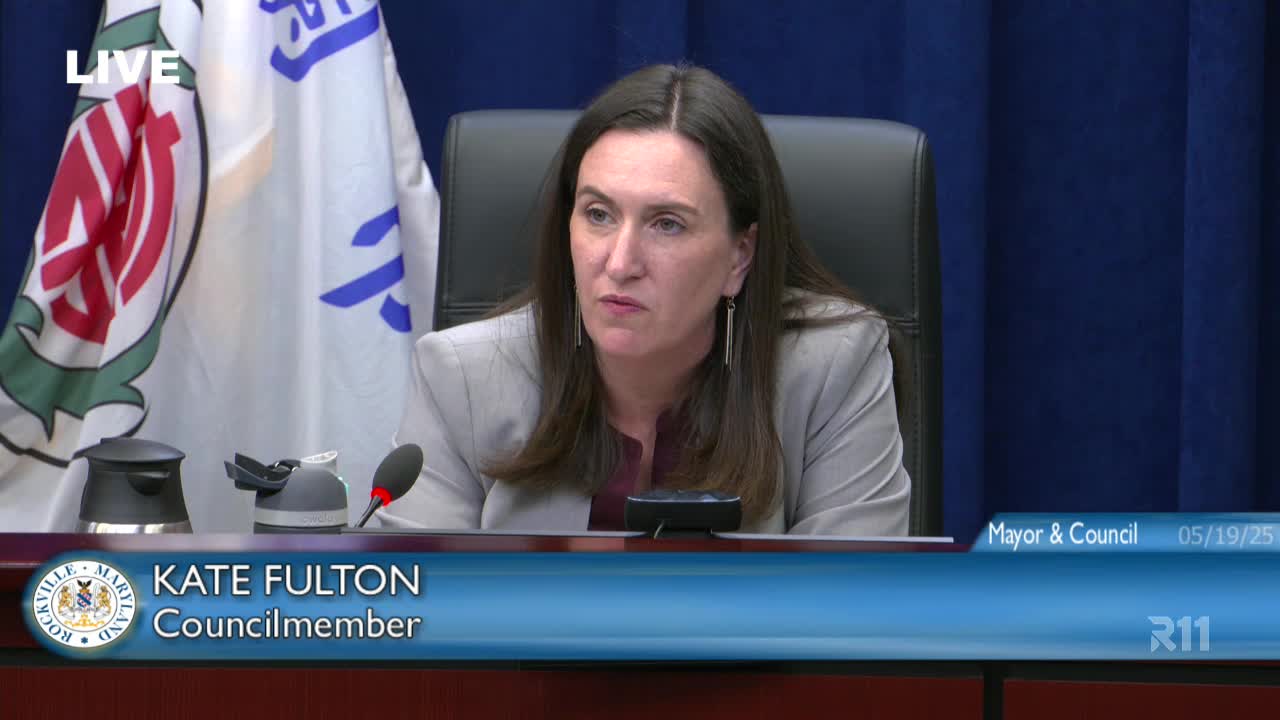
The mayor and council held the first of a series of work sessions on municipal election reform and directed staff and an outside consultant to return with options on several high‑level policy questions including voting age, term limits, representative districts and ranked‑choice voting.
Consultant and background: The city selected the Gantt Group to assist with a comprehensive review after staff summarized prior Charter Review Commission and Board of Supervisors of Elections (BSC) reports dating to 2012 and 2020. Consultant Jason Gantt said the engagement will cover election law definitions, campaign finance, election procedures (ballot handling, drop boxes, cybersecurity), the role and authority of the BSC, and the four advisory ballot measures that the prior council put before voters in 2023.
Council priorities and concerns: Councilmembers repeatedly asked staff and the consultant to prioritize fixes that will prevent the operational problems seen in the 2023 election (ballot delivery and tracking issues, outreach gaps, and ambiguity about candidate and committee rules). Several councilmembers pressed for clearer enforcement rules, faster responses to complaints, stronger public transparency for campaign finance reporting and better voter outreach and accessibility (including 508/screen‑reader compliance for candidate materials and expansion of drop‑box locations such as the swim center).
Specific items council asked staff to return with options on: - Voting age: permit 16– and 17‑year‑old resident voting for municipal elections (councilmembers split; some favored exploring it and others opposed). - Term limits: several members supported exploring limits (examples discussed included three or four consecutive terms); some members asked for staggered terms to avoid mass simultaneous turnover. - Representative districts vs. at‑large seats: some councilmembers want an exploration of district‑based seats to improve geographic representation; others raised concerns about small‑district effects and implementation complexity. - Ranked‑choice voting: councilmembers expressed interest in exploring ranked‑choice voting but some noted procedural and software costs and the need for voter education.
Other recurring topics: councilmembers urged (1) clearer definitions for "campaign materials" (to cover digital ads, robocalls and text messaging and their disclaimers), (2) faster resolution timelines for alleged campaign violations so enforcement can affect an active campaign, (3) discussion of contribution limits and public financing models (some councilmembers supported pilot public‑financing ideas or small democracy vouchers), and (4) improved election worker protections and accessibility for voters with disabilities.
Process and next steps: Gantt will conduct public outreach and return in June with options and proposals; a final report and recommended ordinance rewrites are expected in July. Staff also said they will begin evaluating procurement needs to secure legal and technical help for any comprehensive Code rewrite so council direction can be implemented before the next city election cycle.
Ending: The council gave staff and the consultant direction to come back with concrete policy options, and multiple councilmembers asked staff to prepare drafts and cost estimates for public financing, ballot‑order alternatives, and how to harden ballot tracking and drop‑box procedures.