Get Full Government Meeting Transcripts, Videos, & Alerts Forever!
Get email alerts on the Zoning topic
No spam. Unsubscribe anytime.
City council advances multiple zoning petitions; committee recommendations, several approvals and public hearings continued
Summary
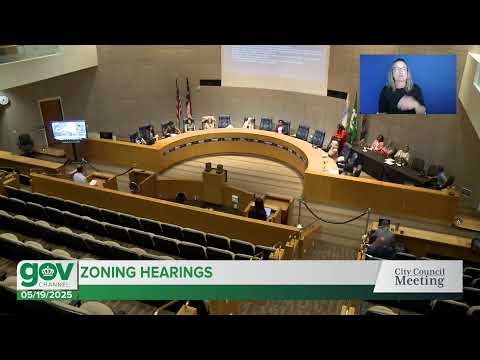
At its May 19 zoning meeting the Charlotte City Council handled a large set of rezoning petitions. Staff and the zoning committee recommended approval for many items; the council approved several petitions (consent items and others) and closed multiple public hearings, while some petitions remain subject to outstanding issues or further review.
Charlotte City Council handled a broad slate of rezoning and text-amendment items during its May 19 special zoning meeting, approving several petitions, closing public hearings, and directing further work on others.
The council considered a mix of consent and nonconsent petitions, administrative text amendments and individual rezoning requests. Staff and the citys zoning committee (the Zoning Committee of the Planning Commission) had recommended approval for most of the items that proceeded to a council vote. Several consent agenda petitions (including petition numbers listed on the agenda as 2024064 by JF Lawrence Properties, 2025002 by Kelsey Miles, and 2025006 by Beacon RCP LLC) were approved as a group by unanimous vote after council members removed one item from consent for separate consideration.
A number of other petitions were presented with staff summaries and public hearings, after which council members either closed the hearings or voted to advance staff-recommended actions. Where petitioners made post-zoning-committee changes staff presented those modifications to council and council often approved motions not to send the petition back to the zoning committee for additional review (for example, petition 2024137 and petition 2024144 were advanced after the petitioner committed to specific changes such as height limits, open-space and rental restrictions for housing units or building-level commitments for LEED silver and a closed-loop cooling system).
Several items were handled by unanimous or near-unanimous council votes when the record shows that outcome; other petitions were continued for additional follow-up on outstanding site-design, transportation or tree-preservation issues. Staff repeatedly noted when petitions were inconsistent with the 2040 Policy Map and identified specific outstanding issues that would need to be resolved before final approval.
Why this matters: Rezoning decisions directly affect land use, development intensity and infrastructure needs across Charlotte. The packet of petitions considered on May 19 included projects that would change neighborhood place types, add residential units, or reclassify parcels for industrial or logistics use. Several petitions included transportation commitments (sidewalks, turn-lanes), open-space or tree-preservation measures and, in some cases, affordability commitments.
What the transcript shows (selected items): - Consent approvals: Council approved consent agenda items 4, 6 and 7 (petitions 2024064, 2025002, 2025006) by unanimous vote after removing one item for separate consideration. - Petition 2024137 (Wilkes Asset Management): The petitioner committed to limiting no more than 20% of units to be for rent at any time, building height limits adjacent to Johnson Aylor Road, and other design commitments; the council voted not to send the petition back to the zoning committee and then voted to approve the petition as presented. - Petition 2024144 (Digital Morse Chapel LLC): The petitioner committed to LEED Silver (or equivalent) for proposed buildings and to a closed-loop cooling system for the data-center use; council voted to advance the petition after the petitioners commitments and closed the public hearing. - Text amendment (petition 2025047): Staff presented a proposed maintenance approach for the Unified Development Ordinance (UDO) that would combine technical corrections and periodic policy updates on a biannual maintenance amendment schedule; council heard the presentation and asked clarifying questions about specific changes (research campus uses, office conversions, landscape yard changes, horseshoe driveway rules).
Process notes: Council repeatedly asked petitioners to work with neighborhood groups and staff to resolve outstanding transportation, site-design and tree-preservation issues prior to final approvals. Where petitioners added specific commitments after the zoning committee review, council members asked whether changes should return to the zoning committee; council frequently exercised the option to accept those revisions without sending the item back.
Next steps and follow-up: Several rezoning petitions were continued to a future meeting date or returned to staff for adjustments to site design and transportation commitments. In other cases, petitioners committed to additional changes and staff indicated those will be resolved during the land-development review process before final permits are issued.