Get Full Government Meeting Transcripts, Videos, & Alerts Forever!
Get email alerts on the Early Learning Childcare topic
No spam. Unsubscribe anytime.
Idaho shifts child-care and some developmental-disability programs under new Early Learning division; governor proposes $15M one-time ICCP funding
Summary
Reorganization moves Idaho Child Care Program under Early Learning and Development; the governor recommends three annual installments of $15 million in one-time CCDBG funds and agency requests ongoing ICCP funding and STAR certification work at SWITC.
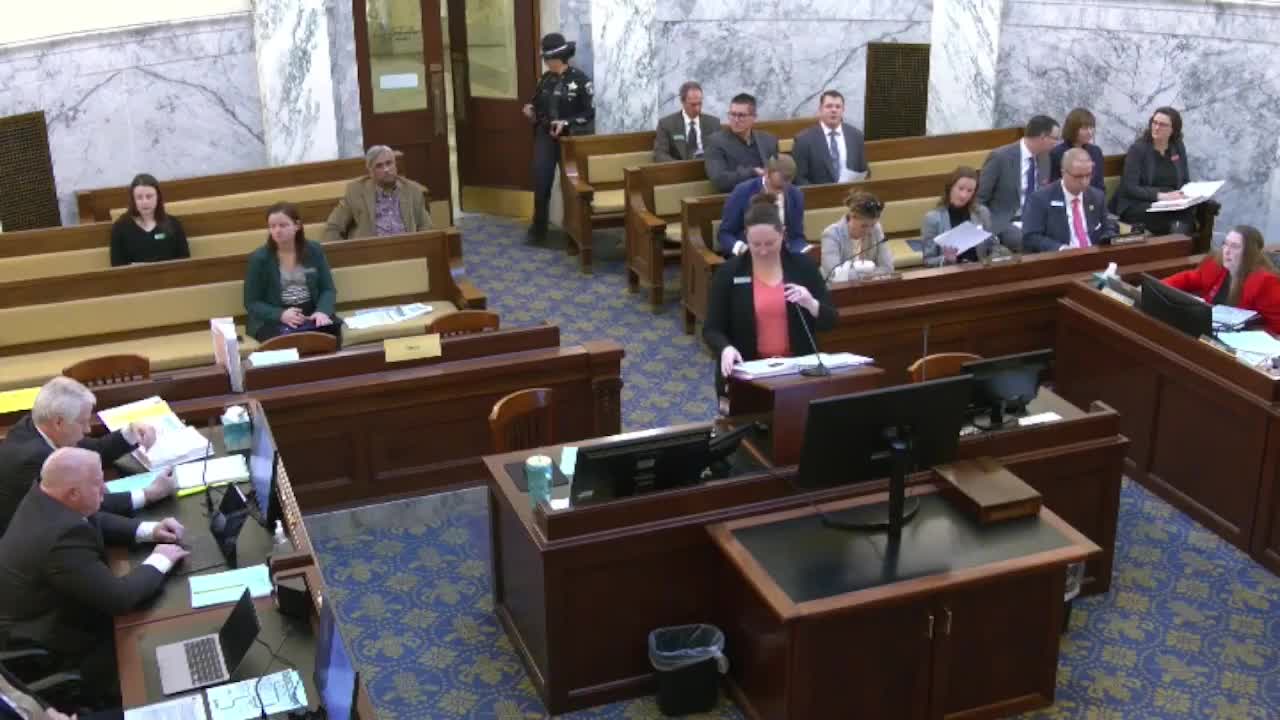
Legislative analysts and department leaders told the Joint Finance and Appropriations Committee on Feb. 20 that a reorganization approved in the maintenance bill is moving an array of child-care and developmental-disability services into a newly titled Early Learning and Development division.
Alex Williamson, budget and policy analyst with Legislative Services, said programs formerly under Services for the Developmentally Disabled (including extended employment services) have shifted; some developmental-disability services are now administered through Medicaid and will be discussed in the Medicaid budget hearing.
Major items in the presentation: - Idaho Child Care Program (ICCP): The governor recommended $15 million one-time in each of three years drawn from available Child Care and Development Block Grant (CCDBG) carryforward funding; the agency also requested $4.2 million ongoing for ICCP. Williamson said the CCDBG underutilization yielded approximately $45 million one-time available over three years. - START certification and treatment at the Southwest Idaho Treatment Center (SWITC): the START clinical model is in rollout. Allison Tate, division administrator, told the committee that START-trained teams have recently increased enrollments; the department will provide a progress report later in the spring. The START model has already been used at SWITC to help some long-term patients move to less-restrictive settings. - SWITC facilities work: Committee members asked about a near-$1 million permanent-building-fund item for a walk-in cooler and lighting upgrades. Lisonbee Tate, who oversees SWITC, said a larger cooler would allow bulk purchasing and central food preparation, reducing food costs at State Hospital West as well.
Child-care operations and past actions: Director Alex Adams described late-2024 actions the department took after program enrollment and spending rose. He said the department paused new enrollments temporarily to stay within the legislative appropriation and prioritized vulnerable groups (foster youth, homeless families and disabled children) during the pause. Adams told lawmakers that the department had spent $52.7 million on childcare in the prior year and said treating ICCP as an entitlement would have required roughly $68.2 million.
What was not decided: No appropriation or vote was taken during this hearing. Department leaders said they will provide a report on START progress and follow up on questions about funding-source details.
Context: The reorganization and the ICCP requests intersect with both state budget decisions and federal CCDBG carryforward availability, and the committee signaled it will review ICCP proposals in more detail during upcoming hearings, including the Medicaid budget where some developmental-disability funding now resides.