Get Full Government Meeting Transcripts, Videos, & Alerts Forever!
Get email alerts on the Higher Education topic
No spam. Unsubscribe anytime.
Tulsa higher-education consortium offers transfer maps, FAFSA help and rental support for students
Summary
A Tulsa-based consortium that launched formally in 2021 described online degree directories, transfer maps, FAFSA outreach and federally funded housing support aimed at increasing degree completion across nine regional institutions.
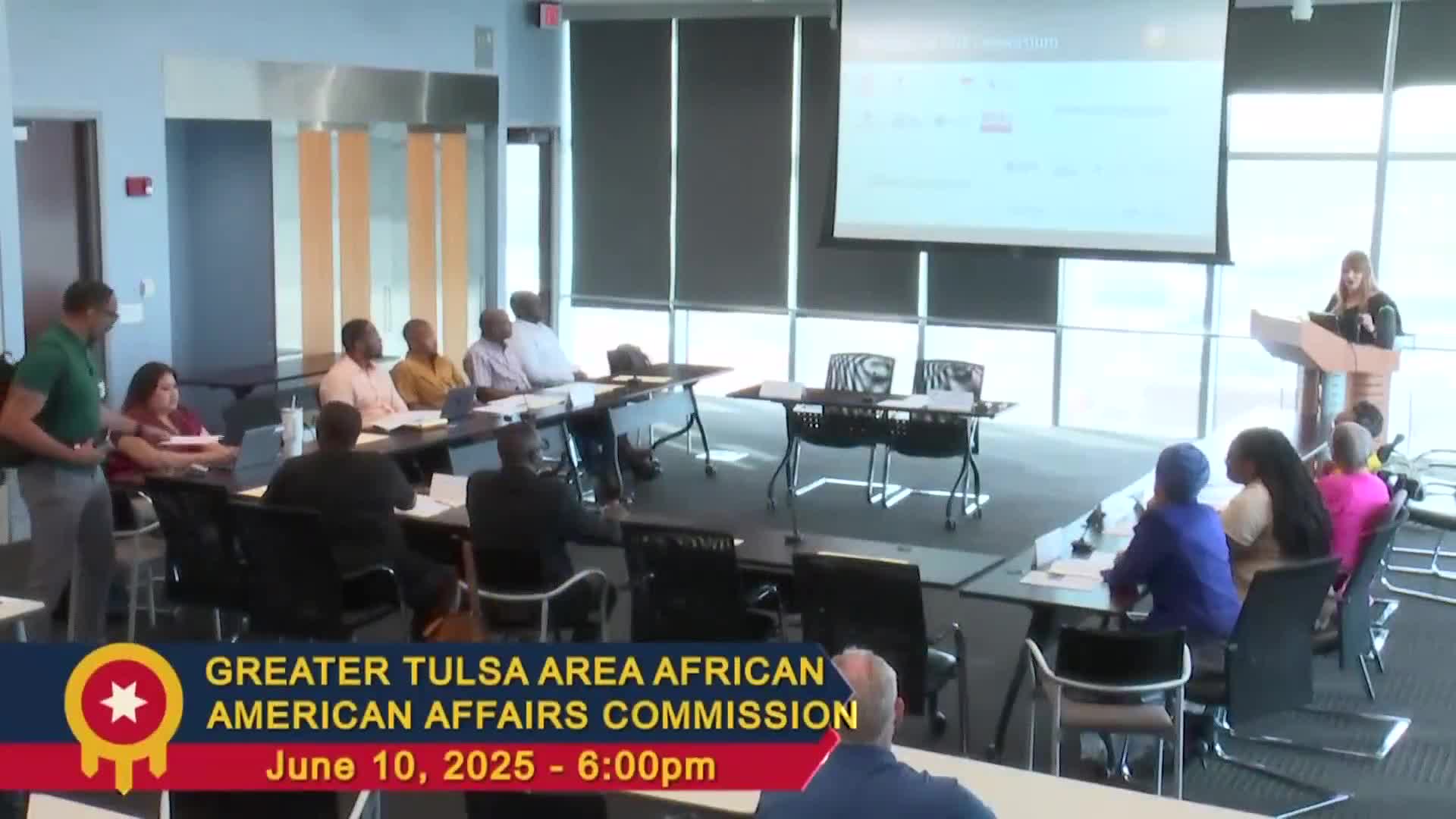
A Tulsa consortium of nine higher-education institutions told the Tulsa African American Affairs Commission that it is working to simplify pathways to college, expand employer tuition partnerships and provide rental and wraparound supports for students.
The consortium representative said the group exists “to cultivate an aligned network of higher education institutions and community partners committed to increasing degree completion for all students in the region.” She said the consortium performs three roles — convener, communicator and connector — and pointed commissioners to the consortium website, www.tulsahireed.com, for resources designed around students’ questions: “Where can I go? What can I study? How can I pay for it? And where can I get started?”
The consortium described a degree directory and transfer portal that let students see which local institutions offer specific programs and maps that lay out semester-by-semester course plans so students transferring from Tulsa Community College (TCC) can finish bachelor’s degrees “in 4 years without losing time, without losing money,” the representative said. When the effort began in 2018 the group documented 23 transfer maps between TCC and bachelor-granting institutions; the consortium said that number has grown to more than 175.
The presenter said the consortium has identified 83 Tulsa-area employers that offer tuition assistance or remission to employees and that the group conducts FAFSA (Free Application for Federal Student Aid) outreach. The consortium currently dispatches five instructors across the city to help students complete FAFSA forms, and the presenters hold regular community events and library pop-ups to assist families.
On student housing, the consortium said it secured a HUD grant to provide rental assistance, housing navigation, case management and wraparound supports across the nine institutions. The presenter gave these program figures: $77,600 distributed for student rental assistance, $277,000 for student support services, more than 80 students connected to housing resources and “moving over 30 households, many with young children, out of homelessness.” She also said the group is launching the internship and on-the-job training arm of a Economic Development Administration program tied to a $51,000,000 federal grant expanding tech opportunities.
Commissioners asked about expanding membership to additional campuses (the presenter said accreditation is one criterion and conversations with other local institutions have begun) and about transportation for students receiving housing help; the presenter said transportation supports are limited to Lyft and ride-hailing for eligible students and acknowledged inconsistent transportation as a widespread barrier.
The consortium representative described its funding as a “patchwork” of dues, philanthropy and federal grants. She said member dues make up about 10% of funding while the rest comes from fundraising, two federal grants and foundation and corporate funders such as ECMC, Blue Cross Blue Shield and QuikTrip. The presenter said the consortium was formally launched in 2021 after planning that began in 2018.
The commission did not take formal action on the presentation. Commissioners and attendees followed with questions about program demographics, capacity limits and next steps to expand employer relationships. The presenter said most students served are first-generation college students and youth aging out of foster care but that exact percentages were “not specified” and that she would provide detailed demographic data on request.
The presentation and subsequent Q&A closed with contact information and an invitation to commissioners to follow up; the presenter said she would remain after the meeting for one-on-one questions.