Get Full Government Meeting Transcripts, Videos, & Alerts Forever!
Get email alerts on the Budget topic
No spam. Unsubscribe anytime.
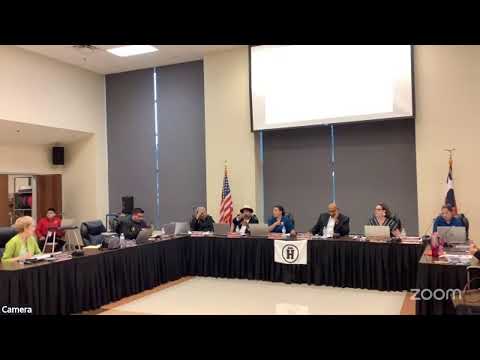
Harlandale ISD board adopts 2025–26 budget, approves $60,000 starting teacher pay and $1.2575 tax rate
Summary
The Harlandale ISD Board of Trustees on June 16 approved the district's proposed 2025—26 annual budget, a compensation plan that sets new-teacher starting pay at $60,000, and a proposed combined tax rate of 0.7575 for maintenance and operations and 0.50 for interest and sinking (total $1.2575).
The Harlandale ISD Board of Trustees on June 16 approved the district's proposed 2025–26 annual budget, a compensation plan that sets new-teacher starting pay at $60,000, and a proposed combined tax rate of 0.7575 for maintenance and operations and 0.50 for interest and sinking, for a total rate of $1.2575 per $100 of assessed value.
The vote followed a public hearing on the budget and multiple public commenters who raised concerns about equity in how state House Bill 2 funds are being applied and about a proposed change to the teacher attendance stipend. Superintendent Sotto and Assistant Superintendent for Business and Finance Flores presented the budget and answered trustees' questions.
District officials described the budget as a multi-fund plan that uses state retention allotments and local funds to increase pay for eligible teachers and to raise other staff pay. The proposed general fund revenue is $132,333,131 and proposed general fund expenses are $143,594,826. The administration said it will use the full projected teacher retention allotment of $3,083,850 and the full support-staff allotment projected at $405,319, plus district proceeds from local and state aid projected at $1,198,562, to implement the compensation plan.
The compensation plan presented to the board implements pay increases that mirror House Bill 2 eligibility tiers: $5,000 for eligible teachers with five or more years of credible experience and $2,500 for those with three to four years of credible experience. The district also proposes a $1,500 increase funded locally for new teachers (one to two years of experience) and a $1,500 increase for non-HB2-eligible teachers with three or more years of experience. The administration said the proposed new-teacher starting salary will be $60,000 for 2025–26 and that the general pay scale midpoint increase is 2% for remaining staff categories not covered by those specific allotments.
Flores walked trustees through fund-level projections. Besides the general fund figures above, the child nutrition fund is budgeted at $14,003,918 for revenues and expenses; the facility assessment fund shows $80,000 in interest revenue and $1,760,650 in expenses (with a $500,000 transfer-in noted); the bequest fund is budgeted at $241,323 in expenses; and the debt service fund shows revenues of $20,177,661 local and $7,508,683 state, with expenses of $17,686,344. The administration also noted a five-year projection that currently shows an overall deficit of about $761,000 by fiscal 2027–28 under present assumptions, and said the projection is a working document.
Public commenters focused on the proposed change to the teacher attendance stipend and on how House Bill 2 excludes some classroom educators from state pay increases. Maricruz Martinez, HEATSGA local president, urged the board to keep the stipend as originally structured: "Please leave it as the attendance stipend it was originally set up as, for those dedicated teachers that come to work daily," she said. Susan Salinas (TSA staff) noted the district identified about 179 teachers who did not qualify for HB2 money and said the district has used local funds to provide a $1,500 increase to those individuals. Parent Jeanette Rodriguez raised concerns about school staff following court orders in custody and guardianship matters and said, "This is not just a procedure oversight. It is a legal and ethical violation." All three appear in the public-comment record for this item.
Trustees asked for additional context about competitiveness within Bexar County and about how the budget and pay decisions might affect staffing and campus ratings. Superintendent Sotto framed attendance as an important revenue and instructional issue: "The biggest revenue that we get is our children being in school," he said, arguing that higher student attendance generates state funding and supports classroom instruction; he also described operational costs when employees are absent (paying both the absent employee and a substitute). The administration pointed out that 11 campuses were at 91% or higher attendance and that the district is proposing a 93% threshold for the proposed attendance-linked incentive.
Votes at a glance: The board approved consent items 7a through 7s on a motion by Trustee Reese with a second by Trustee Arasad; the board approved the proposed 2025–26 budget by a motion from Trustee Moreno (second voiced but speaker not clearly attributed in the record), and the chair announced the motion carried. The record shows the board earlier approved the public-notice advertisement and set the proposed tax rate in the June 5 notice at 0.7575 (M&O) and 0.50 (I&S). The meeting record does not contain a roll-call tally with individual yea/nay names for the budget item; the official minutes should be consulted for the formal vote roll call.
Why it matters: The budget sets pay and program priorities for the coming school year and uses a mix of state allotments and local funds; the board's choices determine which staff groups receive state-mandated increases and which receive locally funded supplements. Trustees and the public pressed the district on trade-offs between targeted teacher pay increases and broader pay raises for other staff, and several trustees described the choices as painful and constrained by state funding limits.
The board was told the district expects to receive the certified appraisal roll no later than July 25; the district plans to adopt a resolution fixing and levying ad valorem taxes in August after that certification. The administration said additional details, including a departmental breakdown of the general fund and a five-year visual of fund balance projections, can be provided to the community.