Get Full Government Meeting Transcripts, Videos, & Alerts Forever!
Get email alerts on the Childcare topic
No spam. Unsubscribe anytime.
Bannock presenters ask county for $25,000 seed to pilot employer-parent-public “Tri Share” childcare program
Summary
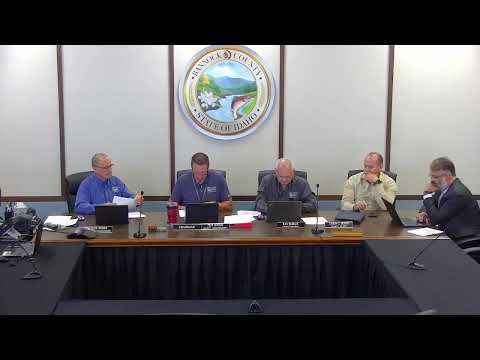
United Way of Southeastern Idaho and the Kids First Coalition asked the Bannock County Board of Commissioners on June 12 to provide at least $25,000 in seed funding to pilot a Tri Share childcare program that would split the cost of childcare among employers, parents and public funds to make care more affordable and stabilize the local workforce.
United Way of Southeastern Idaho and the Kids First Coalition asked the Bannock County Board of Commissioners on June 12 to provide at least $25,000 in seed funding to pilot a “Tri Share” childcare program that would split the cost of childcare three ways — employers, families and public funds — to make care more affordable and stabilize the local workforce.
The request was presented by Danille Coll, director of education at United Way of Southeastern Idaho, and Sadie McMorris of the Kids First Coalition. “This proposal…is really a workforce development solution, not a social program,” Coll said, arguing that stable childcare supports employees and local employers. She also said, “The average childcare worker in Bannock County makes about $12 an hour.”
The presenters described the Tri Share model as a county-level pilot aimed at families who do not qualify for state subsidies and those in the ALICE (Asset Limited, Income Constrained, Employed) population. Under the model, employers would pay a share for participating employees, parents would pay a payroll-deduction share, and county seed funding would match those contributions to reduce monthly parent bills. Coll and McMorris said the pilot would start with families who fall at or above the Idaho Child Care Program eligibility cutoff (130% of federal poverty level) and could extend to ALICE households; they cited models in Indiana and Michigan as precedents.
Commissioners asked detailed questions about design, oversight and cost. One commissioner asked, “What's your anticipated budget?” and said the county needed a pro forma showing how $25,000 would be matched and used. Commissioners pressed presenters on (1) employer commitments — presenters said they had preliminary interest from Simplot and Farm Bureau but no signed memoranda of understanding, (2) fiscal management — presenters said United Way or an established local entity such as Bannock Development could be a fiscal agent and would provide auditing, and (3) whether the subsidy would reliably increase provider wages. Coll acknowledged there is no guarantee providers would increase wages but said the model can provide more predictable monthly revenue for centers.
Presenters said the coalition is collecting provider budgets and waiting for a state-adjusted market rate, due in July, to finalize cost modeling. They estimated larger-scale pilots elsewhere had much larger budgets (Michigan launched a roughly $1.1 million statewide pilot), and emphasized they were seeking a much smaller, county-scale seed to test the model before scaling regionally.
Commissioners expressed general support for the goal of keeping people in the workforce but emphasized fiscal constraints. One commissioner said the county’s charitable-donation budget is already higher than most counties’ and that any county contribution should be considered during the normal budget cycle and not by raising the county budget. Another suggested United Way would be a preferred fiscal agent if the county participates.
The presentation closed with commissioners asking the coalition to return with a clearer budget, employer MOUs, and a proposed application and eligibility process so the county could evaluate a targeted contribution during upcoming budget deliberations.
Provenance: first discussion of the Tri Share model and county ask appears at the presentation beginning (transcript excerpt: “So we are here to present, what we call the Tri Share Model.”) and the presenters’ final remarks and commissioner responses conclude the segment later in the item.