Get Full Government Meeting Transcripts, Videos, & Alerts Forever!
Get email alerts on the Climate Credit Affordability topic
No spam. Unsubscribe anytime.
Assembly committee advances Erwin bill to apply California Climate Credit to volumetric summer rates
Summary
The Assembly Committee on Utilities and Energy voted to send AB 745 to the floor after proponents said the bill would reconfigure the California Climate Credit to lower summer electricity prices by applying the credit as a volumetric rate reduction instead of a lump-sum rebate.
Assemblymember Erwin’s proposal to restructure the California Climate Credit was advanced by the Assembly Committee on Utilities and Energy on a voice and roll-call vote, with the committee recording the measure as passed to the floor.
AB 745 would change the climate credit’s delivery from two lump-sum bill rebates to a direct, volumetric reduction in electricity rates applied in summer months. Proponents said the change would target relief when households face their highest bills and improve affordability while the state reauthorizes the cap-and-trade program that generates the credit.
The bill’s author, Assemblymember Erwin, told the committee that “rather than receiving a flat on-bill credit in off peak months, our constituents would pay noticeably less per kilowatt hour for electricity during the high demand summer months.” Erwin said the credit currently is “distributed as a lump sum on utility bills during April and October” and that the change would shift the majority of the benefit to hot months when air-conditioning use affects public health.
Dr. Kyle Meng, professor of economics at UC Santa Barbara and a former White House Council of Economic Advisors economist, testified for the bill and cited an analysis by the Environmental Markets Lab. He said the climate credit program distributed “over $1,200,000,000 to over 11,000,000 households” in 2023 and that using those funds to lower volumetric rates in summer could reduce electricity prices by “13 to 19%” for households served by the state’s large investor-owned utilities. He added that targeting the credit to low-income households could produce larger percentage reductions for those recipients.
Organized supporters included the Union of Concerned Scientists and the Natural Resources Defense Council, which asked for amendments to preserve or redirect related gas credits. Investor-owned utilities including Pacific Gas & Electric and Southern California Edison said they were still reviewing the bill and sought to work with the author on low-income provisions and program details. The California Coalition of Utility Employees and the State Association of Electrical Workers offered conditional support if low-income CARE (California Alternate Rates for Energy) households were prioritized.
The committee took public testimony limited by the hearing rules: two minutes per witness in support and two in opposition. No primary witness registered formal opposition at the hearing; committee members asked clarifying questions about coordination with other cap-and-trade reauthorization work and about how any redirection of gas credits would be handled.
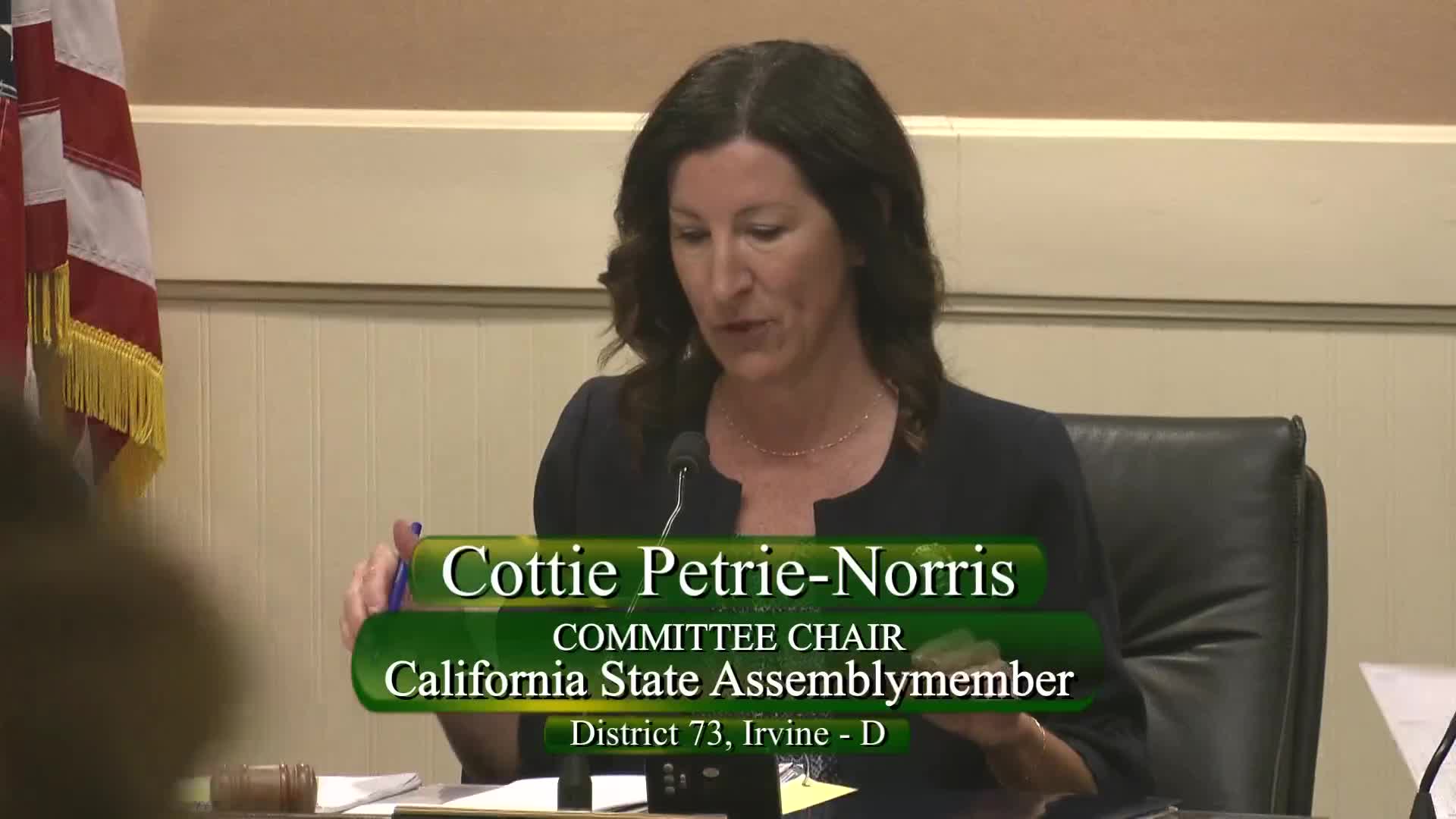
After brief member discussion and a request for members to support the measure, the committee clerk called the roll. The committee chair announced the bill had passed to the floor; later in the hearing the clerk recorded and confirmed that AB 745 had been reported out of committee.
Looking ahead, the bill will go to the Assembly floor. The committee record shows members agreed the bill should be coordinated with cap-and-trade reauthorization work and that additional amendments could address low-income targeting and possible redirection of the gas climate credit.
Ending: The committee advanced AB 745 as a vehicle for changing how the climate credit reaches ratepayers; the measure will now be considered on the Assembly floor where members may offer further amendments and seek additional technical refinements.